Portable device for upper limb rehabilitation

a technology for upper limb rehabilitation and portability, applied in the field of portability devices, can solve the problems of reduced coordination, reduced range of motion, muscular weakness, etc., and achieve the effect of different degree of system complexity/functionality and effective training

US8795207B2Active Publication Date: 2014-08-05FUNDACION FATRONIK
18 Cites 3 Cited by

Patent Information

Authority / Receiving Office
US · United States
Patent Type
Patents(United States)
Current Assignee / Owner
Publication Date
2014-08-05

Smart Images

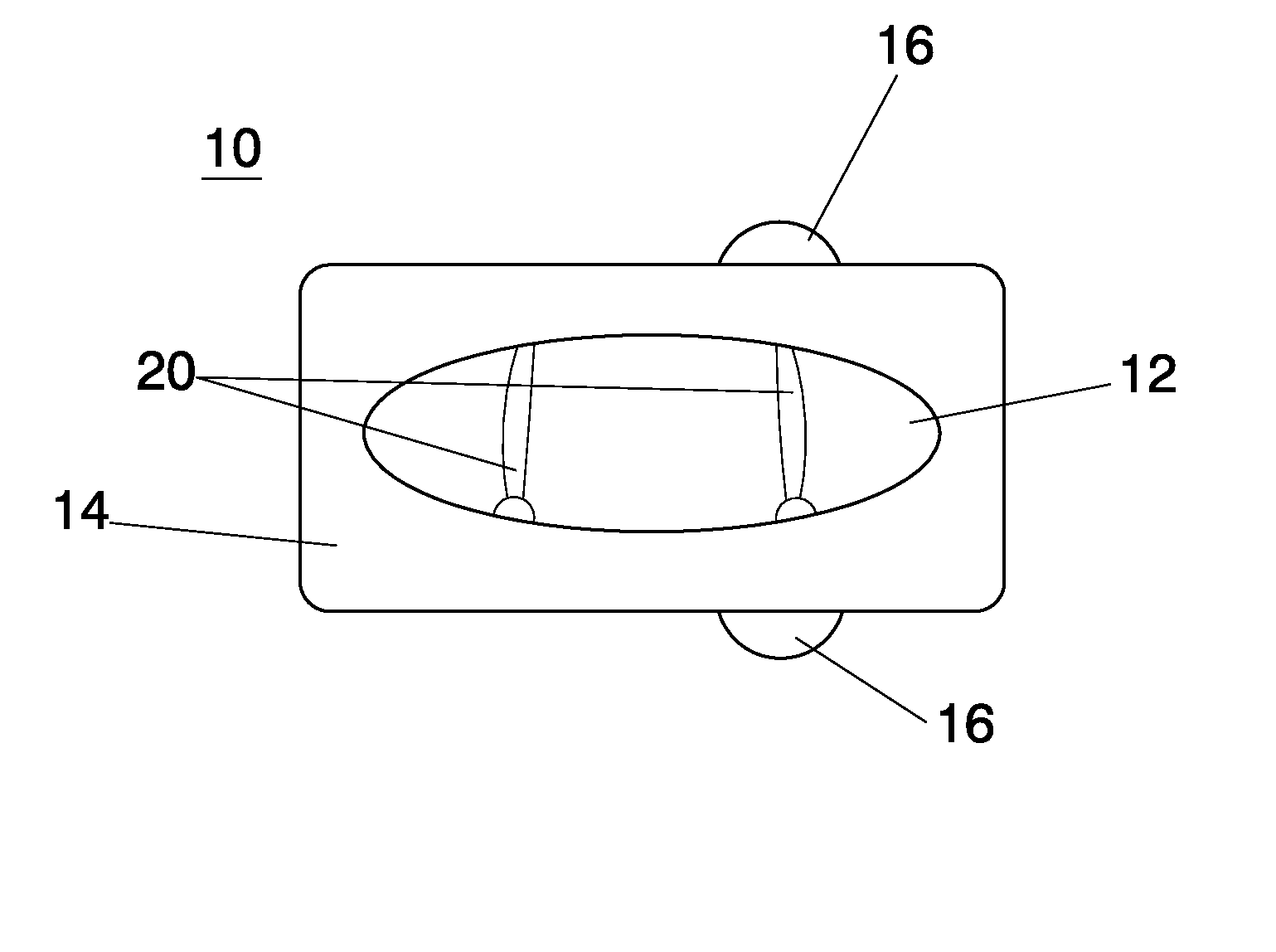
  • Figure 1
    Figure 1
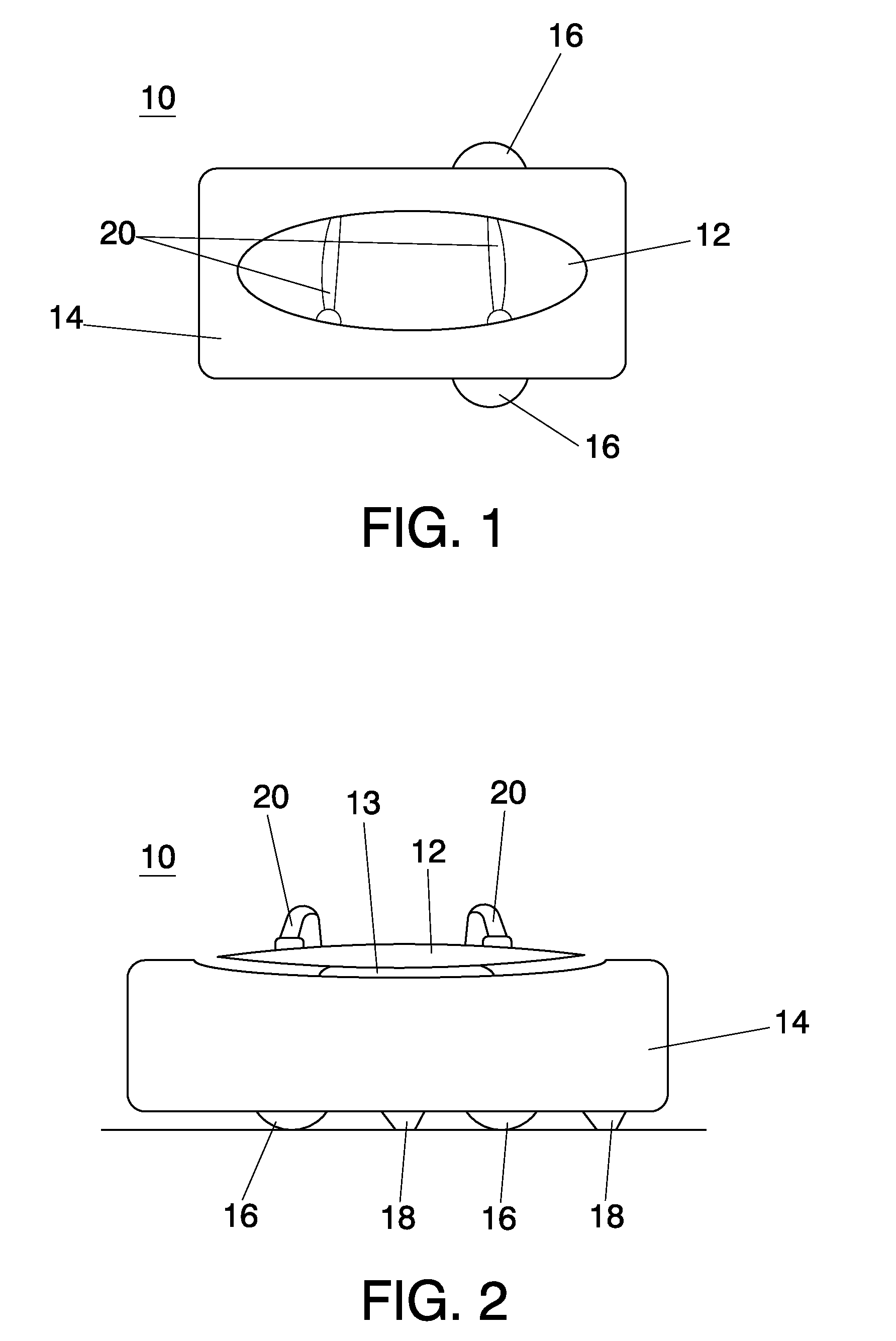
  • Figure 2
    Figure 2
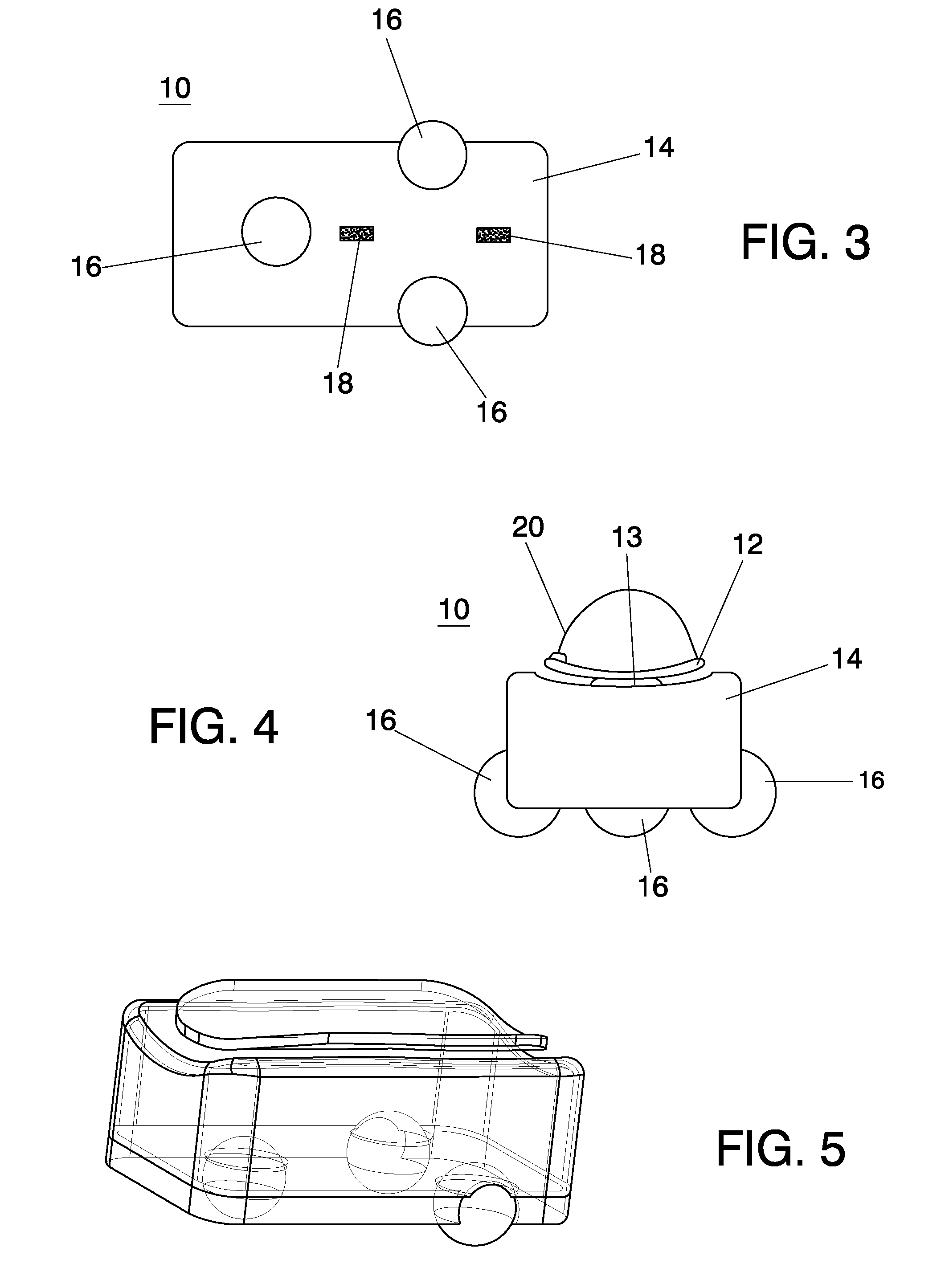
  • Figure 3
    Figure 3
Patent Text Reader

Abstract

The portable device for rehabilitating an impaired user having difficulties in executing simultaneous reaching and lifting tasks comprises an armrest whereto the forearm of the user can be fastened and mechanism for enabling the movement of the armrest on a surface. It furthermore comprises mechanism for monitoring the movement of the armrest and mechanism for sensing a force exercised by the arm of the user in an orthogonal direction to the surface. The device enables the user to conduct reaching movements in a large workspace having the forearm supported and fastened. The fact that the forearm is supported and fastened to the device allows for better control of the shoulder training movements, avoiding uncontrolled trajectories at the level of the elbow that are possible in case only a handle is grasped.
Need to check novelty before this filing date? Find Prior Art

Description

BACKGROUND OF THE INVENTION

[0001] 1. Technical Field

[0002] The present invention relates to a portable device for rehabilitating an impaired user having difficulties in executing simultaneous reaching and lifting tasks. The device is in particular suitable for use in rehabilitation and / or physical therapy programs for the treatment of neuro-vascular or musculoskeletal injuries or diseases of the upper limb.

[0003] 2. Description of Related Art

[0004] Hundreds of thousand of people are disabled each year because of upper limb motor impairments. Impairment can be due to neurological diseases such as stroke (see for example the ‘Heart disease and stroke statistics 2007’ published by the American Heart association and American stroke association), or can be due to musculoskeletal injuries. In both cases the disease can result in a decreased range of motion, muscular weakness, loss of speed and / or reduced coordination of the affected limb.

[0005] Physical therapy is known to be effective in redu...

Examples

Embodiment Construction

[0058]Referring now to FIGS. 1-5, an exemplary embodiment of the portable device 10 according to the invention will be described. The portable device, also referred to in this description as mobile unit or mobile robot, is composed of a device base 14, also referred to in this description as mobile platform with three spherical wheels 16, arranged at the vertexes of an equilateral triangle, that enable the displacement of the portable device. Alwayse or Omnitrack or similar commercial ball transfer devices may be used as passive spherical wheels. An armrest 12, whereto the forearm of the user can be fastened, is connected to the mobile platform. An optical tracking device is embedded into the mobile platform 14 so that the position and orientation of the device can be computed, while it moves.

[0059]The optical tracking device is composed of two optical mouse sensors 18. One of the two sensors is placed in the center of the mobile platform; the other one is placed at distance L from ...