
Dismantlable self-assembly structure
a self-assembly and dismantling technology, applied in the directions of packaging, transportation and packaging, containers, etc., can solve the problems of uneconomical recovery of pallets, difficult to sell new pallets to distant locations, and ensuing economic and environmental costs
- Summary
- Abstract
- Description
- Claims
- Application Information
AI Technical Summary
Benefits of technology
Problems solved by technology
Method used
Image

Examples
Embodiment Construction
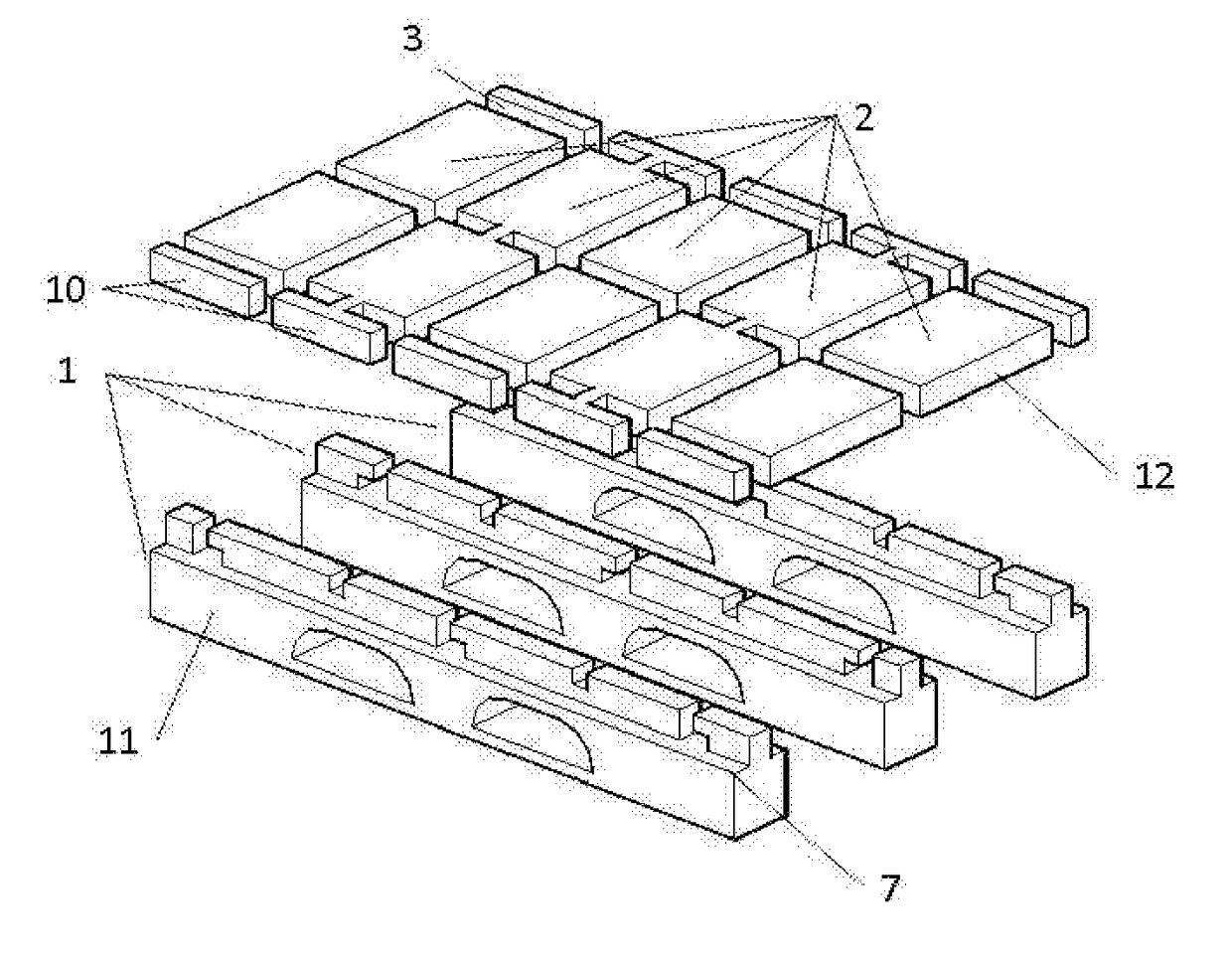
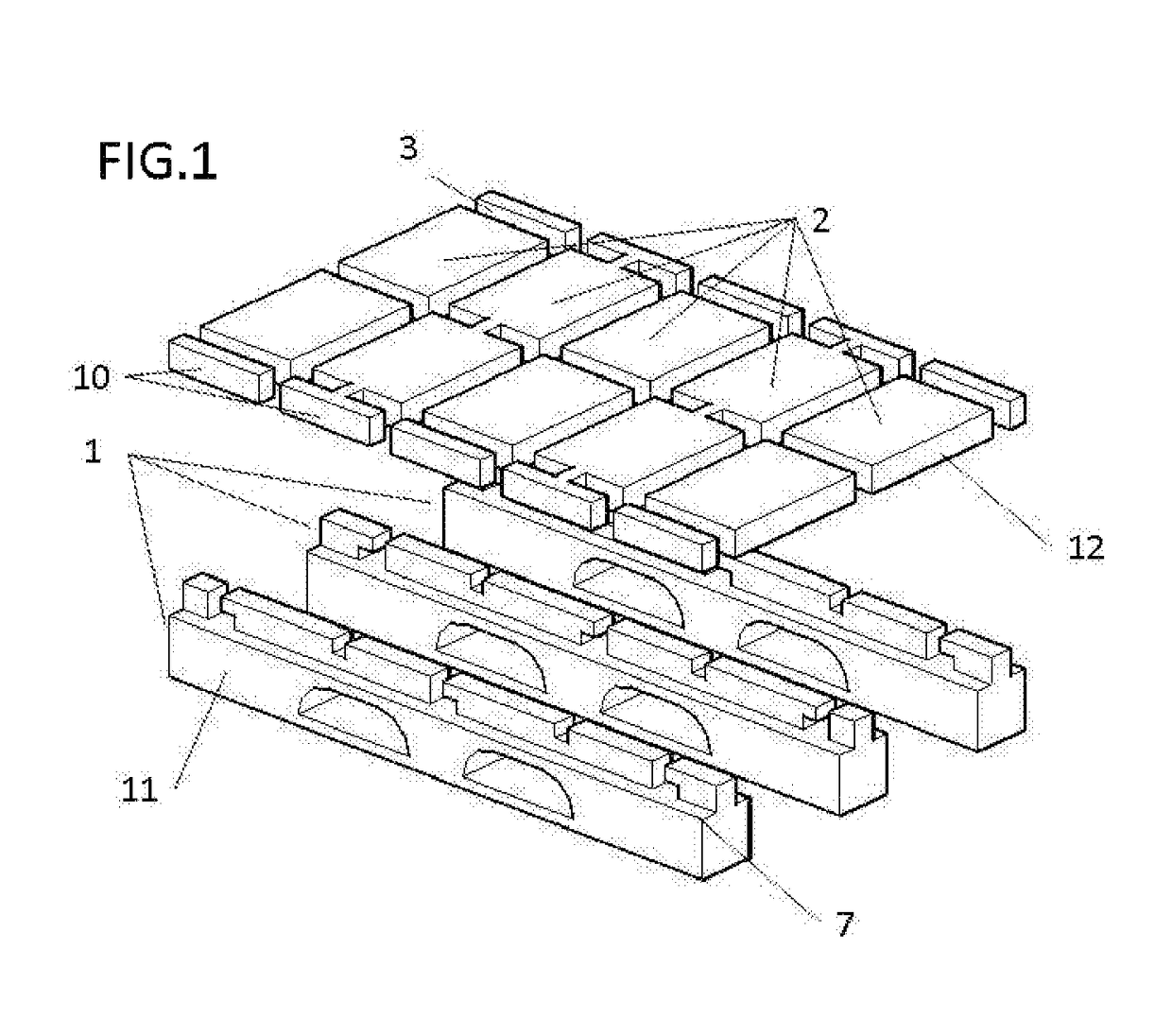
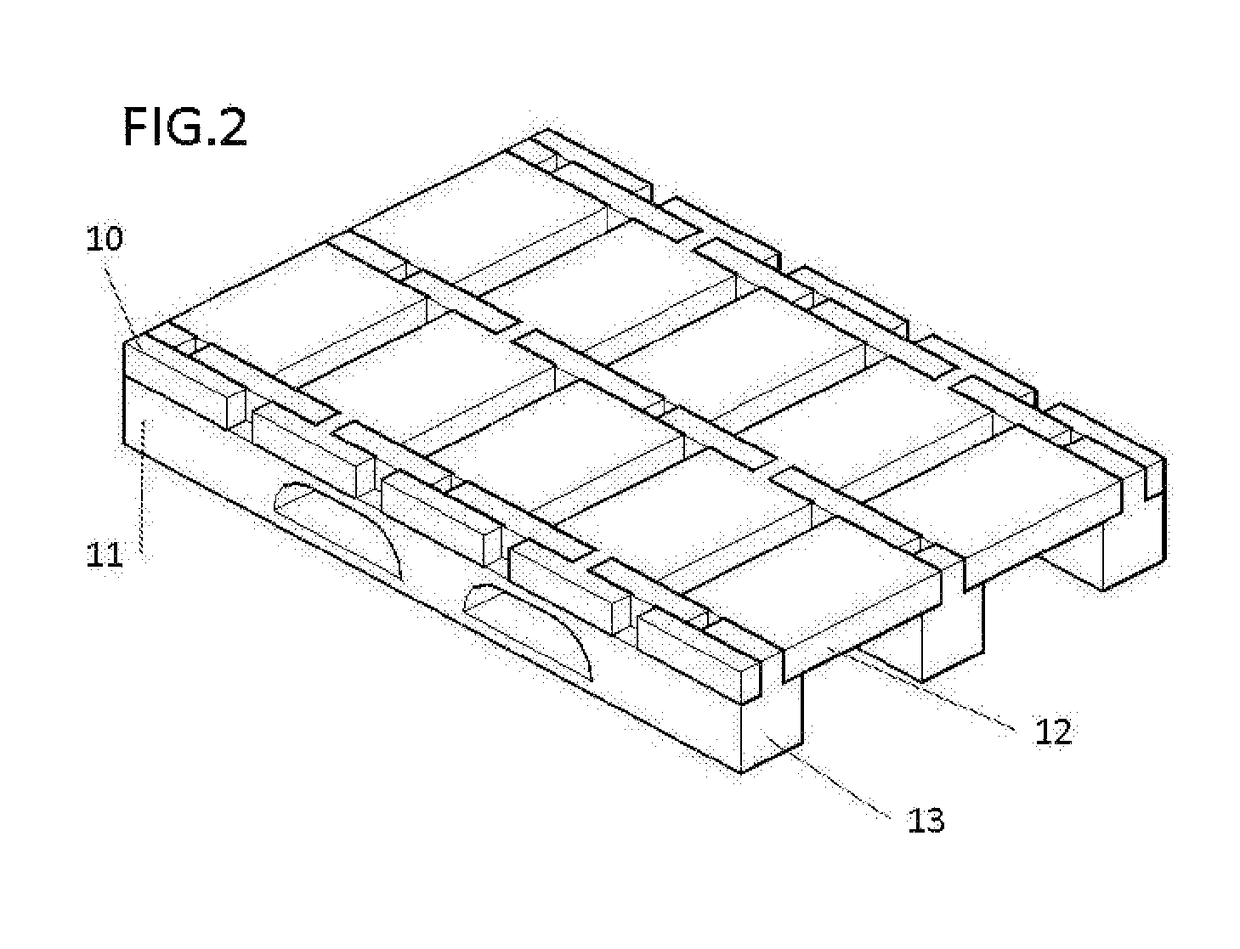
[0048]As indicated above, the invention relates to a dismantlable self-assembly structure applicable in several sectors, although the tests performed show that it is ideal for use in the transportation sector, specifically to make pallets; this example is used to explain an embodiment of the invention represented in FIGS. 1 and 2, which is not the only one possible.
[0049]The pallet according to the proposed embodiment comprises three longitudinal members (1) and five cross members (2).
[0050]Each one of the longitudinal members comprises an elongated parallelepiped body with the lower part thereof thicker than the upper part thereof, a recess (7) determining the difference in thickness between the lower and upper parts.
[0051]At the top part the longitudinal member has a number of slots (4) that prolong downward to form an “L”.
[0052]Said slots are suitable for inserting therein the cross members (2) at the narrowed area thereof.
[0053]To do so it is necessary to arrange the longitudina...
PUM
 Login to View More
 Abstract
Description
Claims
Application Information
 Login to View More