Check patentability & draft patents in minutes with Patsnap Eureka AI!

Trolling assembly

Active Publication Date: 2017-09-12
HERNANDEZ JOHN M +1
View PDF81 Cites 1 Cited by
  • Summary
  • Abstract
  • Description
  • Claims
  • Application Information

AI Technical Summary

Benefits of technology

The present disclosure is about a trolling assembly for fishing that protects the fishing line from water-borne debris while trolling in a body of water from a boat. The trolling assembly includes a first positioning assembly that adjusts the fishing line's position relative to the boat, and a shield assembly that protects the fishing line while trolling and prevents interference from water-borne debris. With this trolling assembly, it is possible to troll at higher speeds, such as 10 to 20 knots, without using heavy weights or interfering with the movement of the fishing line or the action of the bait or lure. This allows for the use of standard, lighter weight monofilament fishing line and the attainment of effective fishing results.

Problems solved by technology

There are, however, some significant drawbacks to trolling.
A common problem encountered while trolling is that all fishable bodies of water contain some form of plant matter, such as algae, leaves, weeds, as well as other water-borne debris.
While trolling, regardless of placement of the fishing line relative to the boat, these water-borne materials can become wrapped around and entangled with the portion of the fishing line disposed near the surface of the water.
This in turn impedes the efficiency of the trolling, and may reduce the likelihood of successfully landing a fish that has taken the bait or lure.
This process may be further complicated depending on the type and number of fishing lines deployed at the same time.
And since entanglement is often a persistent and frequent occurrence, it can significantly reduce the amount of time actually spent trolling, which detracts from the enjoyment of the fishing experience when a person or persons are trolling for sport or recreation.
Another issue presented while trolling is that as a boat moves through the water, it creates a wake behind it, which increases in size proportional to the speed of the boat.
This turbulence often results in erratic, and often undesirable, movement of the lure or bait through the water, which may actually deter a potential game fish from striking the same.
Although this does diminish the magnitude of the wake and the turbulence it creates, this does not always, in and of itself, generate a corresponding increase in strikes, as this tactic may result in the bait or lure moving too slowly and / or evenly.
Slower speeds do not, however, resolve the issue of water-borne debris engaging and becoming entangled in the fishing line during the trolling process.
Furthermore, the use of a downrigger fails to resolve the issue of water-borne debris becoming entangled in at least the portion of the fishing line near the surface, where the majority of the water-borne debris of concern is found.
While outriggers are effective in positioning a fishing line outside of the wake zone and near the surface of the body of water, if multiple lines are being trolled simultaneously from the same side of the boat, which is a common practice, the lines are highly susceptible to becoming entangled while trolling.
In addition, as with the foregoing strategies, the use of outriggers does not resolve the issue of water-borne debris becoming entangled in the fishing line while trolling.
The steel “guitar” leader is required because standard monofilament fishing line will stretch and contract excessively under the weight of the “cigar” at the speed at which it is being trolled, such that is not suitable for this type of application.
While the “cigar” weight, and the weight of the “guitar” leader itself help maintain the bait or lure below the surface of the water while trolling at higher speeds, they necessarily interfere with the normal action of the bait or lure, as well as the operation of the fishing rod and reel.
Trolling at such higher speeds without negatively impacting the action of the bait or lure, or interfering with the normal operation of the rod and reel itself for the entirety of the time one is landing a fish, is not possible utilizing heretofore known trolling mechanisms which require heavy weights and / or heavy steel long leaders to maintain the bait or lure in position below the surface of the water.


Method used

the structure of the environmentally friendly knitted fabric provided by the present invention; figure 2 Flow chart of the yarn wrapping machine for environmentally friendly knitted fabrics and storage devices; image 3 Is the parameter map of the yarn covering machine
View more

Image

Smart Image Click on the blue labels to locate them in the text.
Viewing Examples
Smart Image
  • Trolling assembly
  • Trolling assembly
  • Trolling assembly

Examples

Experimental program
Comparison scheme
Effect test

Embodiment Construction

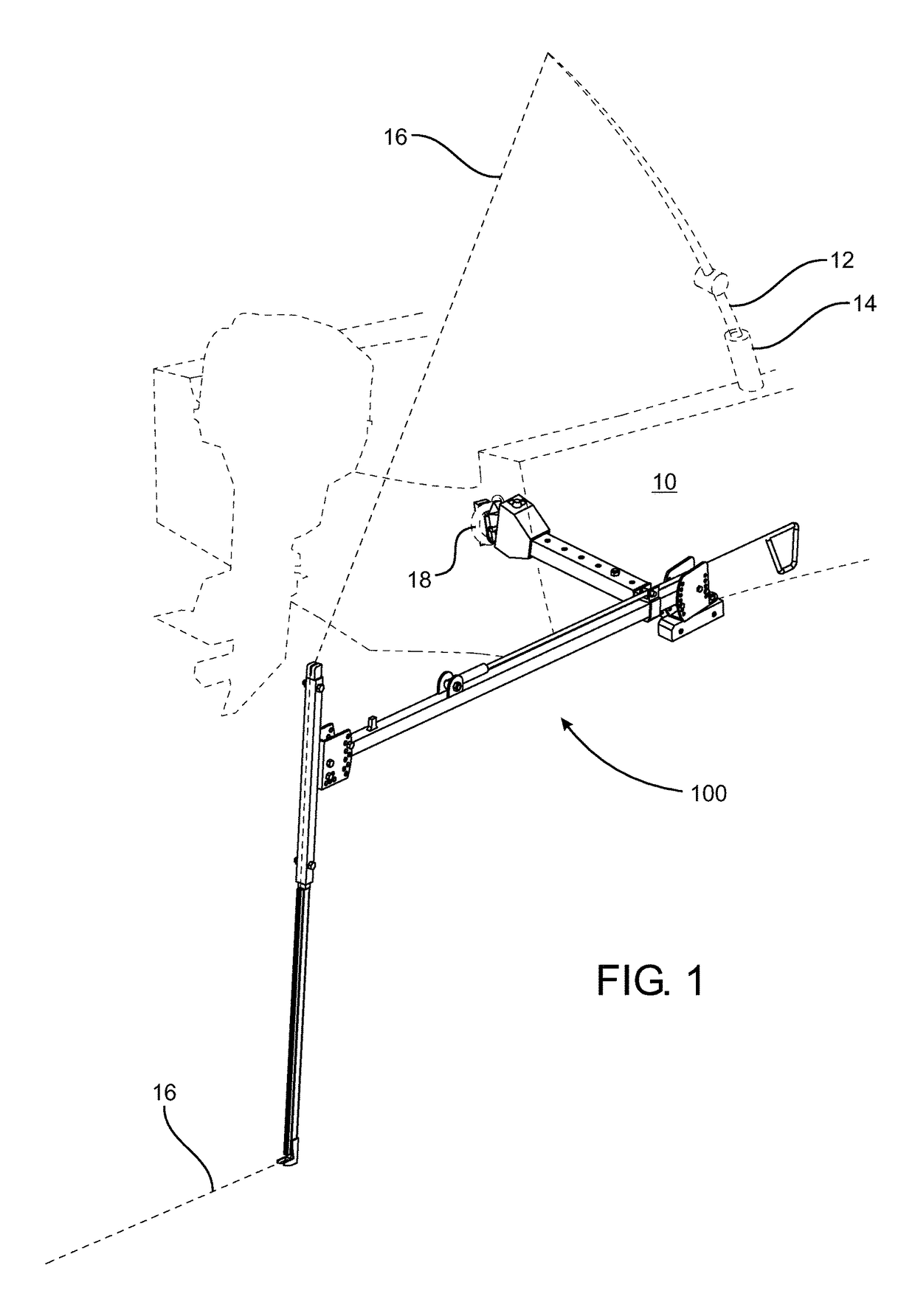
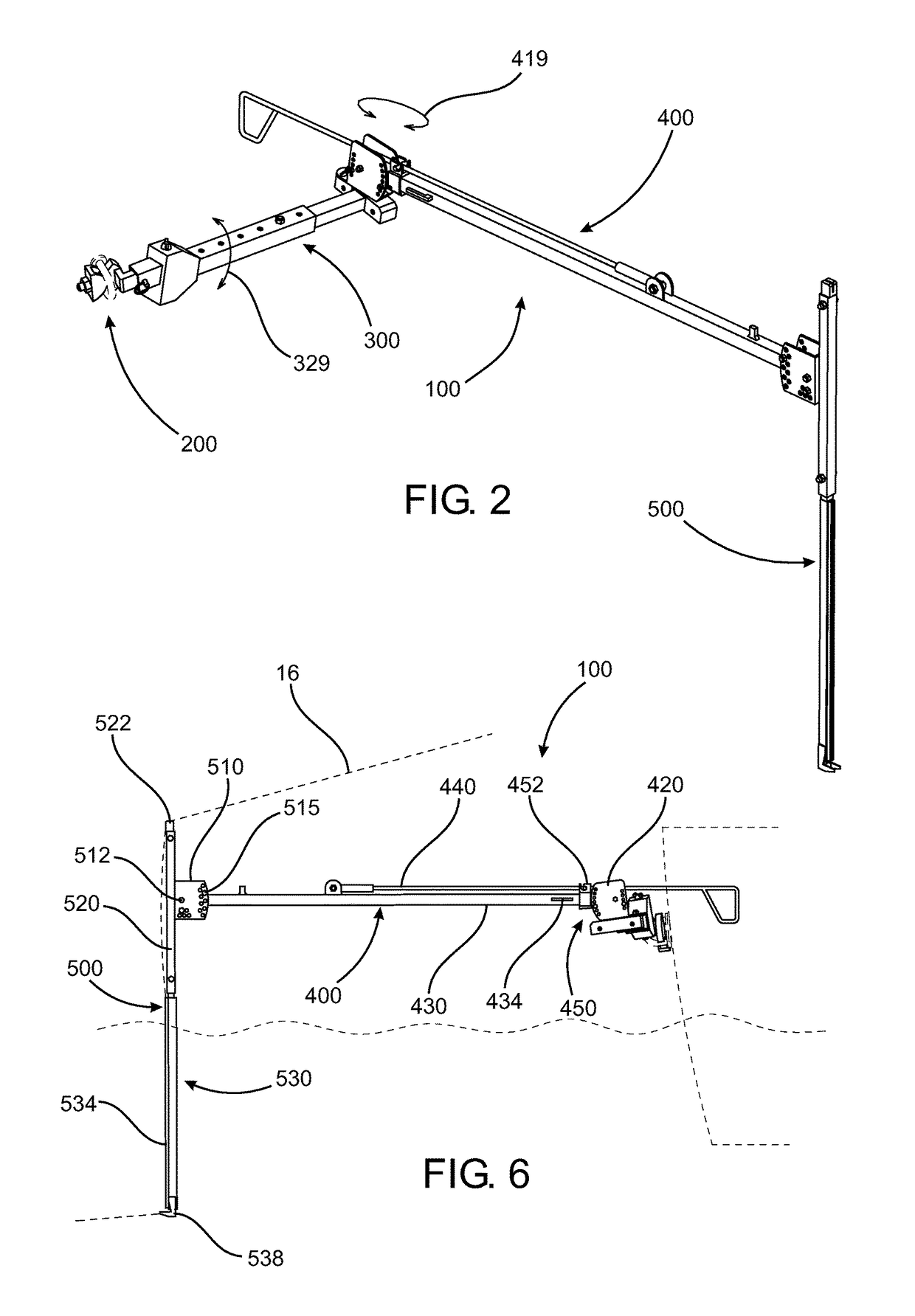
[0033]As stated above, the present disclosure is directed to a trolling assembly, generally indicated as 100, structured to releasably retain at least a portion of a fishing line below the surface of a body of water and protect the submerged portion of the fishing line from water-borne debris while trolling a lure or bait.

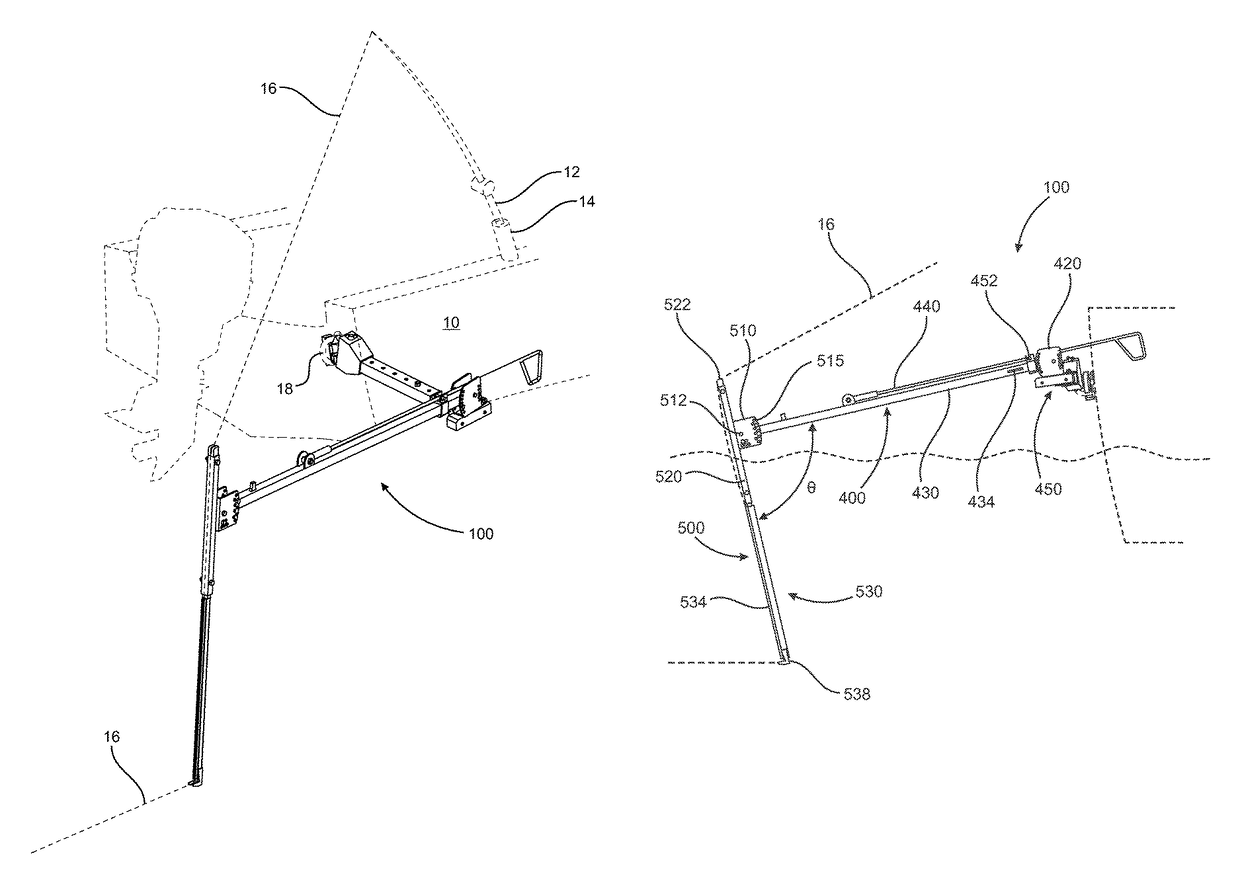
[0034]FIG. 1 depicts one embodiment of a trolling assembly 100 in accordance with the present disclosure disposed in an operative position in relation to a boat 10. The trolling assembly 100 is structured to guide at least a portion of a fishing line 16, such as may be fed out from a fishing rod 12, into the water at a preselected position relative to the course of the boat 10. The trolling assembly 100 is further structured to releasably retain the portion of the fishing line 16 at a predetermined depth beneath the surface of the water while trolling. The fishing rod 12 may be hand held by a fisherman inside the boat 10 or it may be supported within a rod holder 1...

the structure of the environmentally friendly knitted fabric provided by the present invention; figure 2 Flow chart of the yarn wrapping machine for environmentally friendly knitted fabrics and storage devices; image 3 Is the parameter map of the yarn covering machine
Login to View More

PUM

No PUM Login to View More

Abstract

A trolling assembly structured to protect at least a portion of a fishing line from water-borne debris while trolling in a body of water from a boat includes a first positioning assembly attached to the boat and being adjustable to facilitate positioning the portion of the fishing line in a first predetermined spaced relation to the boat, and a second positioning assembly interconnected to the first positioning assembly and being positionable to facilitate positioning the portion of the fishing line in a second predetermined spaced relation to the boat. The trolling assembly also includes a shield assembly, interconnected to the second positioning assembly, which is structured to releasably retain the portion of the fishing line below a surface of the body of water while trolling, and to protect at least the portion of the fishing line from water-borne debris while trolling.

Description

BACKGROUND[0001]The present disclosure is directed to a trolling assembly structured to increase trolling efficiency. More in particular, the present disclosure is directed to a trolling assembly mounted to a boat or other aquatic craft and selectively positionable in relation thereto. Furthermore, the trolling assembly in accordance with the present disclosure is structured to releasably retain and protect a fishing line from water-borne debris, such as seaweed, while trolling, while allowing the line to freely release from the assembly upon the strike of a fish. The present trolling assembly allows for prolonged trolling by eliminating the need to stop and remove debris which typically becomes entangled in the fishing line while trolling a bait or lure in open water.DESCRIPTION OF THE RELATED ART[0002]Trolling is a method of fishing in which a bait or lure is drawn through the water at a relatively high speed, typically, off the back or sides of a moving boat. It is a popular tech...

Claims

the structure of the environmentally friendly knitted fabric provided by the present invention; figure 2 Flow chart of the yarn wrapping machine for environmentally friendly knitted fabrics and storage devices; image 3 Is the parameter map of the yarn covering machine
Login to View More

Application Information

Patent Timeline
no application Login to View More
IPC IPC(8): A01K91/08A01K91/06A01K91/053
CPCA01K91/08A01K91/06A01K91/053
Inventor HERNANDEZ, JOHN M.MARTINEZ, ADOLFO
Owner HERNANDEZ JOHN M
Features
  • R&D
  • Intellectual Property
  • Life Sciences
  • Materials
  • Tech Scout
Why Patsnap Eureka
  • Unparalleled Data Quality
  • Higher Quality Content
  • 60% Fewer Hallucinations
Social media
Patsnap Eureka Blog
Learn More