Equal channel deformation mould for preparing block body ultrafine grain metal

A technology of equal-channel deformation and ultra-fine grain, which is applied in the direction of metal extrusion dies, etc., to achieve the effect of improving load bearing capacity and improving safety

CN101147927AActive Publication Date: 2008-03-26溧阳常大技术转移中心有限公司
0 Cites 5 Cited by

Patent Information

Authority / Receiving Office
CN · China
Current Assignee / Owner
Publication Date
2008-03-26

Smart Images

  • Figure 1
    Figure 1
  • Figure 2
    Figure 2
  • Figure 3
    Figure 3
Patent Text Reader

Abstract

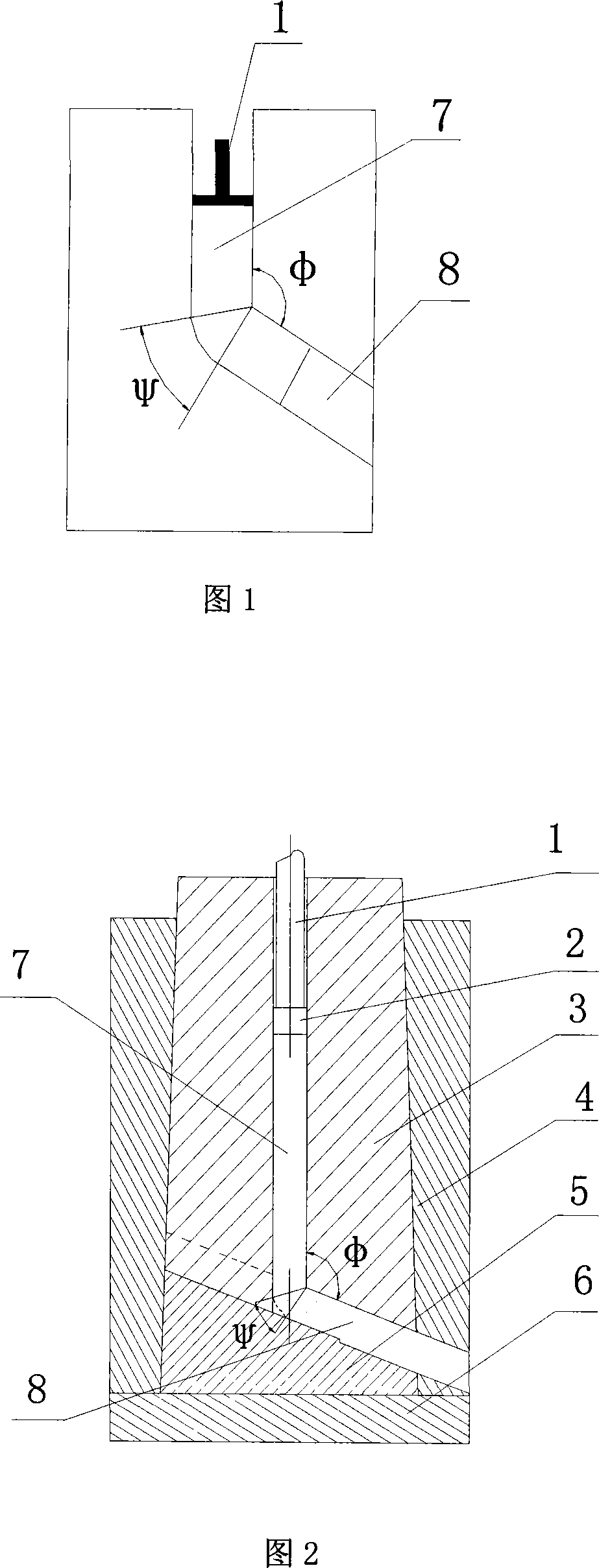
The present invention discloses an equal-channel deformation mould for preparing block-body ultra fine grain metal. Said equal-channel deformation mould includes the following several portions: pressure rod, upper mould, fastening sleeve, lower mould and base seat, in the upper mould interior and lower mould interior are respectively cut two crossed equal-diameter channels. Besides, said invention also provides the concrete structure of above-mentioned every portion, and also provides the concrete application method of said equal-channel deformation mould.
Need to check novelty before this filing date? Find Prior Art

Description

technical field

[0001] The invention relates to a mold for metal plastic processing, in particular to an equal-channel deformation mold for preparing bulk ultrafine-grained metal. Background technique

[0002] The bulk ultrafine-grained metals of 0.1-1 μm have a series of excellent physical and mechanical properties due to the small grain size and unique defect structure such as high-angle grain boundaries. The preparation of bulk ultrafine-grained materials by strong plastic deformation has attracted great attention. Traditional pressure processing techniques such as rolling, extrusion, drawing, etc. can refine grains, but the shape and size of the workpiece after processing often limit its application; grain refinement to ultra-fine grain usually requires a true strain greater than 4, Therefore, traditional plastic processing technology is difficult to meet these requirements. More than 20 years ago, when the former Soviet scholar Segal was studying the deformation textu...

Examples

Embodiment 1

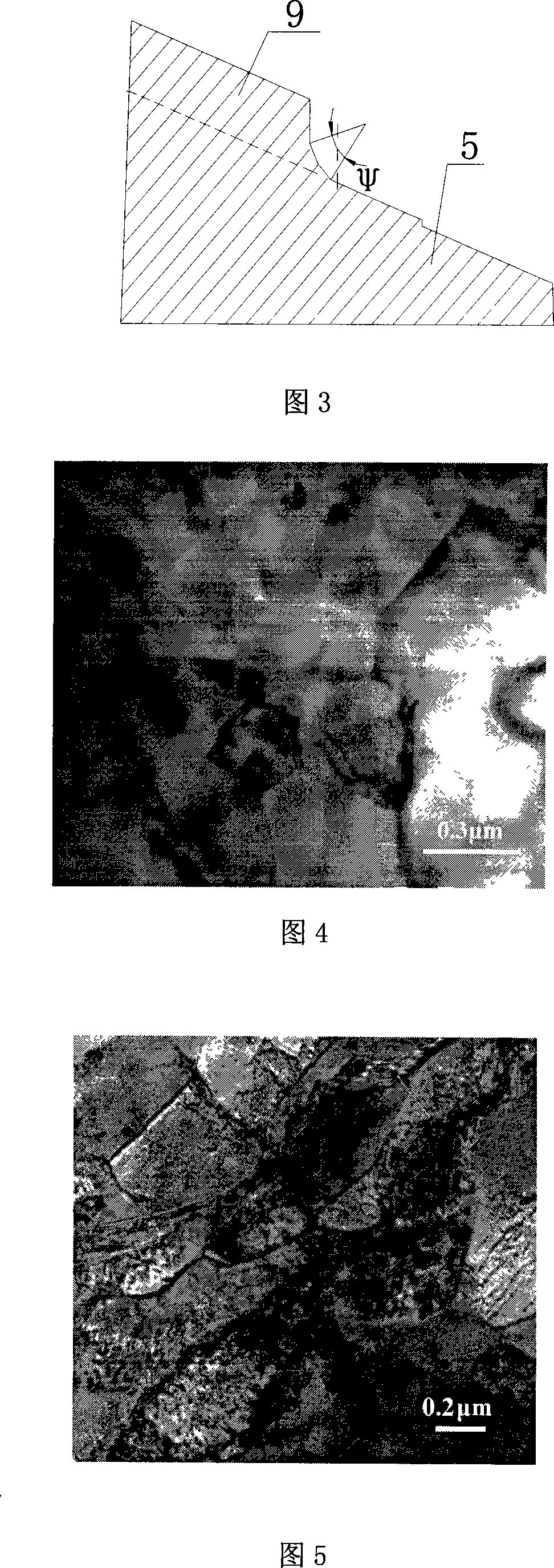
[0027] Embodiment 1: The deformation material is 99.999% high-purity aluminum, a square material of 12mm×12mm×80mm, which is annealed in a vacuum furnace at 400° C. and kept for 2 hours. The inner angle of the mold is 110°, and the outer angle of the mold is 0°. It is deformed at room temperature, and the pressing speed is about 0.15mm / s. Figure 4 is a transmission electron microscope photo after 12 passes of deformation.

Embodiment 2

[0028] Embodiment 2: The deformation material is oxygen-free copper (99.98%), square material of 12mm * 12mm * 80mm, annealed in a vacuum furnace at 600°C, kept for 1 hour, the inner angle of the mold is 90°, and the outer angle of the mold is 22°. Deformation at room temperature, the pressing speed is about 1.0mm / s. Fig. 5 is a transmission electron microscope photo after 12 passes of deformation.