
Preparation method of environment-friendly polymeric isocyanate glue
A polyisocyanate glue, polyisocyanate technology, applied in the direction of polyurea/polyurethane adhesives, adhesives, adhesive types, etc., can solve the problems of water and soil and air pollution, working environment hazards, etc., and achieve stable performance, Versatile and strong bond strength
- Summary
- Abstract
- Description
- Claims
- Application Information
AI Technical Summary
Problems solved by technology
Method used
Image

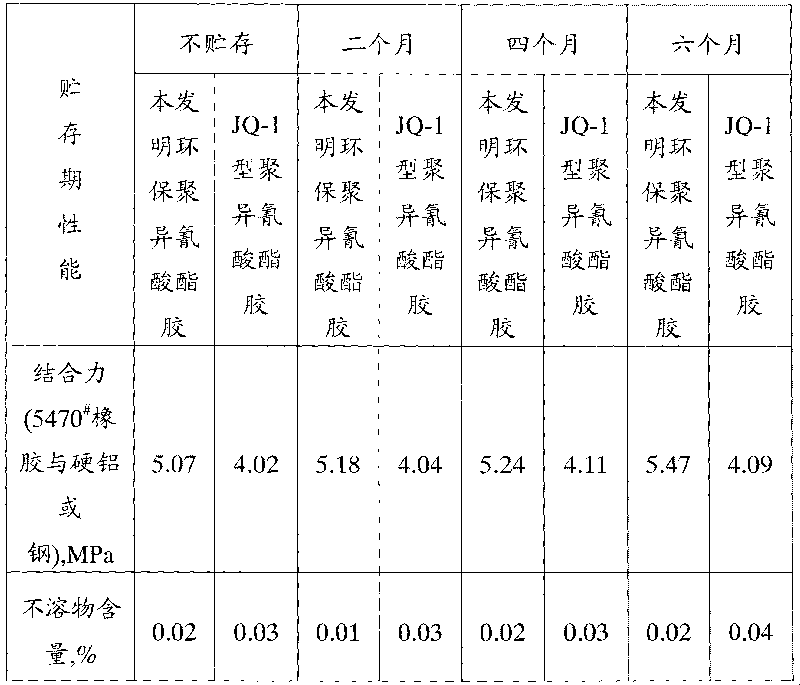
Examples
Embodiment Construction
[0015] 1), photochemical reaction
[0016] In the low-temperature reaction kettle, dissolve triaminotriphenylmethane in chlorobenzene so that the weight percentage of triaminotriphenylmethane in the mixed solution is 21-23%, and wait until the temperature of the mixed solution drops to -5~-10°C When the temperature is high, phosgene is introduced to carry out low-temperature photochemical reaction; when the specific gravity of the low-temperature photochemical mixture reaches 1.2, it is transferred to a high-temperature reactor and the temperature is raised to 120-125°C, and then phosgene is introduced to carry out high-temperature photochemical reaction; Carry out high-temperature degassing when the weight content of polyisocyanate produced is greater than 10%;
[0017] 2), high temperature catch air
[0018] Control the high-temperature reaction liquid at 125-130°C, and use dry compressed air to drive out the excess phosgene and hydrogen chloride gas generated in the liquid...
PUM
 Login to View More
 Abstract
Description
Claims
Application Information
 Login to View More