Chitin fiber reinforced collagen base bone tissue engineering scaffold with compounded human mesenchymal stem cells and preparation method

A technology of bone tissue engineering and bone marrow mesenchyme, applied in medical science, prosthesis, etc., can solve problems such as insufficient strength, reduced strength, and decreased pH value, and achieve good mechanical properties, good cell compatibility, and promote repair Effect

CN102989041AInactive Publication Date: 2013-03-27BEIHANG UNIV
2 Cites 7 Cited by

Patent Information

Authority / Receiving Office
CN · China
Patent Type
Applications(China)
Current Assignee / Owner
Publication Date
2013-03-27
Estimated Expiration
Not applicable · inactive patent

Smart Images

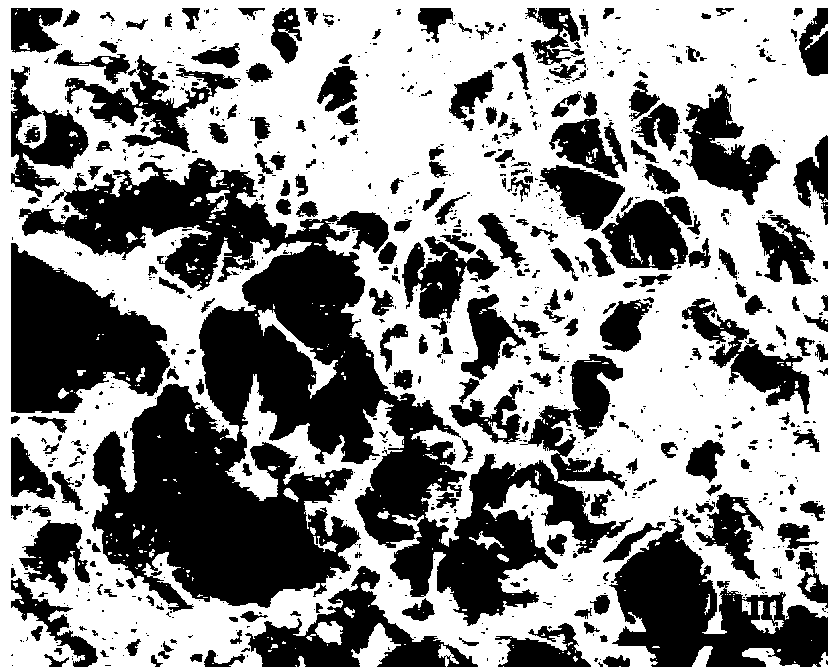
  • Figure 1
    Figure 1
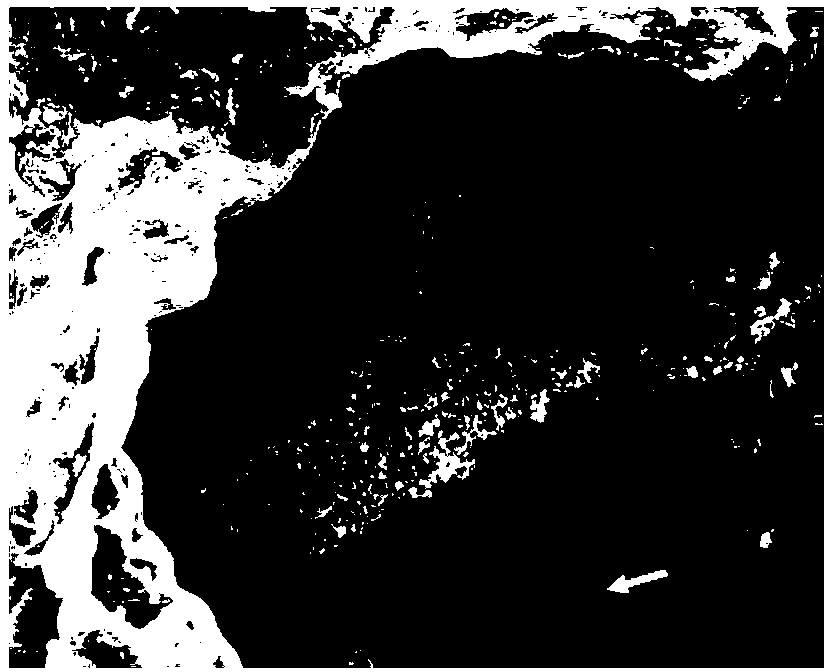
  • Figure 2
    Figure 2
Patent Text Reader

Abstract

The invention discloses a bone tissue engineering scaffold which compounds bone-like tissue engineering materials with human mesenchymal stem cells and a preparation method of the bone tissue engineering scaffold, and belongs to the technical field of tissue engineering. The bone tissue engineering material is prepared by compounding mineralization collagen (MC), polylactic acid (PLA) and natural chitin woven high-strength fiber (CHF); because of the adding of the MC, the material is good in mechanics integration, and the components of the material are close to natural bones; due to the adding of the PLA, the material is good in molding property; by adopting the CHF, the material is enhanced, and the acid degradation product of the PLA is neutralized by the degradation product; and the bone tissue engineering material can be degraded and has a three-dimensional porous structure. By adopting the scaffold formed by compounding the bone tissue engineering material with the human mesenchymal stem cells, people go through goat tibia bone defect with the bone spaces of 25mm after eight weeks, the bone defect is completely recovered after the implantation of the scaffold, and the recovery effect and the self-bone have no obvious difference; and therefore, the bone tissue engineering scaffold is hopefully applied to clinic.
Need to check novelty before this filing date? Find Prior Art

Description

technical field

[0001] The invention belongs to the technical field of tissue engineering. More precisely, the invention relates to a chitin fiber-reinforced collagen-based bone tissue engineering scaffold for bone marrow mesenchymal stem cells and a preparation method for repairing bone defects. Background technique

[0002] Bone tissue is the largest organ in the human body and is also the most prone to defects. Every year, millions of patients with bone tissue damage need surgical treatment. Bone grafting is the traditional method for repairing bone defects. Autologous bone grafting is currently the most commonly used therapy, but the limited availability of donors limits its application and increases the suffering of patients. Allograft bone has antigenicity, especially when implanted in a large amount, it will often cause severe immune rejection. Bone tissue engineering can achieve bone regeneration and provide new methods and approaches for the repair of clinical bo...

Examples

Embodiment Construction

[0029] The invention provides a method for preparing a three-dimensional porous bone tissue engineering scaffold compounded with human bone marrow mesenchymal stem cells in order to meet the demand for bone tissue defect repair. The bone tissue engineering material mainly contains mineralized collagen MC, high-molecular polymer polylactic acid PLA with good biocompatibility, and high-strength fiber CHF woven from natural chitin. They are compounded by combining physical mixing and ultrasonic dispersion technology.

[0030] After many repeated experiments, it is determined that the suitable mass content ratio of the chitin fiber CHF and polylactic acid PLA is 0.25-0.3.

[0031] After repeated experiments, it is determined that the appropriate length of the chitin fiber CHF is 1.4-1.6mm.

[0032] The bone tissue engineering material adopts mold forming and subsequent freeze-drying to obtain a three-dimensional porous structure.

[0033] The human mesenchymal stem cells are hBM...