
Method for preparing porcine circovirus 2 open reading frame 2 (ORF2) protein
A circovirus and ORF2 technology, which is applied in the field of preparation of porcine type II circovirus ORF2 protein, can solve the problems of high price, high expression cost, lack of production inspection methods and standards, etc., so as to reduce production costs and avoid protein denaturation. Effect
- Summary
- Abstract
- Description
- Claims
- Application Information
AI Technical Summary
Problems solved by technology
Method used
Image


Examples
Embodiment Construction
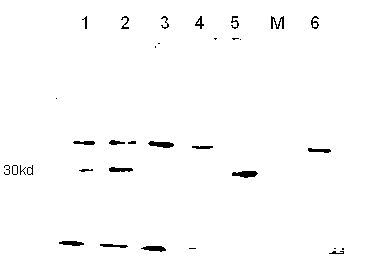
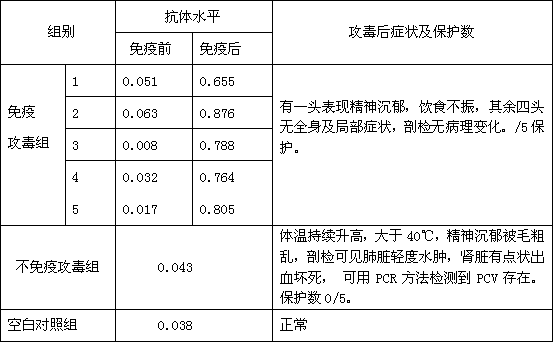
[0022] see figure 1 and figure 2 Shown, the preparation method of a kind of porcine type II circovirus ORF2 protein of the present invention comprises the following steps:
[0023] 1. Sequence Synthesis
[0024] Through sequence alignment, the nucleotide sequence is changed under the premise of ensuring that the encoded amino acids are the same, the rare codons in the sequence are replaced with E. coli preferred codons, and EcoR I and Not I restrictions are added to the two ends of the sequence respectively Restriction site, synthesize cap gene, connect to PES vector, digest according to the set restriction endonuclease, clone the target fragment into pMD18-T plasmid vector, transform competent DH5a cells, pick positive colonies , A small amount of plasmid was extracted with OMEGA kit, and the positive plasmid was identified by enzyme digestion.
[0025] 2. Construction and identification of prokaryotic expression vector
[0026] The plasmid pES-Cap was digested by EcoR ...
PUM
 Login to View More
 Abstract
Description
Claims
Application Information
 Login to View More