
Method for SPEED rapid magnetic resonance imaging based on wavelet domain sparse representation
A technology of magnetic resonance imaging and sparse representation, which is applied in the fields of measuring magnetic variables, medical science, and measuring devices. It can solve undisclosed problems and achieve the effects of easy integration, avoiding extreme value states, and fast reconstruction speed.
- Summary
- Abstract
- Description
- Claims
- Application Information
AI Technical Summary
Problems solved by technology
Method used
Image

Examples
Embodiment Construction
[0050] The present invention will be further described below in conjunction with accompanying drawing.
[0051] The invention mainly includes two major steps: regular under-sampling data collection, and SPEED image reconstruction based on sparse representation of wavelet domain data.
[0052] Regular under-sampling data acquisition includes two steps: regular under-sampling of k-space and full-sampling in the central area of k-space.
[0053] 1-1. Regular undersampling of k-space
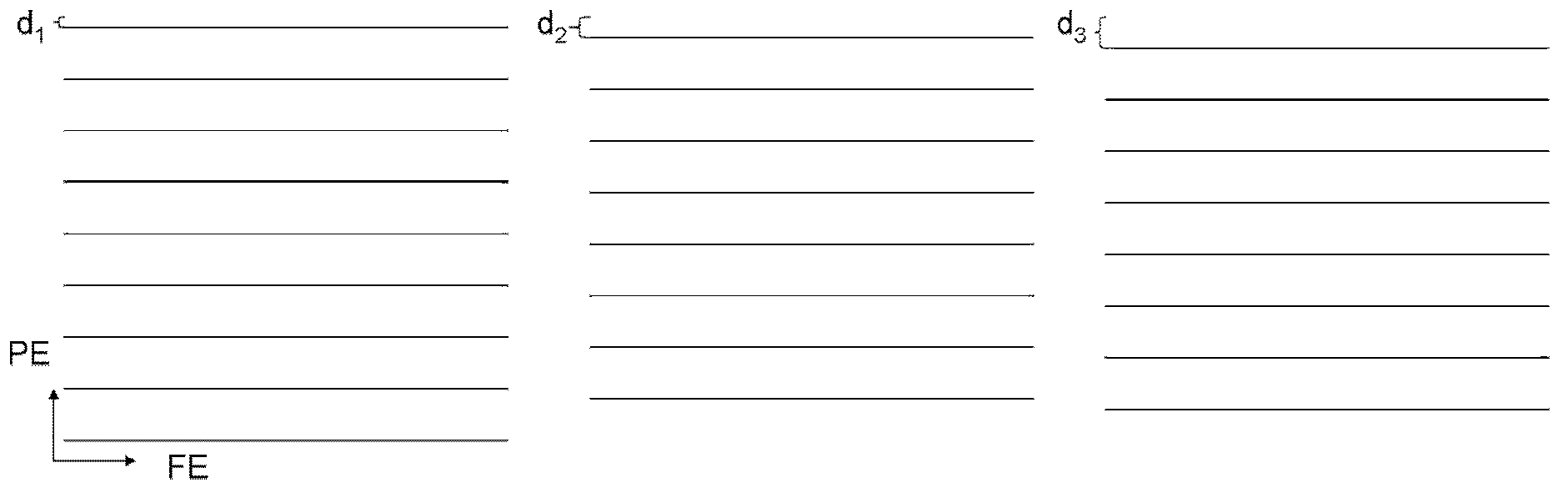
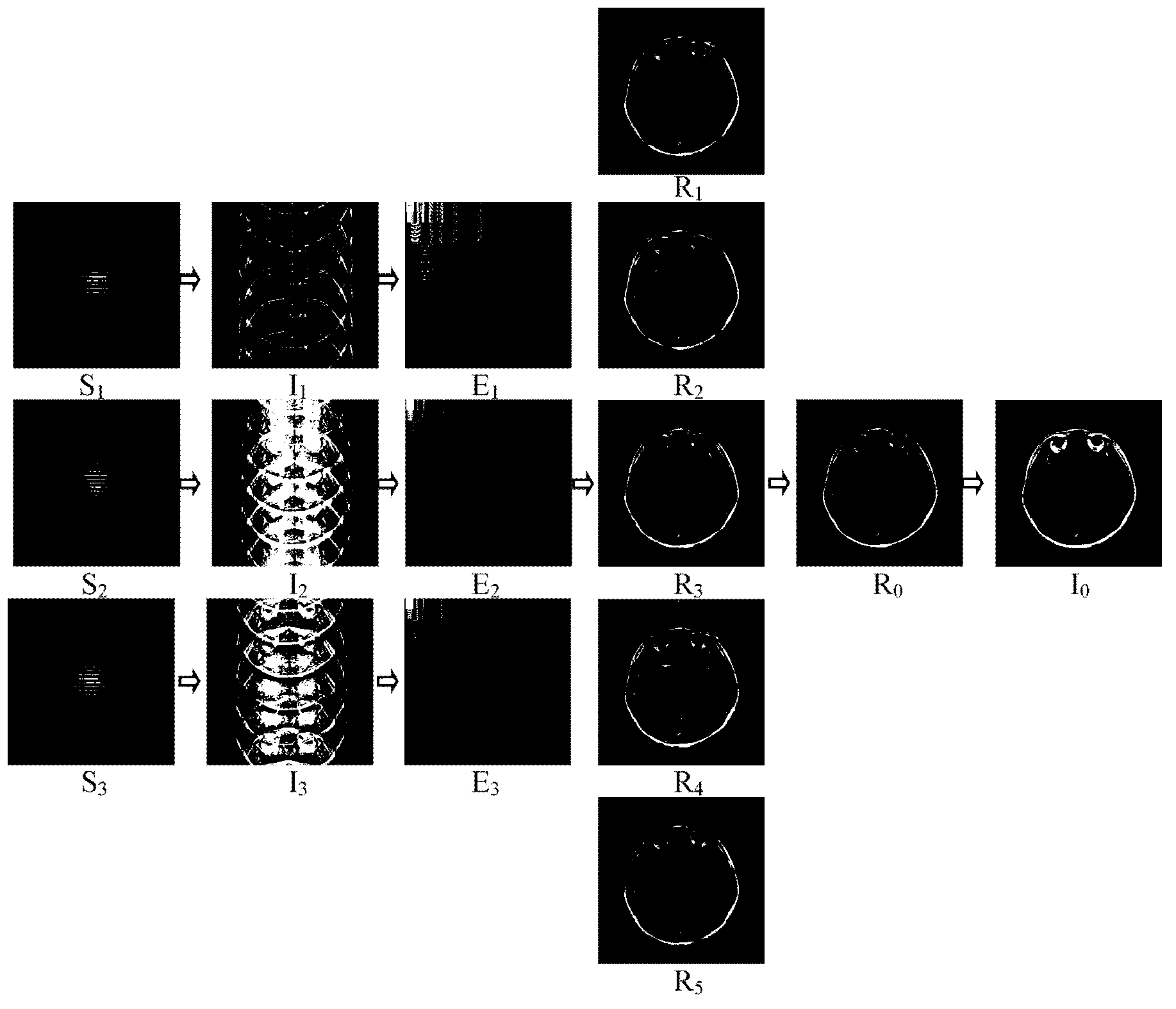
[0054] In the phase encoding PE direction of k-space, a row of k-space data is collected every N rows, and a total of three groups are collected (such as figure 1 shown), and three sets of undersampled k-space data are obtained S 1 , S 2 with S 3 (Such as figure 2 shown). use d 1 , d 2 , d 3 Indicates the offset of each group of undersampled data in the PE direction, and the sampling method is N ( d 1 , d 2 , d 3 )express.
[0055] 1-2. Full sampling in the central area ...
PUM
 Login to View More
 Abstract
Description
Claims
Application Information
 Login to View More