Synthesis process of self-sharpening resin diamond
A synthesis process and diamond technology, applied in the field of self-sharpening resin diamond synthesis process, can solve the problems of few single crystal abrasive grain cutting edges, unsatisfactory use effect, affecting the sharpness of grinding, etc., and achieve rough surface and self-sharpening. Good, low cost effect
- Summary
- Abstract
- Description
- Claims
- Application Information
AI Technical Summary
Problems solved by technology
Method used
Image

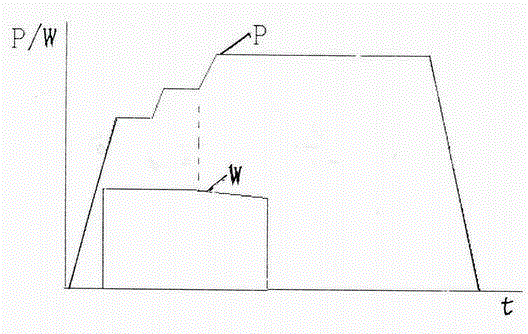
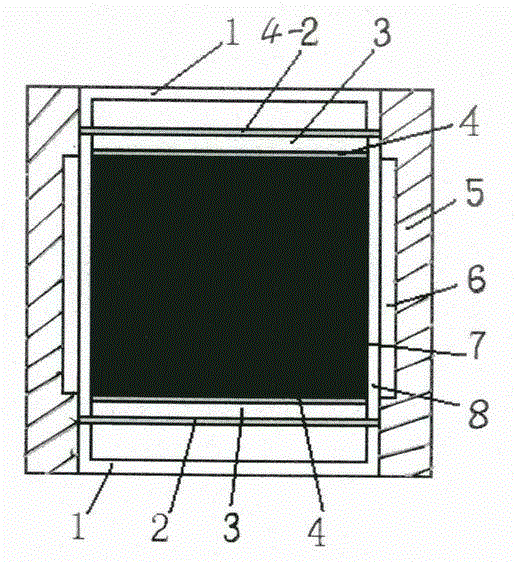
Examples
Embodiment 1
[0018] A self-sharpening resin diamond synthesis process is characterized in that it comprises the following main steps:
[0019] A. Fully mix 200-mesh graphite powder and nickel-based alloy catalyst powder at a weight ratio of 7:3. The components of the nickel-based alloy catalyst powder are recorded by weight ratio: Mn: 20%, Fe: 2%, Cr: 0.07%, Co: 0.001%, dispersant: 1%, and the balance is Ni.
[0020] B. Put the mixture in step A into a three-dimensional mixer and mix for 10 hours. After isostatic pressing, crush it to 50 mesh or finer. Do vacuum deoxidation at 800°C in a vacuum furnace for 60 minutes, and cool naturally to At room temperature, a mixed material was obtained.
[0021] C. Fill the mixed material in step B into the mold, and use a four-column press to press it into a columnar composite rod. The size of the composite rod is φ34×33mm, and the density of the composite rod is 2.1g / cm 3 .
[0022] D. Assemble the synthetic rod of step C with pyrophyllite, conduc...
Embodiment 2
[0027] A self-sharpening resin diamond synthesis process is characterized in that it comprises the following main steps:
[0028] A. 250 mesh graphite powder and nickel-based alloy catalyst powder are fully mixed in a ratio of 7: 4.5 by weight. The components of the nickel-based alloy catalyst powder are recorded by weight ratio: Mn: 28%, Fe: 3%, Cr: 0.073%, Co: 0.0013%, dispersant: 1.5%, and the balance is Ni.
[0029] B. Put the mixture in step A into a three-dimensional mixer and mix for 11 hours. After isostatic pressing, crush it to 50 mesh or finer. Do vacuum deoxidation at 850°C in a vacuum furnace for 65 minutes, and cool naturally to At room temperature, a mixed material was obtained.
[0030] C. Fill the mixed material in step B into the mold, and use a four-column press to press it into a columnar composite rod. The size of the composite rod is φ34×33mm, and the density of the composite rod is 2.4g / cm 3 .
[0031] D. Assemble the synthetic rod of step C with pyro...
Embodiment 3
[0036] A self-sharpening resin diamond synthesis process is characterized in that it comprises the following major steps:
[0037] A, 350 mesh graphite powder and nickel-based alloy catalyst powder are fully mixed in a ratio of 7: 6 by weight. The components of the nickel-based alloy catalyst powder are recorded by weight ratio: Mn: 35%, Fe: 5%, Cr0.08%, Co: 0.002%, dispersant: 2%, and the balance is Ni.
[0038] B. Put the mixture in step A into a three-dimensional mixer and mix for 12 hours. After isostatic pressing, crush it to a finer size than 50 mesh. Do vacuum deoxygenation at 900°C in a vacuum furnace for 70 minutes, and cool naturally to At room temperature, a mixed material was obtained.
[0039] C. Fill the mixed material in step B into the mold, and use a four-column press to press it into a columnar composite rod. The size of the composite rod is φ34×33mm, and the density of the composite rod is 2.7g / cm 3 .
[0040] D. Assemble the synthetic rod of step C with py...
PUM
| Property | Measurement | Unit |
|---|---|---|
| density | aaaaa | aaaaa |
| density | aaaaa | aaaaa |
| density | aaaaa | aaaaa |
Abstract
Description
Claims
Application Information
 Login to View More