Ceramic smashing mechanism

A pulverizing mechanism and ceramic technology, applied in the field of ceramics and pulverization, can solve the problems of acid and alkali resistance, acid and alkali resistance, expensive metal materials, difficult to clean, etc., and achieve the effects of low cost, high mechanical strength, and simple production.

CN103431784BInactive Publication Date: 2015-07-01佛山市南海区赛聚机械制造有限公司
3 Cites 2 Cited by

Patent Information

Authority / Receiving Office
CN · China
Patent Type
Patents(China)
Current Assignee / Owner
Publication Date
2015-07-01
Estimated Expiration
Not applicable · inactive patent

Smart Images

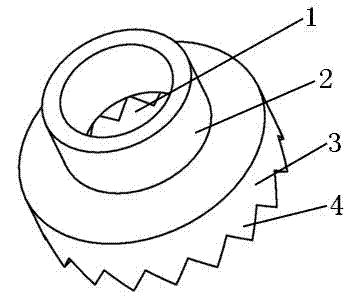
  • Figure 1
    Figure 1
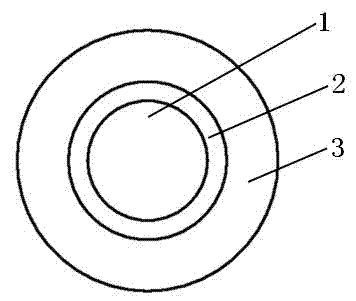
  • Figure 2
    Figure 2
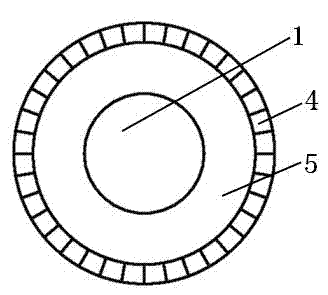
  • Figure 3
    Figure 3
Patent Text Reader

Abstract

The invention belongs to the technical field of ceramics and crushing, and in particular relates to a ceramic crushing mechanism, which is characterized in that it includes a connecting part and a crushing part, the connecting part is located above the crushing part and both are integrally formed; the connecting part is in the shape of a circular column And the hollow part through the upper and lower parts of the connecting part is the connecting cavity; the inside of the crushing part has a hollow container chamber, and the edge of the crushing part is circular cylindrical and the edge of the crushing part has a plurality of teeth distributed along the circular column. The diameter of the cavity is larger than the diameter of the connection cavity, the connection cavity communicates with the container cavity, and the container cavity does not completely penetrate the upper surface of the crushing part; on the orthographic projection of the upper surface of the crushing part, the connection part is located in the center and the connection cavity The center of circle of the chamber coincides with the center of circle of the holding chamber and the center of circle where the outer edge of the pulverized parts is located. The invention has the following main beneficial effects: wear resistance, wide temperature adaptation range, acid and alkali resistance, high mechanical strength, easy cleaning, no rust, and easy replacement.
Need to check novelty before this filing date? Find Prior Art

Description

technical field

[0001] The invention belongs to the technical field of ceramics and crushing, and in particular relates to a ceramic crushing mechanism for soybean milk machines, food cooking machines, juice extractors and the like. Background technique

[0002] In the prior art, the crushing mechanisms of soybean milk machines, food processors, juicers, etc. are usually blades. Of course, the blades are straight or arc-shaped; most of the current blades are made of metal materials. Because the metal material is relatively expensive and easy to rust, not resistant to acid and alkali or not strong in acid and alkali resistance; and it is not easy to clean. Contents of the invention

[0003] In order to solve the above problems, the present invention discloses a ceramic pulverizing mechanism, which is realized by adopting the following technical solutions.

[0004] A ceramic crushing mechanism, characterized in that it includes a connecting part 2 and a crushing part 3 bond...

Examples

Embodiment Construction

[0020] The present invention will be described in further detail below in conjunction with the accompanying drawings.

[0021] Please see Figure 1 to Figure 3 , A ceramic crushing mechanism, characterized in that it comprises a connecting part 2 and a crushing part 3 bonded to the connecting part. The connecting part is located above the crushing part and the two are integrally formed; the connecting part is in the shape of a circular cylinder and is connected The hollow part that penetrates the top and bottom of the component is the connecting cavity 1; the inside of the pulverizing component has a hollow container 5, the edge of the pulverizing component is cylindrical and the edge of the pulverizing component has a plurality of teeth 4 distributed along the cylindrical column. The diameter of the object cavity is larger than the diameter of the connecting cavity. The connecting cavity is in communication with the volume cavity, and the volume cavity does not completely penetr...