
A simulation method of large-scale complex uwb channel
A simulation method and large-scale technology, applied in transmission monitoring, electrical components, transmission systems, etc., can solve the problems of high experimental conditions, a lot of manpower and material resources, low calculation accuracy, etc., to achieve accelerated solution, fast extraction, fast channel Effects of parameters
- Summary
- Abstract
- Description
- Claims
- Application Information
AI Technical Summary
Problems solved by technology
Method used
Image

Examples
Embodiment Construction
[0018] The present invention will be described in further detail below in conjunction with the accompanying drawings.
[0019] A kind of emulation method of large-scale complex UWB channel of the present invention, the steps are as follows:
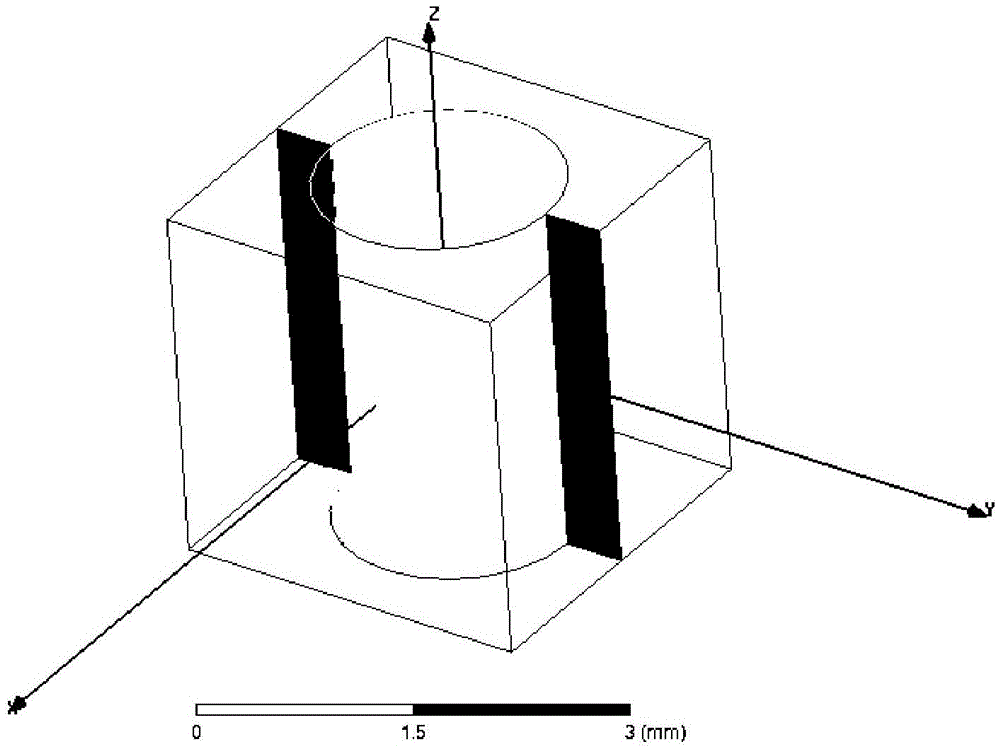
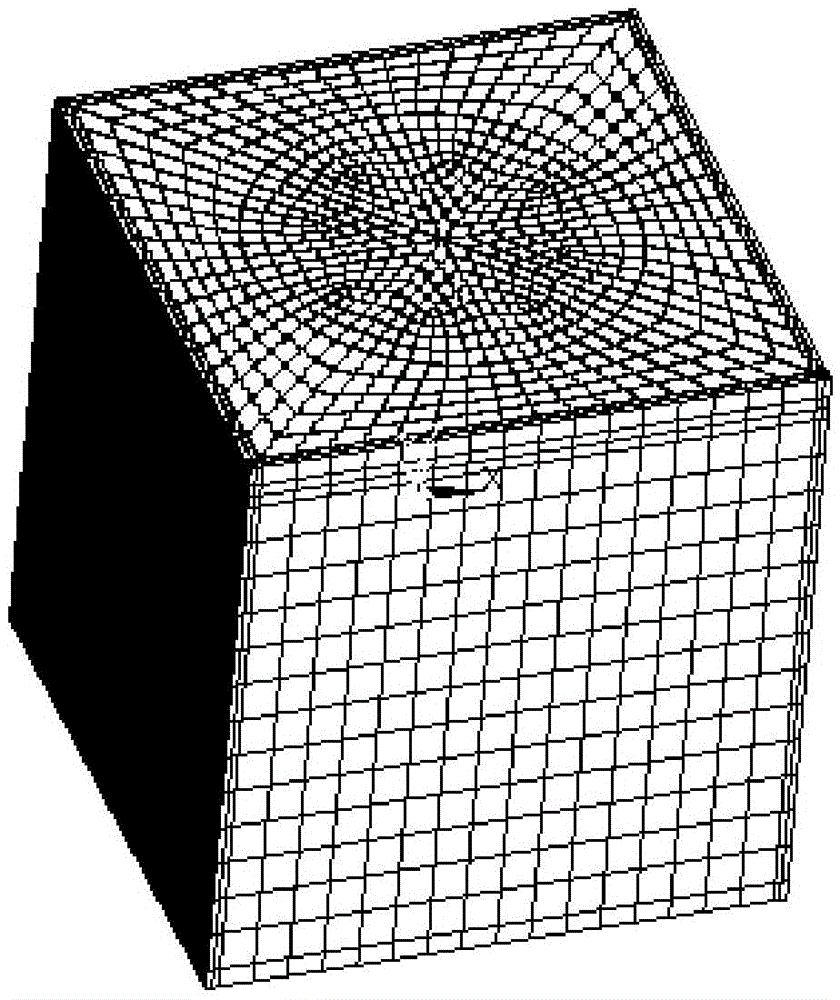
[0020] The first step is to model and mesh the channel, such as figure 1 Shown is a simple schematic diagram of the channel, using the curved hexahedron grid subdivision algorithm to subdivide the object, as follows figure 2 The meshing shown. The subdivision size is larger than 0.1λ (λ is the wavelength of electromagnetic wave). After subdivision, the vertex number and coordinates of each hexahedron unit, the number of the hexahedron, etc. are obtained.
[0021] In the second step, the electric field is expanded at the nodes using the GLL basis function,
[0022] In the 1-D standard reference unit ξ∈[-1,1], the N-order GLL (Gauss-Lobatto-Legendre, Gauss-Lobatto-Legendre) basis function is defined as:
[0023] ...
PUM
 Login to View More
 Abstract
Description
Claims
Application Information
 Login to View More