Ultra-high performance liquid chromatographic determination method for content of carotenoid in wheat

A carotene and wheat technology, applied in the field of chromatographic detection, can solve problems such as the lack of a unified industry measurement standard, and achieve the effects of high separation ability, high analytical sensitivity, and improved speed and resolution

CN104297407AInactive Publication Date: 2015-01-21INST OF CROP SCI CHINESE ACAD OF AGRI SCI
3 Cites 17 Cited by

Patent Information

Authority / Receiving Office
CN · China
Patent Type
Applications(China)
Current Assignee / Owner
Publication Date
2015-01-21
Estimated Expiration
Not applicable · inactive patent

Smart Images

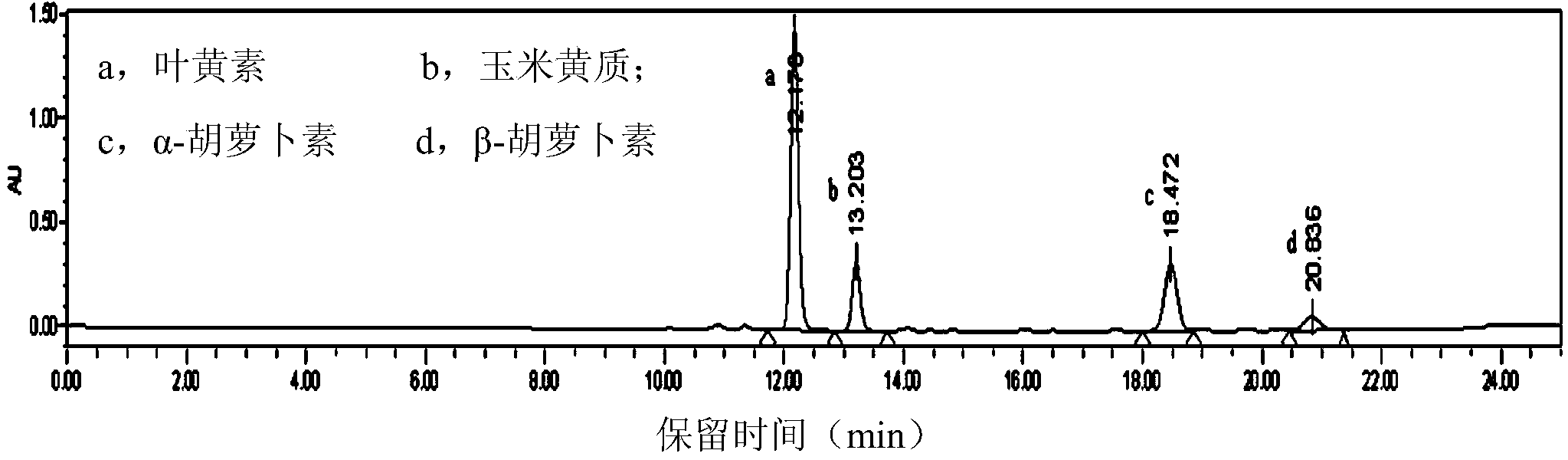
  • Figure 1
    Figure 1
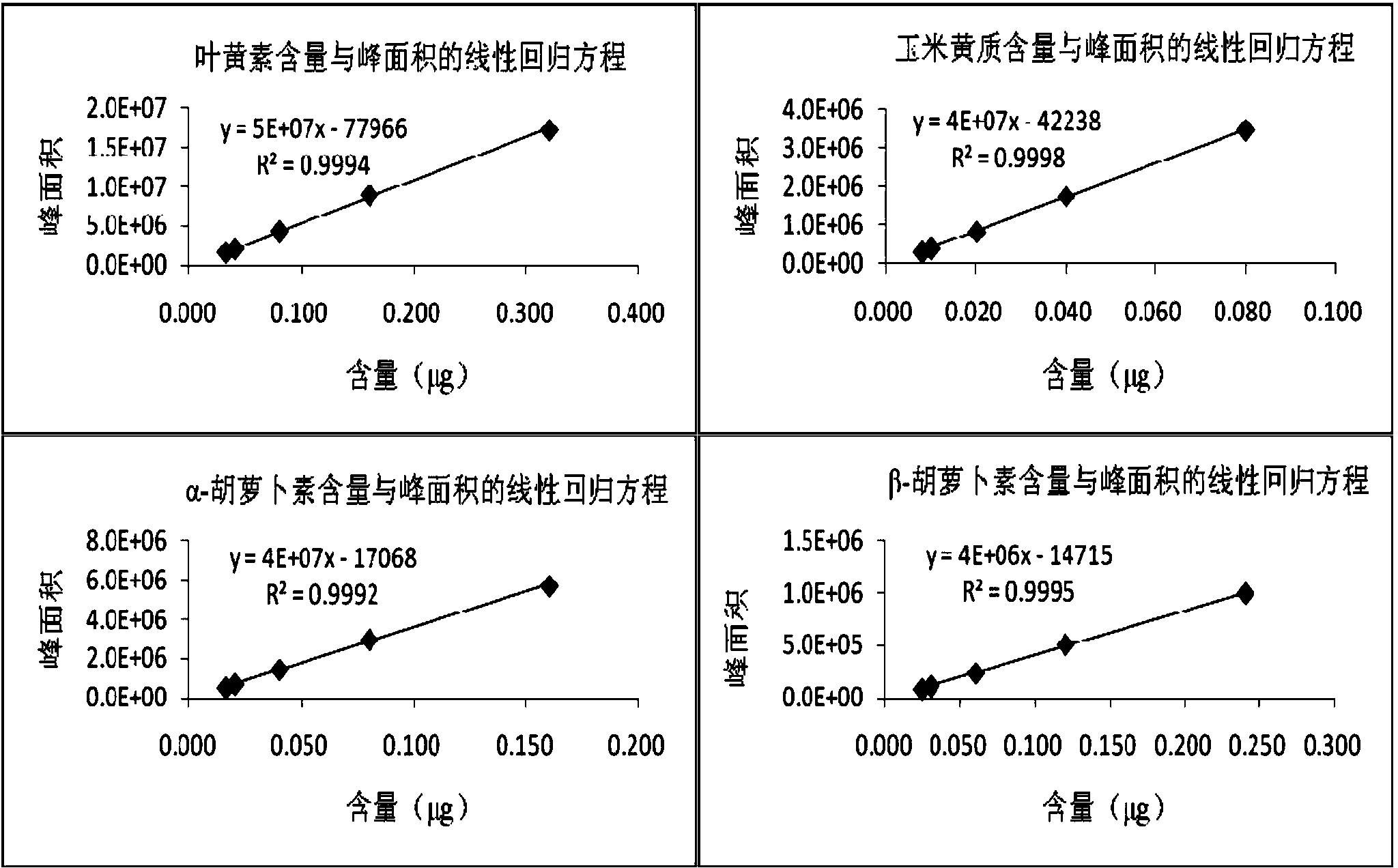
  • Figure 2
    Figure 2
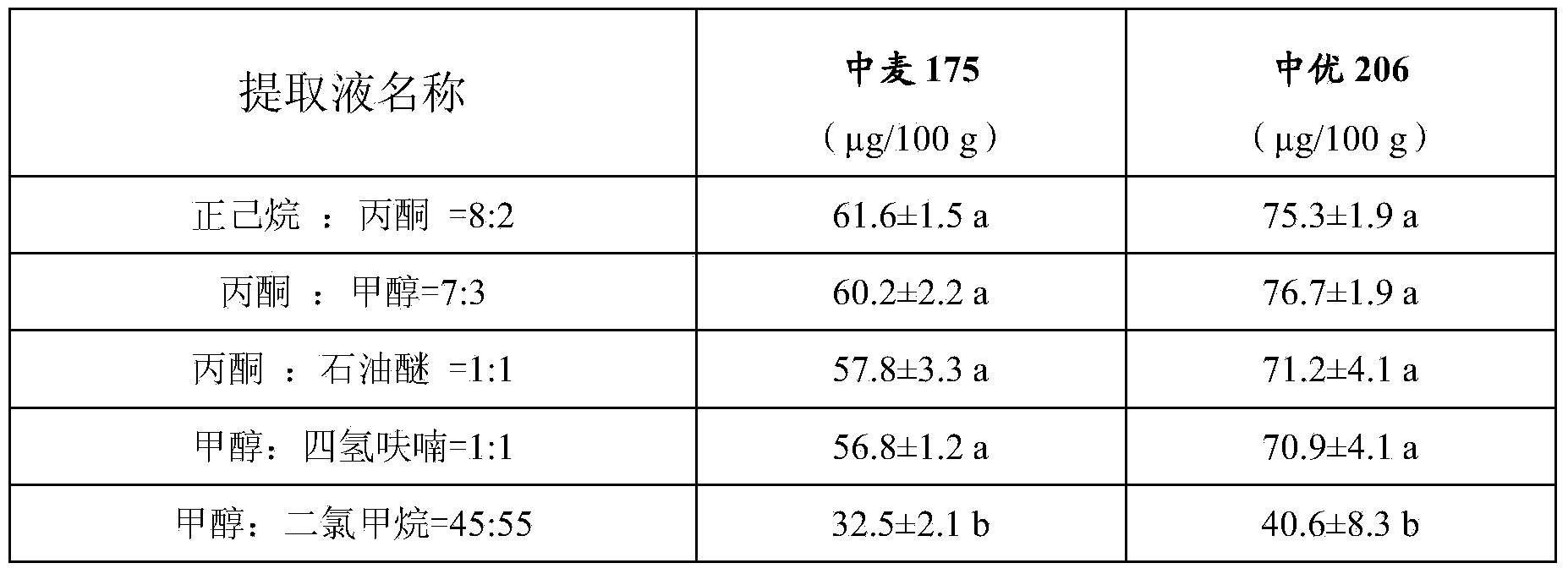
  • Figure 3
    Figure 3
Patent Text Reader

Abstract

The invention relates to a determination method for the content of carotenoid in wheat. The determination method comprises the following steps: (1) preparing a standard sample, namely mixing xanthophylls, zeaxanthin, alpha-carotene and beta-carotene standard substances to prepare a series of standard samples; (2) preparing a to-be-detected solution, namely, dissolving extracted carotenoid into a mixed solution of methyl alcohol and ethyl acetate with the ratio of 68 to 32 to obtain a mixed solution, centrifuging the mixed solution to obtain a centrifuging solution, and enabling the centrifuging solution to pass through an oily filter membrane so as to obtain the to-be-tested solution; (3) testing by adopting an ultra-high performance liquid chromatography, namely testing under a defined chromatographic condition; and (4) processing testing data, namely, drawing a standard curve, and substituting tested peak area data of the to-be-tested solution into the standard curve so as to obtain the content of each component of the carotenoid in the wheat. According to the determination method, the time spent on extracting the carotenoid in the wheat is short, and the efficiency is high; the adopted ultra-high performance liquid chromatography has the characteristics of rapidness, high efficiency, high analysis flexibility and the like, and the xanthophylls and the zeaxanthin can be separated completely; the determination method can be widely applied to the determination of the content of the carotenoid in the wheat.
Need to check novelty before this filing date? Find Prior Art

Description

technical field

[0001] The invention belongs to the field of chromatographic detection, in particular to an ultra-high performance liquid chromatography determination method for carotenoid content in wheat. Background technique

[0002] my country is the world's largest producer and consumer of wheat, with an annual planting area of ​​about 24 million hectares and a total output of about 110 million tons, occupying an important position in the national economy. With the development of the economy and the improvement of people's living standards, consumers pay more attention to the nutritional quality and appearance quality of flour products. Carotenoids are not only an important factor in the formation of the color of flour and noodle products, but also have a great influence on their nutritional value. Therefore, accurate determination of carotenoid content in flour has great guiding significance for evaluating the nutritional value of wheat and quality breeding in the fut...

Examples

Embodiment 1

[0070] Embodiment one: the mensuration of carotenoid content in 305 parts of common wheat

[0071] 1) Extraction of carotenoids in wheat:

[0072](1) After the wheat grains were harvested, dried in the sun, the water content was measured with a near-infrared (NIT) analyzer, and the hardness value was determined with a SKCS single-grain grain characteristic tester (Perten Instruments North America Inc, Springfield, IL). Hard wheat (> 60), mixed wheat (40≤hardness value≤60) and soft wheat (<40) were adjusted to moisture content of 16.5%, 15.5% and 14.5% respectively, and then tempered for 16 hours, and finally grinded with Brabender Quandrmat Junior powder and pass through a 60-mesh sieve. The ground and sieved powder sample (ie flour) was stored at -20°C in the dark.

[0073] (2) Weigh 8.0g of powdery sample and put it into a 100ml blue cap reagent bottle, add 40.0ml of n-hexane: acetone=8:2 extract (which contains 0.1% BHT), close the stopper, and put it in the mixing chambe...