Polybasic carboxylic acid non-ironing process washing-free method adopting urea as additive
A polycarboxylic acid and additive technology, used in textiles and papermaking, fiber processing, plant fibers, etc., can solve the problems of low pH value of fabrics, and achieve the effects of improved wrinkle recovery angle, improved fabric strength, and simple operation.
- Summary
- Abstract
- Description
- Claims
- Application Information
AI Technical Summary
Problems solved by technology
Method used
Image

Examples
Embodiment 1
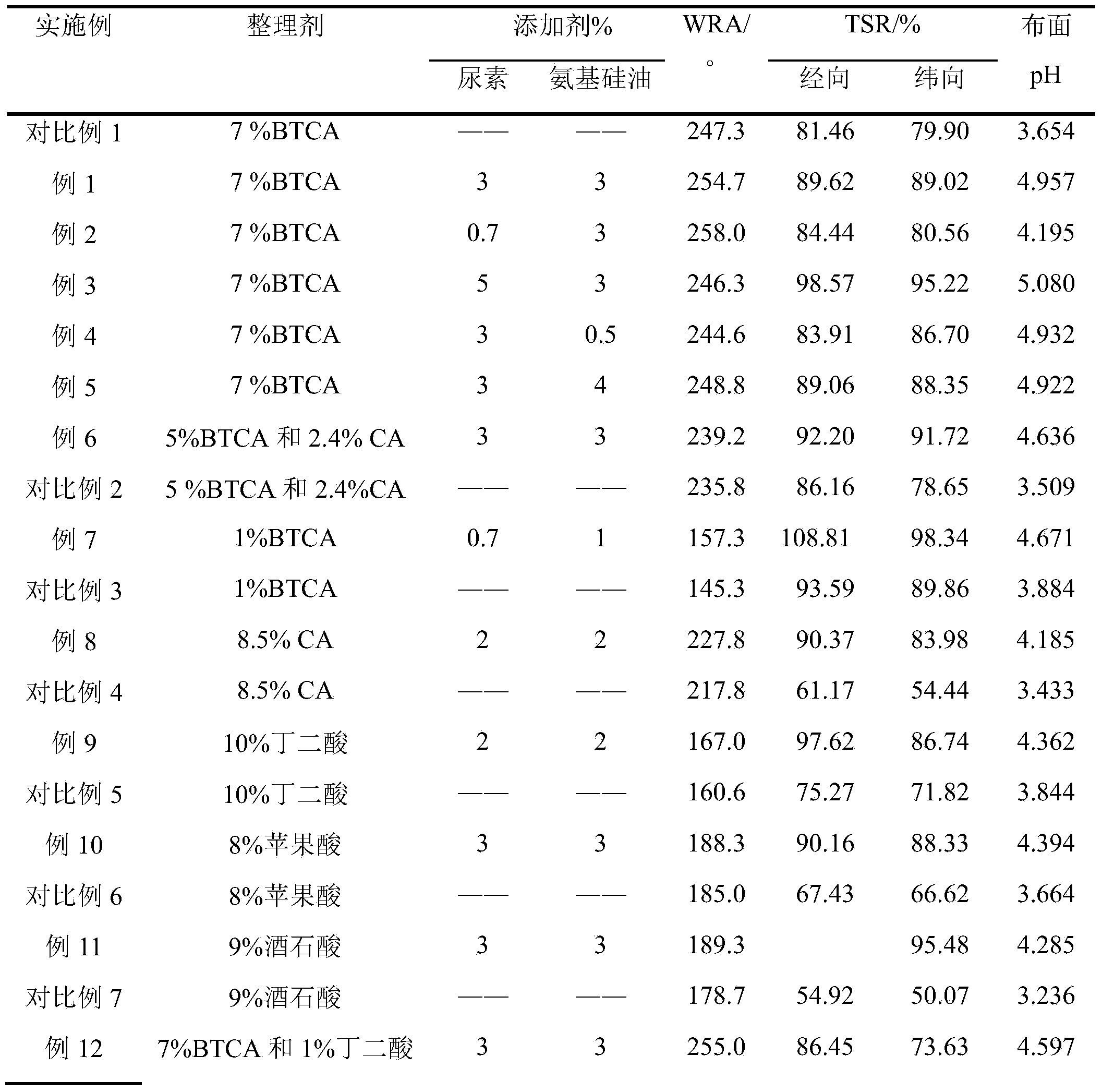
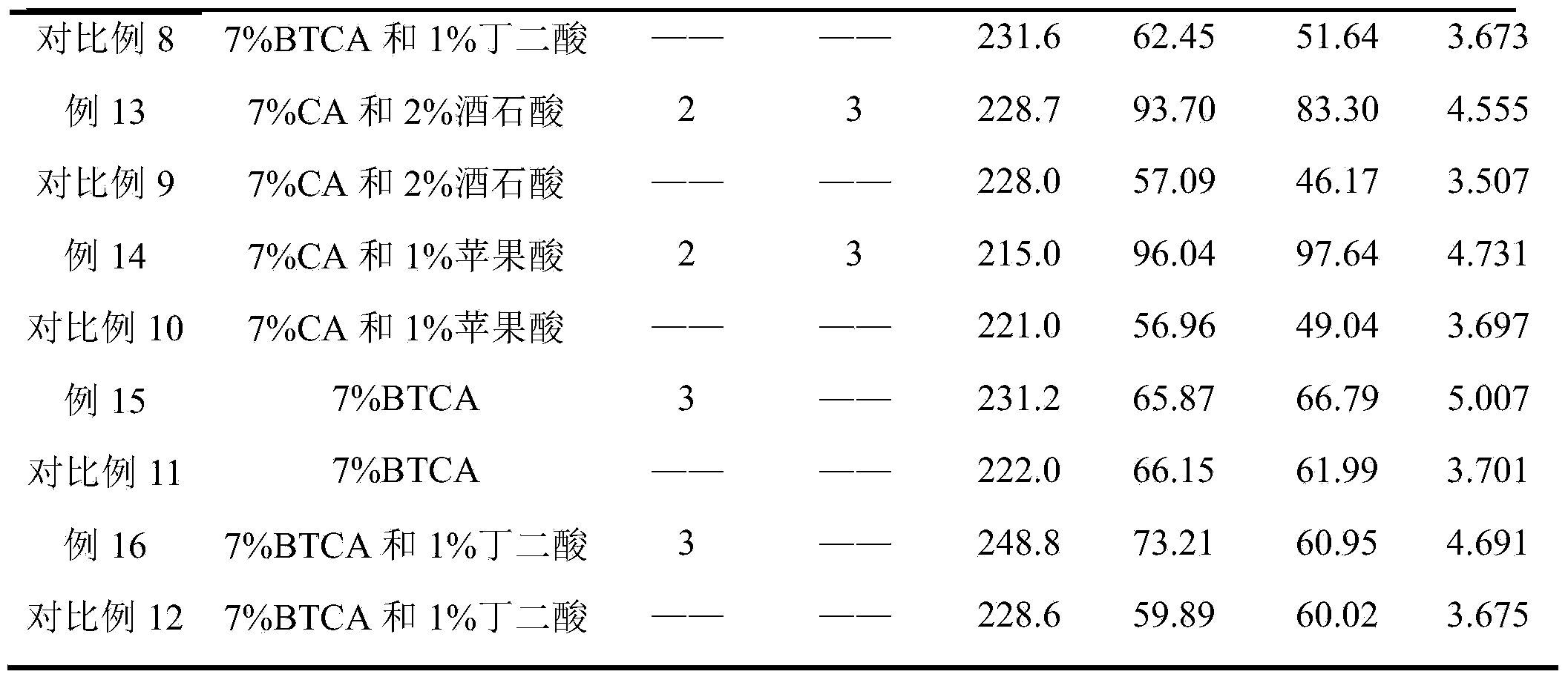
[0020] Prepare finishing solution, add 7% formaldehyde-free finishing agent BTCA, 1.6% catalyst SHP, 3% urea and 3% amino silicone oil, 3% strong protective agent HD-208, 0.5% penetrating agent HD-2 into the finishing solution. The fabric was dipped twice and rolled twice, the excess rate was 90%, dried at 100°C for 2 minutes, baked at 160°C for 3 minutes, and the pH of the tested cloth surface was 4.957. The crease recovery angle and tear strength retention rate of the fabric are shown in Table 1.
Embodiment 2
[0024] Prepare finishing solution, add 7% formaldehyde-free finishing agent BTCA, 1.6% catalyst SHP, 0.7% urea and 3% amino silicone oil, 3% strong protective agent HD-208, 0.5% penetrating agent HD-2 into the finishing solution. The fabric was dipped twice and rolled twice, the excess rate was 90%, dried at 100°C for 2 minutes, baked at 160°C for 3 minutes, and the pH of the tested cloth surface was 4.195. The crease recovery angle and tear strength retention rate of the fabric are shown in Table 1.
Embodiment 3
[0026] Prepare finishing solution, add 7% formaldehyde-free finishing agent BTCA, 1.6% catalyst SHP, 5% urea and 3% amino silicone oil, 3% strong protective agent HD-208, 0.5% penetrating agent HD-2 into the finishing solution. The fabric was dipped twice and rolled twice, the excess rate was 90%, dried at 100°C for 2 minutes, baked at 160°C for 3 minutes, and the pH of the tested cloth surface was 5.080. The crease recovery angle and tear strength retention rate of the fabric are shown in Table 1.
PUM
 Login to View More
 Abstract
Description
Claims
Application Information
 Login to View More