
Single-process dynamic storage management method based on Hash table
A technology of dynamic storage and management methods, applied in multi-programming devices, resource allocation, input/output to record carriers, etc., can solve the problem of real-time monitoring without means, program dynamic memory overflow cannot be detected in real time, and memory overflow code cannot be accurately located. location and other issues, to achieve good application prospects, solve dynamic memory overflow and memory leak problems, and improve debugging and testing efficiency.
- Summary
- Abstract
- Description
- Claims
- Application Information
AI Technical Summary
Problems solved by technology
Method used
Image

Examples
Embodiment Construction
[0027] The present invention will be further described below in conjunction with the accompanying drawings.
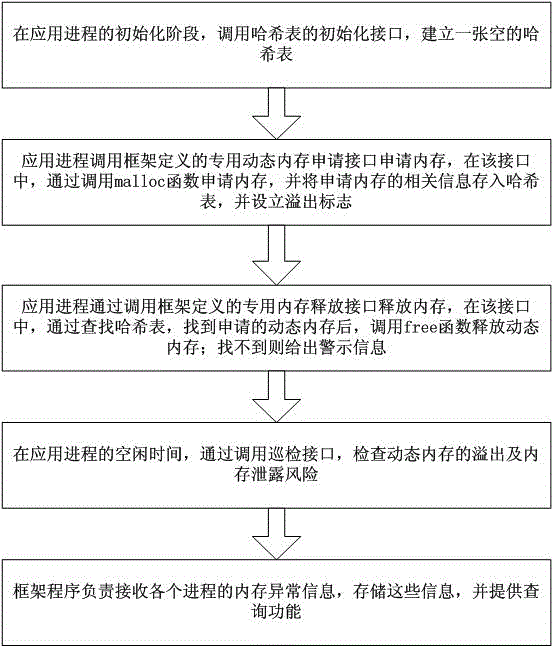
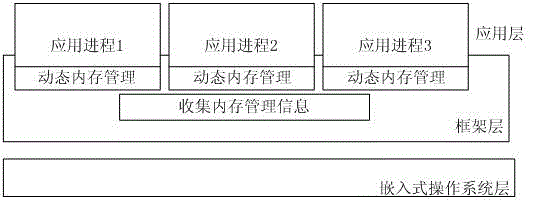
[0028] The hash table-based single-process dynamic storage management method of the present invention is used to run on a single application process, occupy the idle time of the application process to monitor and check the dynamic memory usage in real time, and send the monitoring results to the framework program through the message queue, The framework program is responsible for collating and providing queries, such as figure 1 As shown, it specifically includes the following steps,
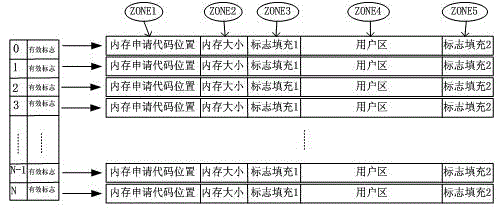
[0029] Step (1): In the initialization phase of the application process, call the initialization interface of the hash table to create an empty hash table. The hash table includes the maximum number of memory application blocks and the information of each block of memory. Each block of memory The information includes valid flags, the starting address of the requested memory, the size of...
PUM
 Login to View More
 Abstract
Description
Claims
Application Information
 Login to View More