

Cell model for screening drugs with neuroprotection activity, and application and use method thereof
A neuroprotective and candidate drug technology, applied in the field of medicine and biology, can solve the problems of not knowing the specific structure and construction method of the screening model, and not disclosing the base sequence of gene fragments
- Summary
- Abstract
- Description
- Claims
- Application Information
AI Technical Summary
Problems solved by technology
Method used
Image

Examples
Embodiment 1
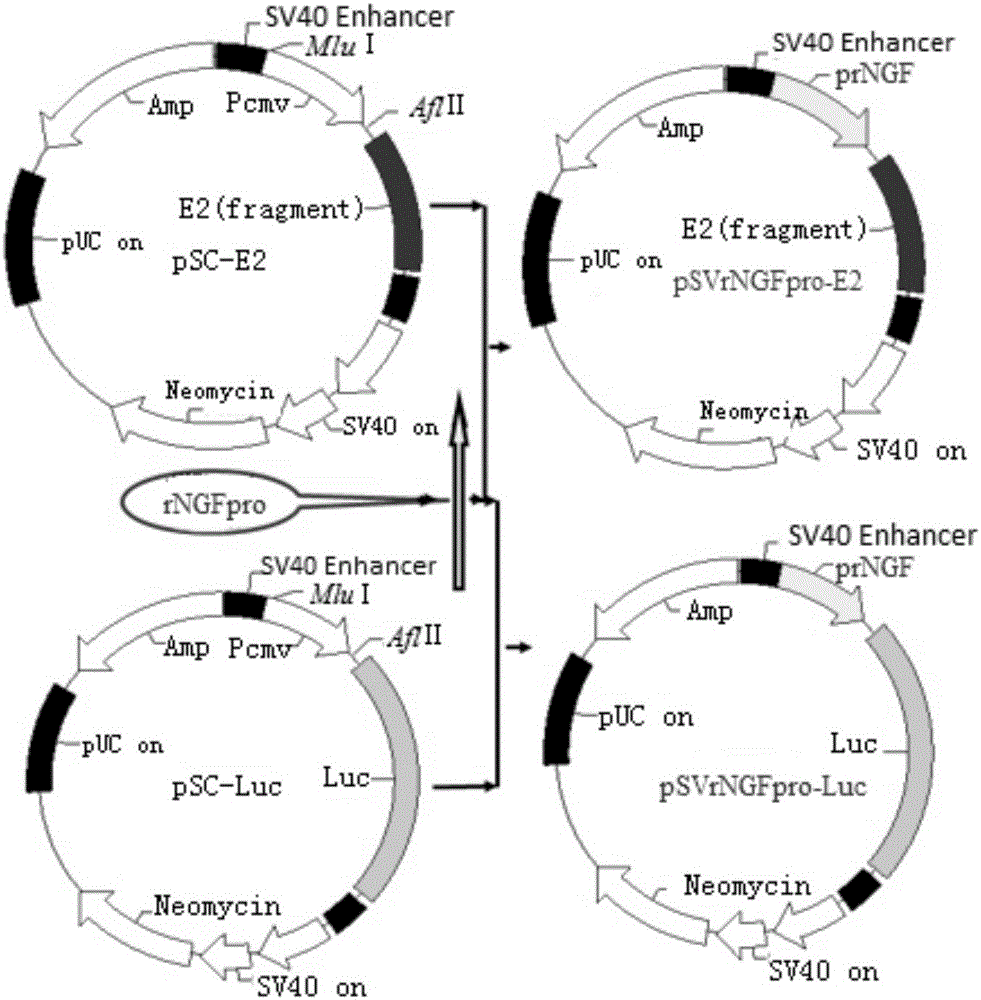
[0045] The construction of embodiment 1 recombinant plasmid
[0046] 1.1 Test method
[0047] Using rat genomic DNA as a template, primers were designed to introduce MluⅠ and AflⅡ restriction sites into the upstream and downstream of the rNGF promoter sequence, respectively, and PCR was amplified to obtain the promoter fragment: rNGFpro (abbreviated as Np) (-615bp~+50bp) (+ 1 is the gene transcription initiation site), the forward primer sequence is shown in SEQ NO.2, and the reverse primer sequence is shown in SEQ NO.3. 1% agarose gel electrophoresis identification, ethanol precipitation recovery to obtain each promoter fragment. Digest the vector pSC-E2 and each promoter fragment (Np) with double restriction enzymes, electrophoresis on 1% agarose gel, recover the target fragment from the gel, connect the vector and promoter fragment, transform Escherichia coli, screen for resistance to ampicillin plate, and select positive Transformants were quickly cleaved for identificati...
Embodiment 2
[0051] The establishment of embodiment 2 stable cell lines
[0052] 2.1 Experimental method
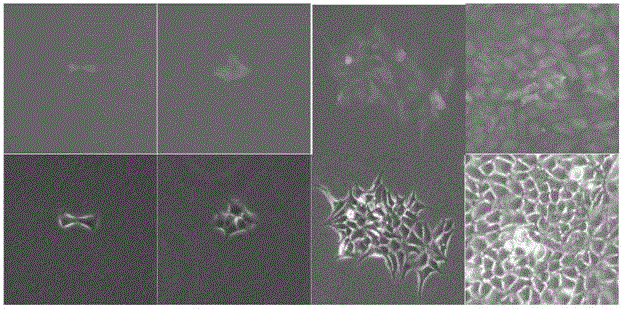
[0053] Transfect HEK293 cells with recombinant plasmids pNp-E2 and pNp-Luc respectively, see Lipofectamine for details TM 2000 Reagent Manual. After 36-48 hours after transfection, the cells were digested with trypsin, and according to the transfection efficiency, an appropriate amount of them were dispersed and cultivated in a 10cm culture dish. After the cells adhered to the wall, 800ng / μLG418 was added to start screening, 2-3 weeks Finally, the cells form a separate colony with a long distance in the culture dish; select a suitable cell colony under an inverted microscope, and mark the position of the cell colony at the bottom of the culture dish with a marker pen; in strict aseptic operation, use Cut the 1mL tip into an appropriate slope with a scalpel blade, and carefully remove all the cells around the marked point with the sloped tip; rinse and remove the scraped cells as muc...
Embodiment 3
[0057] The functional identification of embodiment 3 cell model
[0058] 3.1 Experimental method
[0059] The positive stimulus CLE can up-regulate the expression of NGF in cells, so it can be used to verify whether the screening model is successfully established. If the screening model is successfully established, the expression of NGF in the cells will be up-regulated after being stimulated with positive stimuli.
[0060] In order to verify the validity of the model, the responses of two reporter gene cell models, 293-pNp-E2 cells and 293-pNp-Luc cells, to known positive stimuli were investigated respectively.
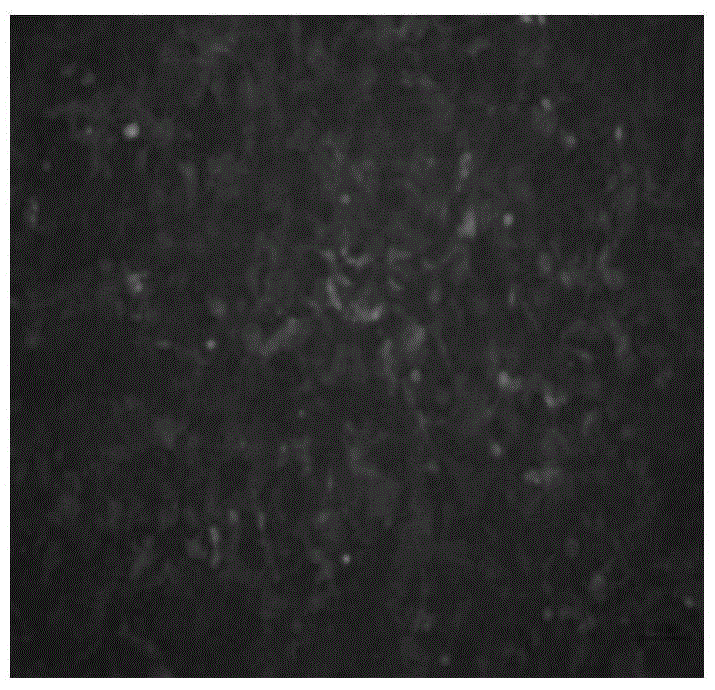
[0061] 293-pNp-E2 cells, 293-pNp-Luc cells, and HEK-293 cells were cultured using HEK-293 cell culture conditions, that is, DMEM high-glucose medium (Hyclone) + 10% FBS (Sciencell) + 1 ×10 5 U / L penicillin and streptomycin (Hyclone Company) were cultivated in a 37° C., 5% CO2 incubator. The number and shape of the cells were observed every day. When the cells gre...
PUM
 Login to View More
 Abstract
Description
Claims
Application Information
 Login to View More