
A multi-objective service composition method based on cost-benefit optimization
A combination of services, cost-effective technology, applied in transmission systems, electrical components, etc., can solve problems that cannot really meet the needs of users
- Summary
- Abstract
- Description
- Claims
- Application Information
AI Technical Summary
Problems solved by technology
Method used
Image

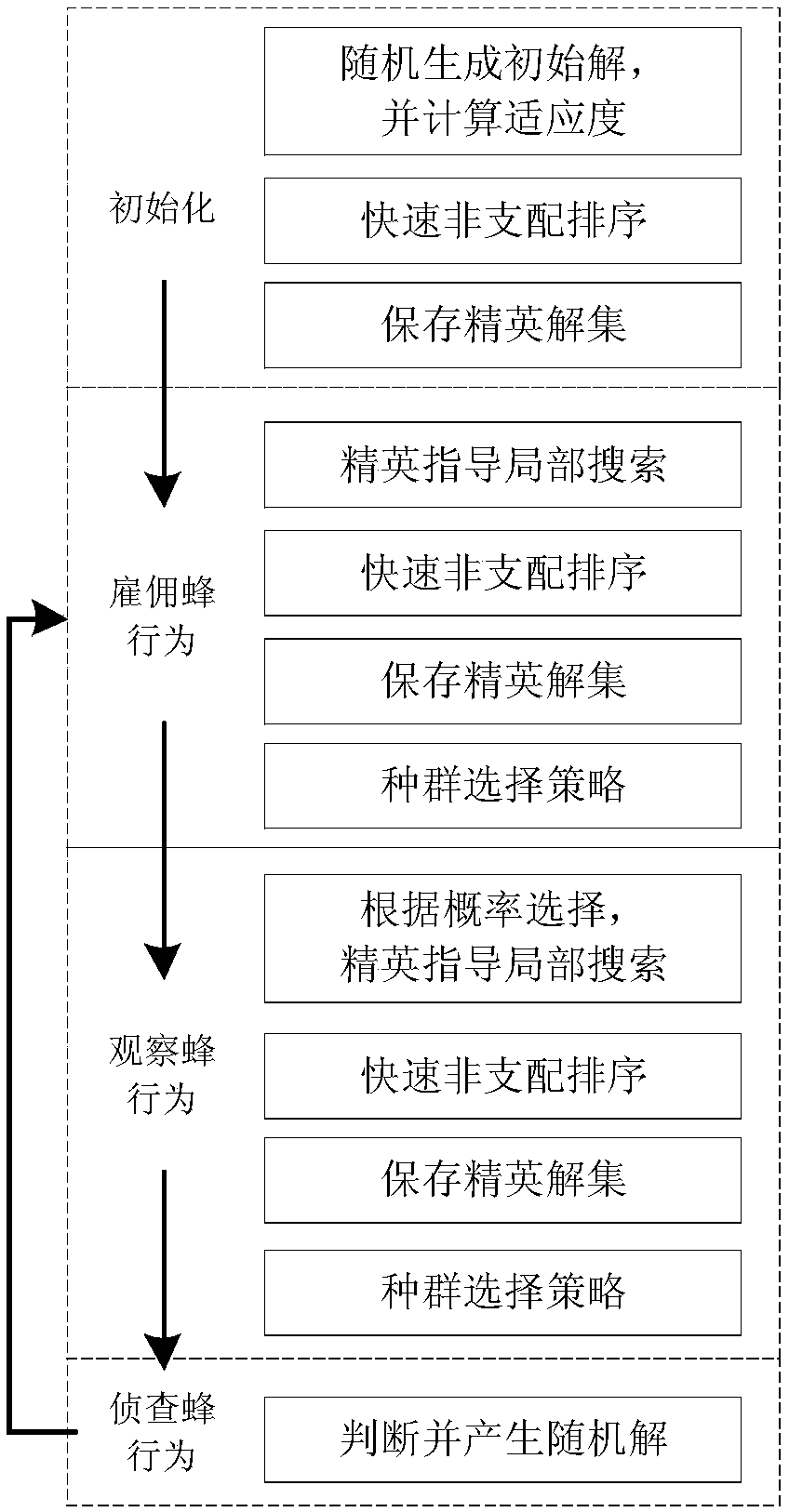

Examples
Embodiment
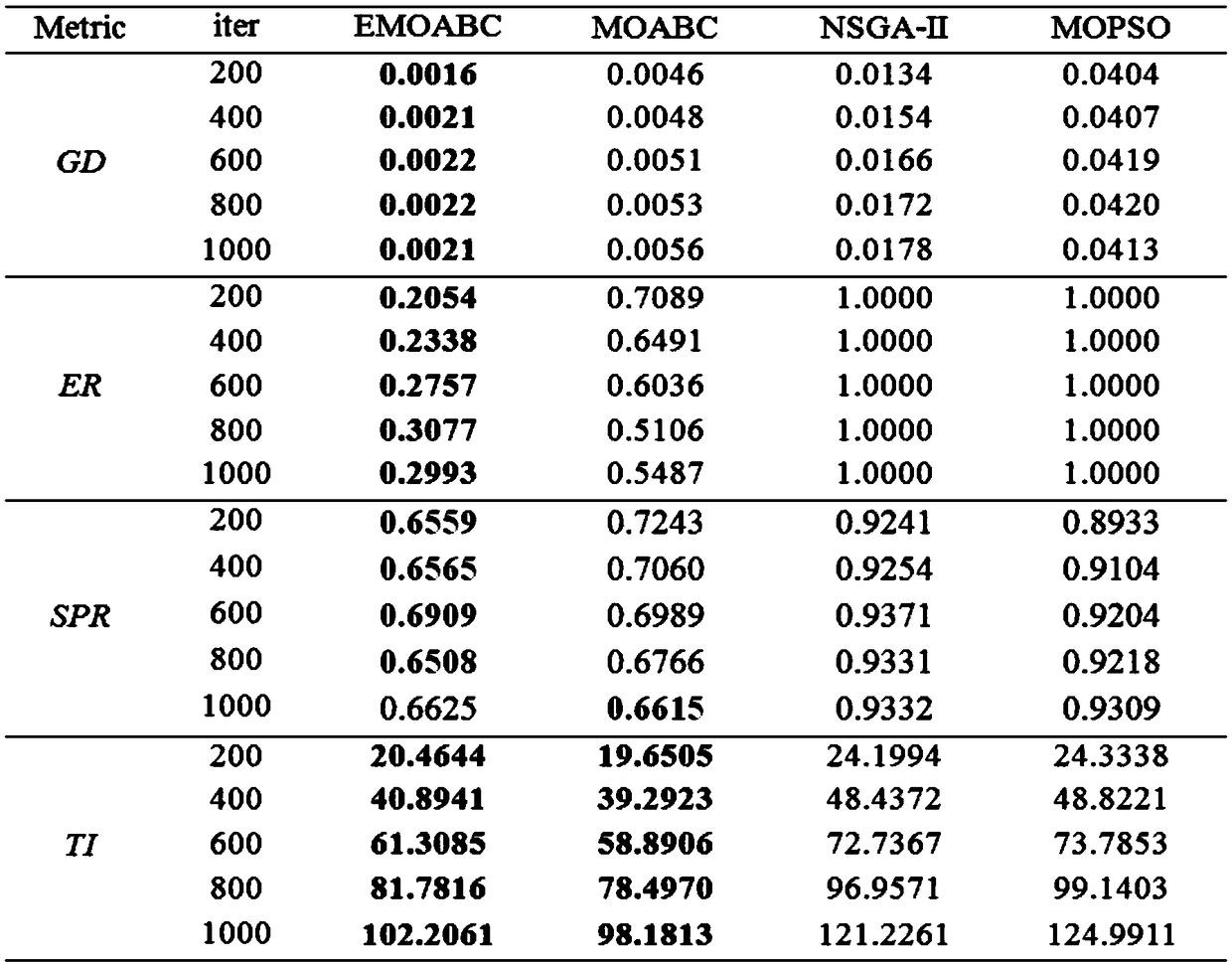
[0165] Randomly generate 500,000 simulated service data, and the evaluation value of each service for each quality attribute is evenly distributed in the range (0,1). The experimental environment is: Intel Core i3-2370M (2.4GHz), 6.0GB RAM, Windows 7 (64bit), MATLAB R2010b. Compare the EMOABC algorithm with similar algorithms. In the experiment, each algorithm uses the same control parameters, the population number is 50, and all the experimental results are the average of 30 experiments. The parameters of the comparison algorithm are set as follows:
[0166] 1) NSGA-II: The crossover probability is set to 0.9, the mutation probability is 0.1, and the simulation binary crossover and polynomial mutation strategy is adopted. The distribution indexes of the crossover and mutation operators are both 20;
[0167] 2) MOPSO: The size of the repository is the number of populations, the inertia weight w is 0.4, and the individual learning coefficient c 1 And the global learning coefficien...
PUM
 Login to View More
 Abstract
Description
Claims
Application Information
 Login to View More