Three-axis decoupling device and vibration table with pre-tightening structure

A decoupling device and three-axis technology, applied in the field of three-axis decoupling device and vibration table, can solve problems such as inability to guarantee stability, and achieve the improvement of working stability and durability, and system rigidity and stability. Effect

CN106546401BActive Publication Date: 2019-09-20SUZHOU DONGLING VIBRATION TEST INSTR
17 Cites 0 Cited by

Patent Information

Authority / Receiving Office
CN · China
Patent Type
Patents(China)
Current Assignee / Owner
Publication Date
2019-09-20

Smart Images

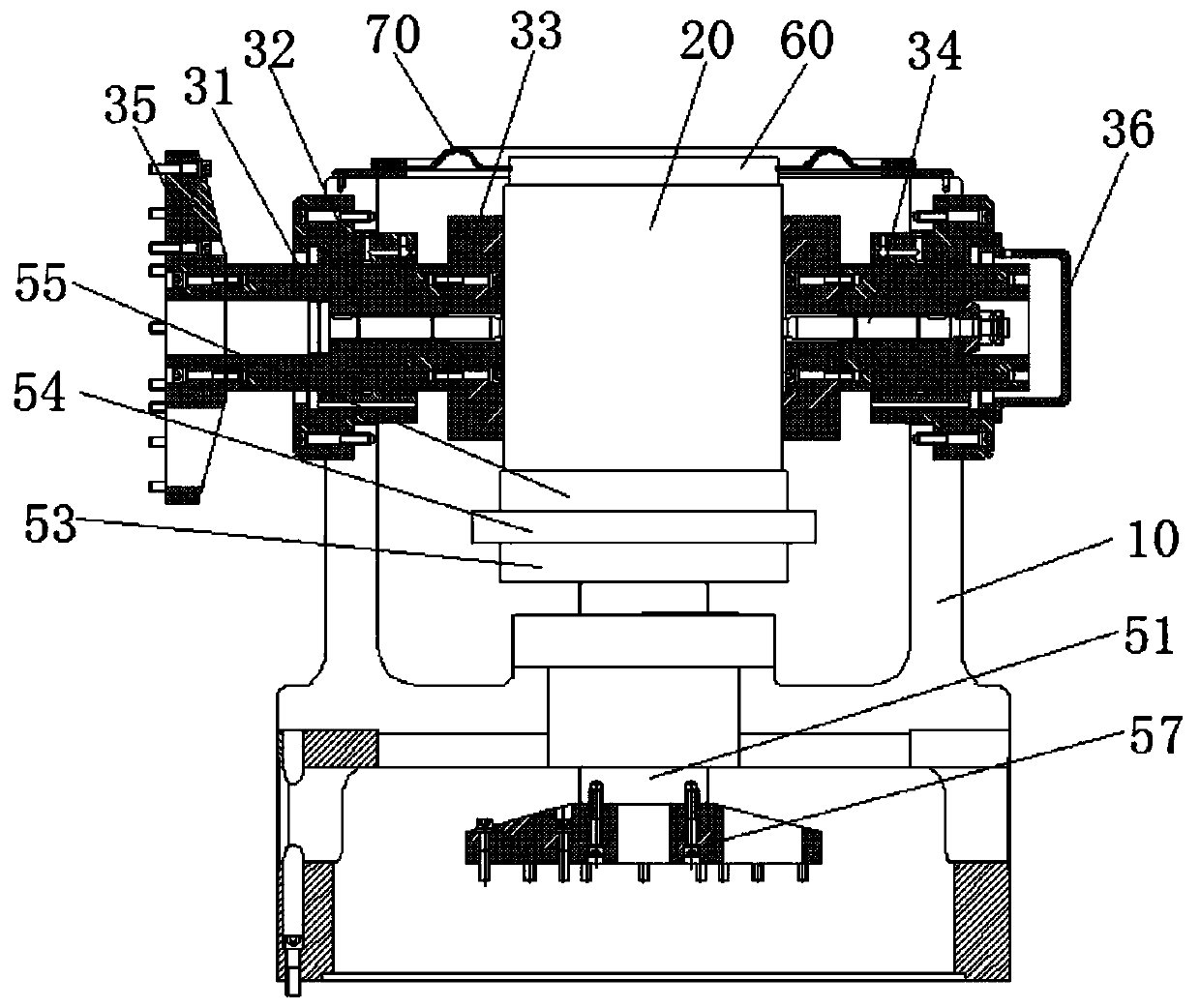
  • Figure 1
    Figure 1
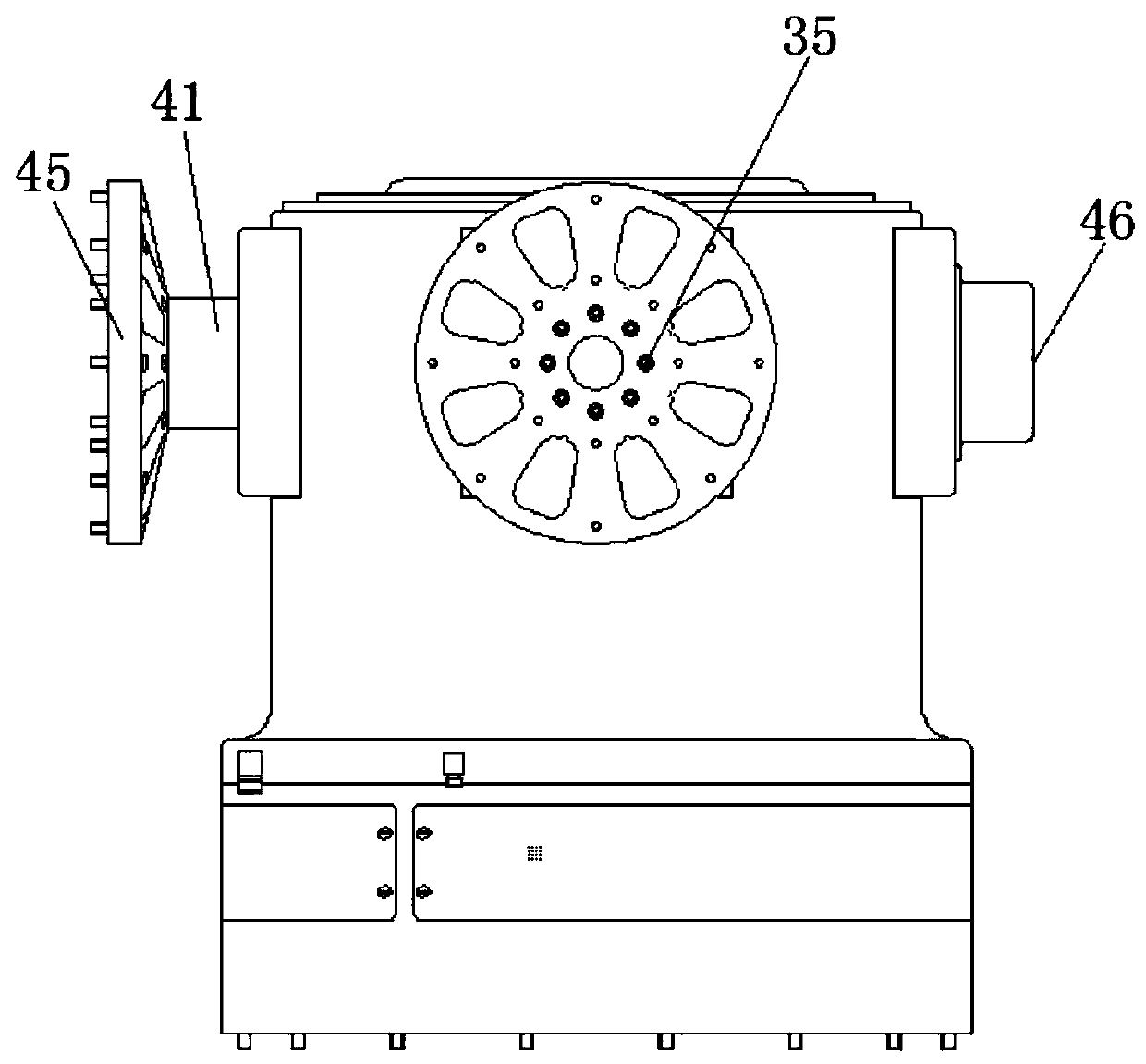
  • Figure 2
    Figure 2
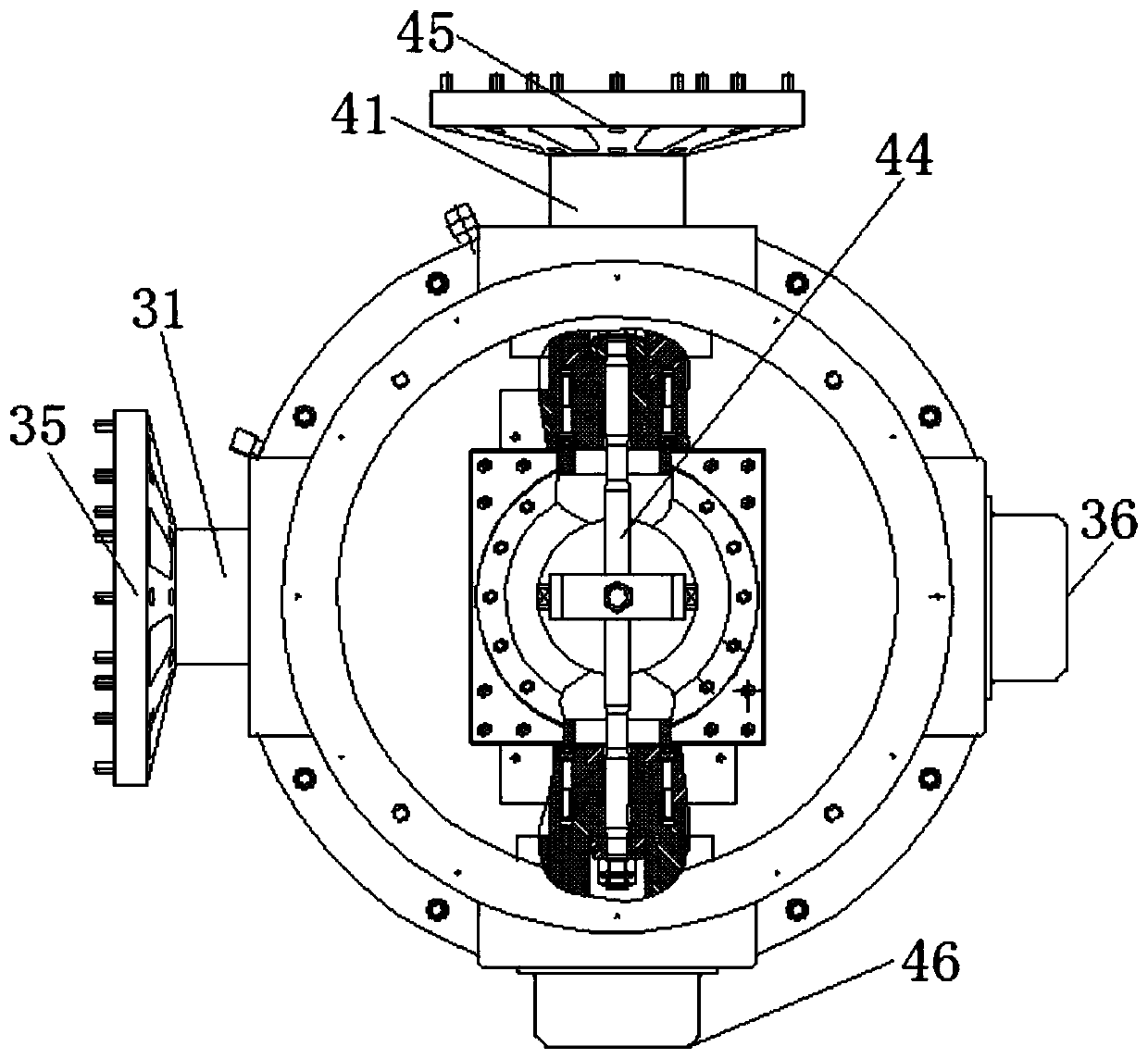
  • Figure 3
    Figure 3
Patent Text Reader

Abstract

The present invention discloses a three-axial decoupling device with a pre-tightening structure. The three-axial decoupling device with the pre-tightening structure includes a slide rail, an X guide shaft, a Y guide shaft and a Z guide shaft; each guide shaft is arranged floatingly through a static pressure oil film layer formed by a corresponding first static pressure mechanism; and each first static pressure mechanism is provided with a pre-tightening screw, and one end of the pre-tightening screw is fixed to the first static pressure mechanism oppositely, and the other end of the pre-tightening screw is fixed to a static pressure mechanism at the same side or a static pressure mechanism at the other side oppositely. According to the three-axial decoupling device with the pre-tightening structure of the invention, a connection mode adopts the structural design of the pre-tightening screws. When the three-axial decoupling device is working, high-pressure oil is introduced into the three-axial decoupling device, high-pressure oil films are generated at two oil film layers; the pre-tightening forces of the pre-tightening screws can cancel tensile forces generated by the high-pressure oil films to the outside, and therefore, the gap of the oil film layers and the rigidity of the oil film layers can be ensured, and the operational stability and durability of the three-axial decoupling device can be improved. The invention also discloses a vibration table.
Need to check novelty before this filing date? Find Prior Art

Description

technical field

[0001] The invention relates to the field of test and measurement, in particular to a three-axis decoupling device and a vibrating table with a pre-tightening structure. Background technique

[0002] At present, the development of uniaxial test system has gradually matured, but with the continuous development of science and technology, in order to improve the pass rate of products and reduce unnecessary losses caused by products in actual production, more and more scientific and technological fields need more The real simulation test environment is used to verify the product development. Then a three-axis vibration test system was produced.

[0003] The Chinese utility model patent with the authorized notification number CN201218773Y discloses a three-axis vibration test device. The worktable and three vibration generators pass through one-way vibration-transmitting connectors, and each one-way vibration-transmitting connector can be placed on one of the thr...

Examples

Embodiment Construction

[0032] The specific implementation manners of the present invention will be further described in detail below in conjunction with the accompanying drawings and embodiments. The following examples are used to illustrate the present invention, but are not intended to limit the scope of the present invention.

[0033] see Figure 1 to Figure 3 , as shown in the legend therein, a triaxial decoupling device comprising:

[0034] - the connection body, which includes a housing 10 with an open upper side, the left side wall and the right side wall of the housing 10 are respectively provided with X-axis passages (not shown) extending in the left and right directions, the front of the housing 10 The side wall and the rear side wall are respectively provided with a Y-axis channel (not shown in the figure) extending along the front-rear direction, and the lower side wall of the housing 10 is provided with a Z-axis channel (not shown in the figure) extending along the up-down direction. ...