Unloading device for ship

A unloading device and marine technology, applied in the field of marine equipment, can solve problems such as low loading and unloading efficiency, and achieve the effects of improving efficiency, reducing sticky materials, and reducing delay time

CN106629143AInactive Publication Date: 2017-05-10霍进铭
2 Cites 0 Cited by

Patent Information

Authority / Receiving Office
CN · China
Patent Type
Applications(China)
Current Assignee / Owner
Publication Date
2017-05-10
Estimated Expiration
Not applicable · inactive patent

Smart Images

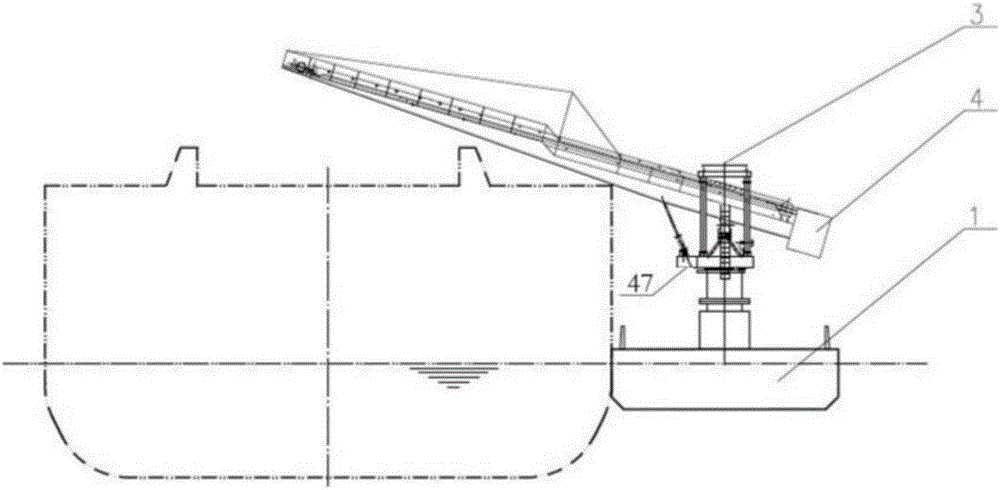
  • Figure 1
    Figure 1
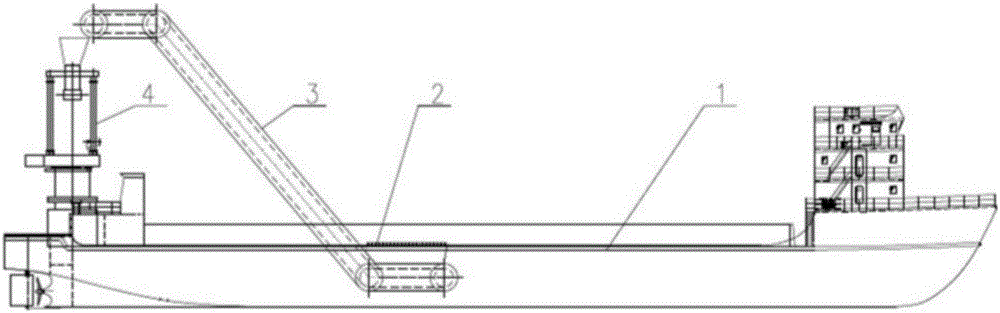
  • Figure 2
    Figure 2
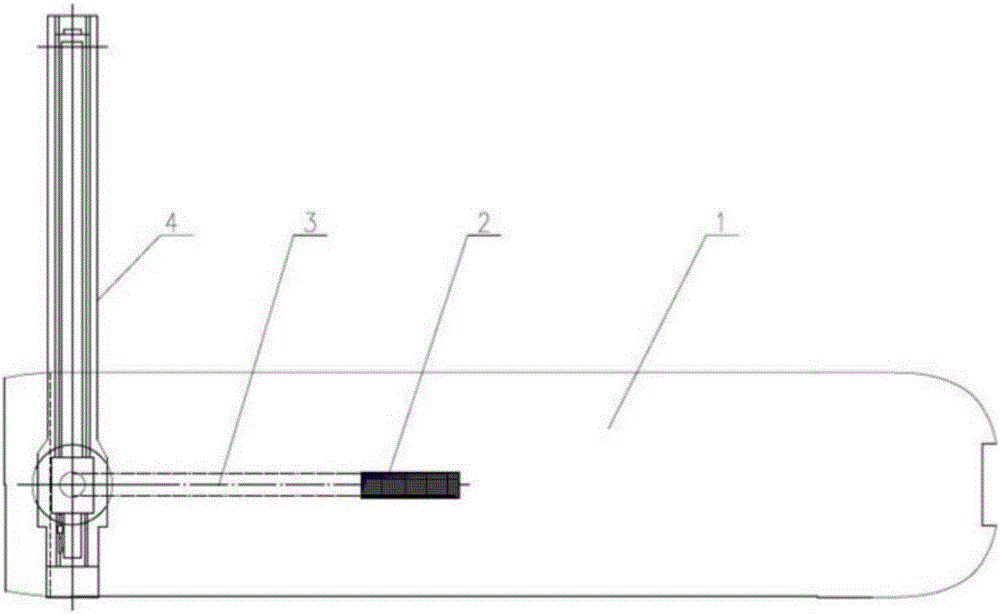
  • Figure 3
    Figure 3
Patent Text Reader

Abstract

The invention relates to an unloading device for a ship. The unloading device for the ship comprises a ship body, wherein a receiving bin for loading bulk cargo is arranged in the ship body; an upper deck of the ship body is provided with an unloader, and the unloader comprises a pedestal which is used as a supporting base, and a cantilever which can be horizontally rotated and obliquely moved up and down; one end of a conveyor is arranged in the receiving bin while the other end of the conveyor obliquely extends to be right above a hopper of the cantilever. Compared with the prior art, the unloading device for the ship has the advantages that the bulk cargo is unloaded from the ship through a continuous conveying device, so that the time of the ship stopping in a port and a harbor during unloading can be reduced, and the efficiency is improved; the device is simple to operate; the requirement on worker quality is reduced; the probability that heavy matters freely fall down to break a bilge is avoided; in addition, that materials are adhered to conveying equipment can be obviously reduced.
Need to check novelty before this filing date? Find Prior Art

Description

technical field

[0001] The invention relates to ship equipment, in particular to a ship unloading device. Background technique

[0002] A bulk carrier is a ship used to transport unpackaged goods such as ore, timber, salt, and cement. Usually, a crane or a grab bucket is installed at the opening of the warehouse of the bulk carrier, and the goods on the shore are loaded onto the ship and the goods in the warehouse are unloaded when they are in port.

[0003] However, in areas without official wharf facilities, or in my country's coastal areas where the water depth is generally shallow, when there is no loading and unloading conditions on the shore or the bulk carrier has a large draft and cannot dock, barges are often used to transport bulk carriers moored in deep water areas. materials. When the barge is loaded, the bulk cargo is driven to the barge by a dump truck for unloading, and then the barge is driven or towed by a tugboat to the side of the bulk carrier in the deep...

Examples

Embodiment Construction

[0022] The present invention will be further described now in conjunction with accompanying drawing.

[0023] see figure 2 , image 3 , figure 2 , image 3 What is shown is an embodiment of the present invention, including a ship body 1, which includes a powered barge. Among them, the power and equipment devices are concentrated at the tail, that is, the tail type is adopted, which can make the relatively square hull in the middle be used to set the receiving bin 2 for loading bulk cargo, so as to improve the loading and unloading efficiency; the length of the shafting can be reduced, and the Propulsion efficiency; avoid setting shaft tunnel cabins and reduce manufacturing costs.

[0024] The mouth of the storage bin 2 is flush with the upper deck of the ship body 1, and is provided with a fixed grid screen, which can prevent large pieces of material from entering the equipment of the present invention.

[0025] An unloader 4 is arranged at the midline of the upper deck...