Nondestructive testing method for testing soil characteristics of soil complex through acoustic emission

An acoustic emission detection and non-destructive testing technology, which is applied in the analysis of solids using sonic/ultrasonic/infrasonic waves, and can solve problems such as not fully satisfying the detection needs.

CN107991392AInactive Publication Date: 2018-05-04NANJING HYDRAULIC RES INST
5 Cites 5 Cited by

Patent Information

Authority / Receiving Office
CN · China
Current Assignee / Owner
Publication Date
2018-05-04
Estimated Expiration
Not applicable · inactive patent

Smart Images

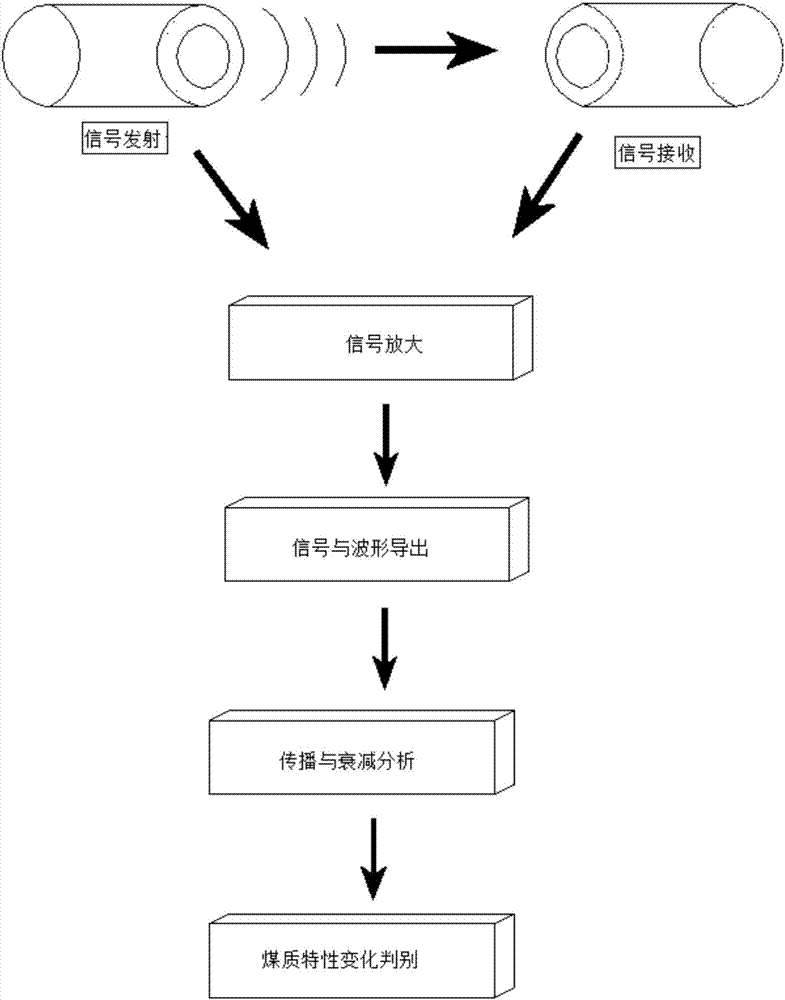
  • Figure 1
    Figure 1
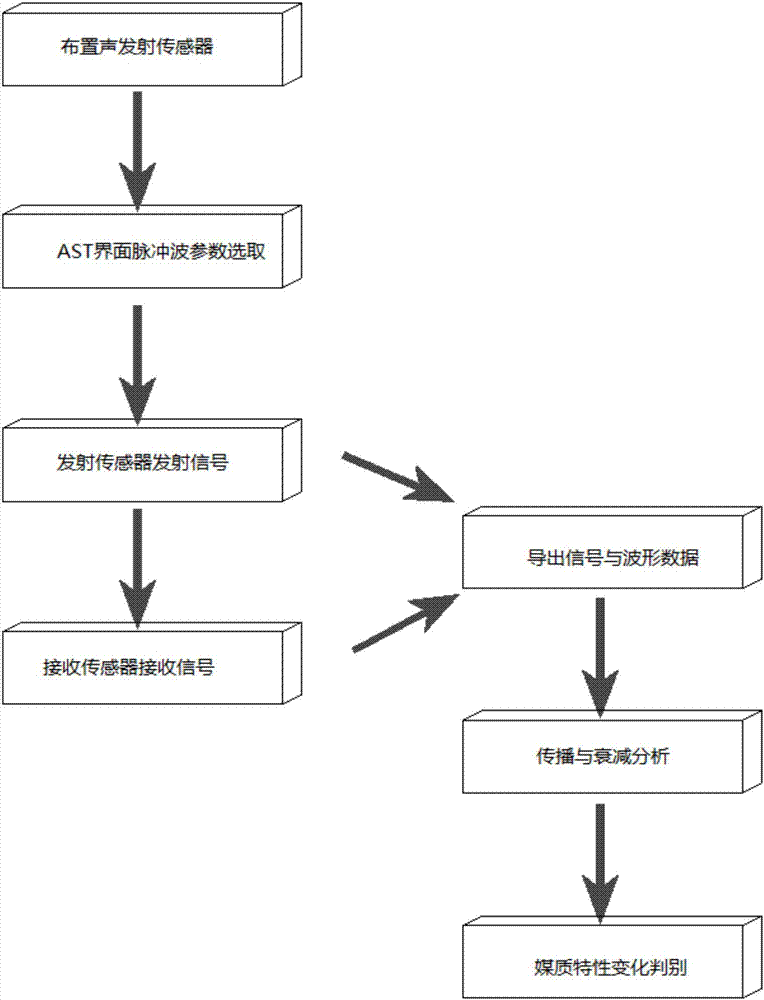
  • Figure 2
    Figure 2
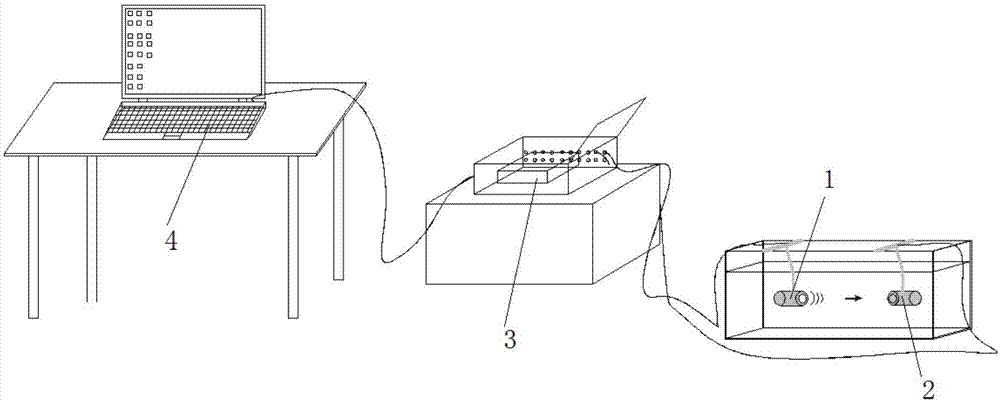
  • Figure 3
    Figure 3
Patent Text Reader

Abstract

The invention relates to a nondestructive testing method for testing soil characteristics of a soil complex through acoustic emission. Multiple pairs of acoustic emission sensors and acoustic reception sensors are reasonably arranged in a medium or on the surface of a material, a reception signal probe receiving surface of each acoustic reception sensor and an emission surface of each acoustic emission sensor are arranged oppositely, the distance between each acoustic emission sensor and each acoustic reception sensor is S, the propagation velocity v=S / t of impulse waves is calculated, the attenuation coefficient alpha of the impulse waves is calculated, the characteristic change of the medium is judged according to the propagation velocity V and the attenuation coefficient alpha of the impulse waves, the main frequency of emission waves is determined according to an acoustic emission spectrogram, and the characteristics of the medium are judged according to the main frequency and theattenuation coefficient alpha obtained through testing. The acoustic emission sensors and the acoustic reception sensors are arranged on the to-be-tested medium, the characteristic change of the physical mechanics of a soil mass is obtained by use of the tested propagation velocity and the attenuation coefficient of the impulse waves. The technology is simple, convenient and flexible to operate.
Need to check novelty before this filing date? Find Prior Art

Description

technical field

[0001] The invention relates to a non-destructive testing method using acoustic emission, and belongs to the field of non-destructive testing. Background technique

[0002] The propagation and attenuation of sound waves in the medium are two important parameters to describe the characteristics of the medium. The propagation and attenuation of sound waves in the medium are closely related to the microstructure and physical and chemical properties of the medium. The acoustic parameters can be measured to detect the Changes in the characteristics of the measured medium.

[0003] Acoustic emission automatic testing technology (AST) is an extension of acoustic emission technology. Acoustic emission technology is the phenomenon of stress wave propagation generated in the dynamic process of materials or structures. Due to too many interference factors, the uncertainty of the test is caused. The acoustic emission automatic test technology is different from the chara...

Examples

Embodiment Construction

[0027] 1 test device

[0028] The test uses a self-made piping model test device, which is different from the traditional sand tank model test. In order to better arrange the acoustic emission sensor 1 and better monitor the whole process of piping damage to the embankment, the device is divided into 4 parts:

[0029] (1) The length of the model box is 200cm, the width is 31cm, the height is 55cm, and the left side 25cm is the water inlet chamber, which is separated from the embankment model by a permeable plate, so that the water flows into the sand tank evenly;

[0030] (2) The model size of the embankment is determined based on the principle that the model seepage field must be similar to the prototype. The model scale is 1:40, the simulated height is 16m, the downstream side slope ratio is 1:2.5, the width of the embankment crest is 4m, and the width of the embankment bottom is 12.4m For the actual levee, the embankment foundation is a double-layer permeable sand foundatio...