
Application of FBXW5 and FBXW5 inhibitor to preparation of medicine for treating fatty liver and related diseases
A technology of FBXW5, fatty liver, applied in the preparation of medicines for preventing, relieving and/or treating fatty liver and related diseases. Application field
Patent Information
- Authority / Receiving Office
- CN · China
- Patent Type
- Applications(China)
- Current Assignee / Owner
- Publication Date
- 2018-07-13
Smart Images
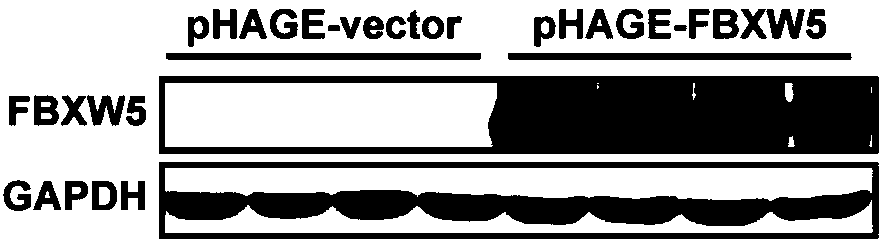
Figure 1 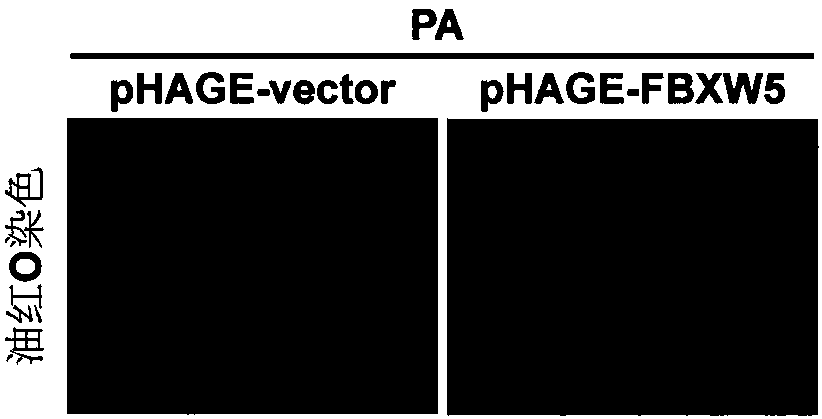
Figure 2 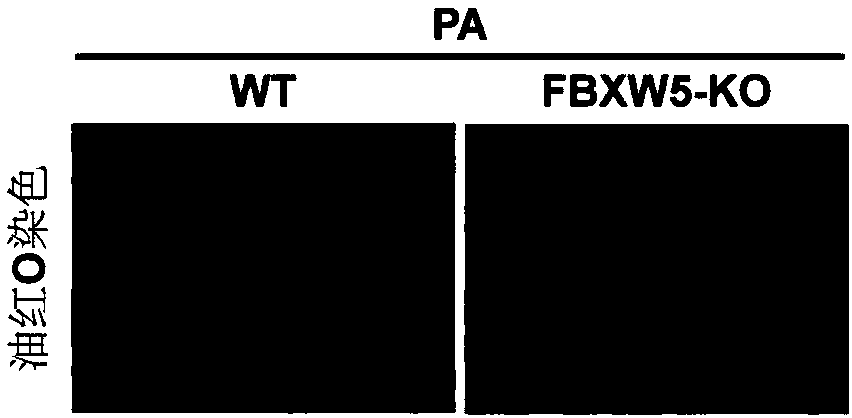
Figure 3
Abstract
Description
technical field
[0001] The present invention belongs to the field of gene function and application, and particularly relates to the application of FBXW5 as a drug target in the screening of drugs for the treatment of fatty liver, and the use of FBXW5 inhibitors in the preparation of drugs for the prevention, alleviation and / or treatment of fatty liver and related diseases application. Background technique
[0002] Nonalcoholic fatty liver disease (NAFLD) refers to the diffuse fatty infiltration of the liver caused by factors other than alcohol. NAFLD is one of the most common chronic liver diseases, and the high incidence group is middle-aged people aged 40-50, with no significant gender difference. With the improvement of living standards, the incidence of NAFLD is gradually increasing. The etiology of NAFLD is relatively complex. At present, obesity, diabetes, long-term use of hormones, improper diet and lifestyle, and insufficient exercise are all believed to be its cau...
Examples
Embodiment 1
[0116] [Example 1] Establishment of FBXW5 overexpressed L02 stably transfected cell line
[0117] According to the steps of establishing the L02 stable transfection cell line in the embodiment, the L02 stable transfection cell line with FBXW5 overexpression was established. Afterwards, the cells were collected, and the expression of FBXW5 in L02 cells was verified by WB. The result is as figure 1 As shown, it can be seen that in L02 cells infected with the FBXW5 overexpression lentiviral system, the expression of FBXW5 was significantly increased, indicating that the FBXW5 overexpression L02 stable transfection cell line was successfully established.
Embodiment 2
[0118] [Example 2] Effect of FBXW5 overexpression on fat accumulation in L02 cells
[0119] 1. Grouping of experimental cells: normal L02 cell control group, FBXW5 stable overexpression L02 cell control group, normal L02 cell experimental group, FBXW5 stable overexpression L02 cell experimental group.
[0120] 2. Establishment and detection of fatty liver cell model: After the cells adhere to the wall and the cells are cultured to 50% healing, add 0.5mM palmitate (PA) to the two experimental groups for stimulation, and add the same amount of BSA to the control group , Cell samples of each group were collected at 0, 3, 6, 9, and 12 hours of stimulation, and stained with Oil Red O.
[0121] The results of Oil Red O staining were as follows: figure 2 As shown, the cells in the control group had no obvious red color, but when the experimental group was stimulated by adding PA, the area of the red fat droplet in the experimental group was significantly increased compared with t...
Embodiment 3
[0122] [Example 3] Effect of FBXW5 knockout on fat accumulation in liver cells
[0123] (1) Grouping of experimental cells: WT primary hepatocyte control group, FBXW5-KO primary hepatocyte control group, WT primary hepatocyte experimental group, FBXW5-KO primary hepatocyte experimental group.
[0124] (2) Establishment and detection of fatty liver cell model: as soon as the cells adhere to the wall, after the cells are cultured to 50% healing degree, 0.5mM palmitate (PA) is added to the two experimental groups for stimulation, and the same amount of PA is added to the control group Cell samples of each group were collected at 0, 3, 6, 9, and 12 hours of stimulation, and oil red O staining and RT-PCR detection were performed.
[0125] The results of Oil Red O staining were as follows: image 3 As shown, the cells in the control group had no obvious red color, and the area of red fat droplets in the cells in the experimental group increased after adding PA stimulation, but th...