
Biomarker for assisting diagnosis of sudden asthenozoospermia and application thereof
It is an auxiliary diagnosis and burst technology, which is applied in the direction of microbial determination/inspection, biochemical equipment and methods, DNA/RNA fragments, etc. It can solve the problems of cumbersome processing procedures and high technical requirements for experimenters, and achieve increased sensitivity and Specificity, ease of use, and inconvenience-reducing effect
- Summary
- Abstract
- Description
- Claims
- Application Information
AI Technical Summary
Problems solved by technology
Method used
Image

Examples
Embodiment 1
[0053] The collection of embodiment 1 sample
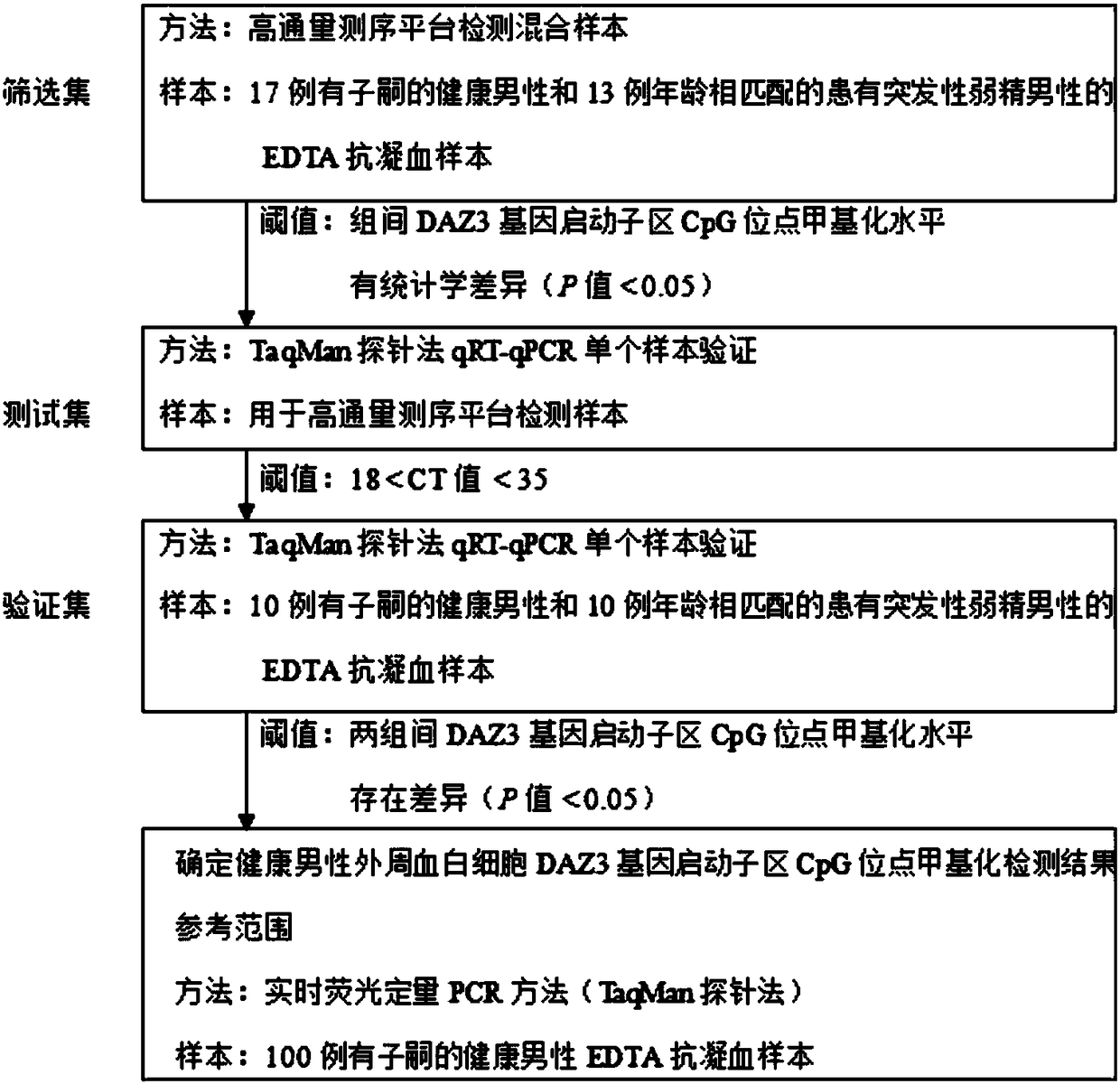
[0054] We collected EDTA anticoagulated whole blood samples from 17 healthy men with offspring and 13 age-matched men with sudden asthenospermia. The details are as follows:
[0055] Table 1 Sample information table
[0056]
[0057] Data are presented as mean ± SD. ***P<0.001.
Embodiment 2
[0058] Example 2 Quantitative detection of the methylation level of each CpG site in the promoter region of the DAZ1-3 gene in peripheral blood leukocytes of healthy men with offspring and men with sudden asthenospermia
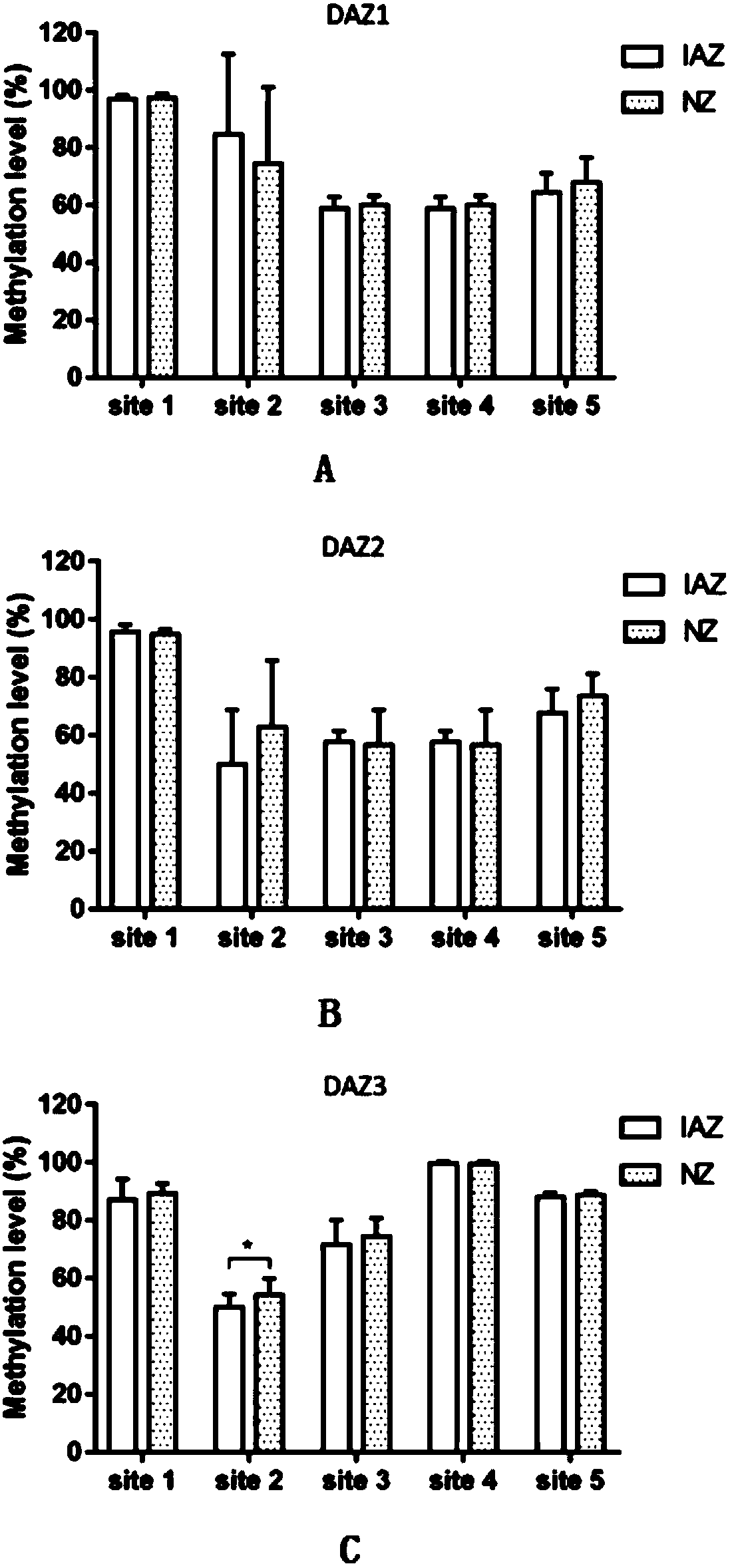
[0059] In the initial screening stage, quantitative detection of CpG sites in the promoter region of the DAZ1-3 gene in peripheral blood leukocytes was performed on 17 healthy men with offspring and 13 age-matched men with sudden asthenospermia to screen for the presence of methylation CpG sites with level differences. The results showed that the methylation level of a specific CpG site (-312~-313) in the promoter region of the DAZ3 gene was different between the two groups (P figure 2 ). Table 2 CpG site (-312~-313) methylation in the promoter region of DAZ3 gene in the peripheral blood leukocytes of healthy men with offspring and men with sudden asthenospermia initially screened by the Sequenom MassARRAY methylation quantitative detection and analysis platf...
Embodiment 3
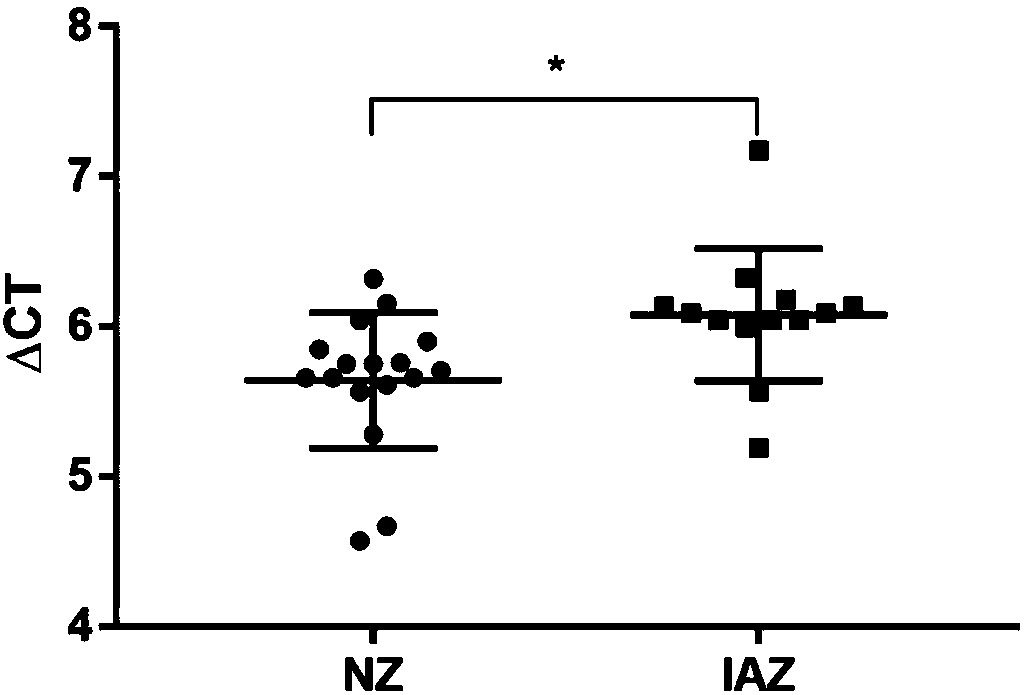
[0062] Example 3 Real-time fluorescence quantitative PCR experiment of the methylation level of the promoter region CpG site (-312~-313) of the DAZ3 gene in peripheral blood leukocytes
[0063] The quantitative PCR method was used to verify the CpG sites initially screened from the methylation quantitative detection and analysis platform for batch samples one by one. The experimental principle and experimental steps of quantitative PCR are the same as those of RT-PCR. The instrument is a Roche Cobas z 480.
[0064] (1) Use the DNA blood mini kit (Qiagen Company) to extract the total DNA of peripheral blood leukocytes
[0065] a) Add 20μL Qiagen Protease to the bottom of 1.5mL EP tube;
[0066] b) Add 200 μL EDTA anticoagulated blood sample;
[0067] c) Add 200 μL Buffer AL and vortex for 15 seconds;
[0068] d) 56°C water bath for 10 minutes;
[0069] e) Briefly centrifuge the 1.5mL EP tube;
[0070] f) Add 200 μL of absolute ethanol, vortex for 15 seconds, and centrifug...
PUM
 Login to View More
 Abstract
Description
Claims
Application Information
 Login to View More