
A Robust Broadband Beamformer Design Method Based on Probability Constraints
A design method and technology of the former, which can be applied to instruments, radio wave measurement systems, etc., can solve the problems of being too conservative and expected signal attenuation, and achieve the effect of simple, intuitive, and good passband beam response performance.
Patent Information
- Authority / Receiving Office
- CN · China
- Patent Type
- Patents(China)
- Current Assignee / Owner
- Publication Date
- 2022-06-17
Smart Images
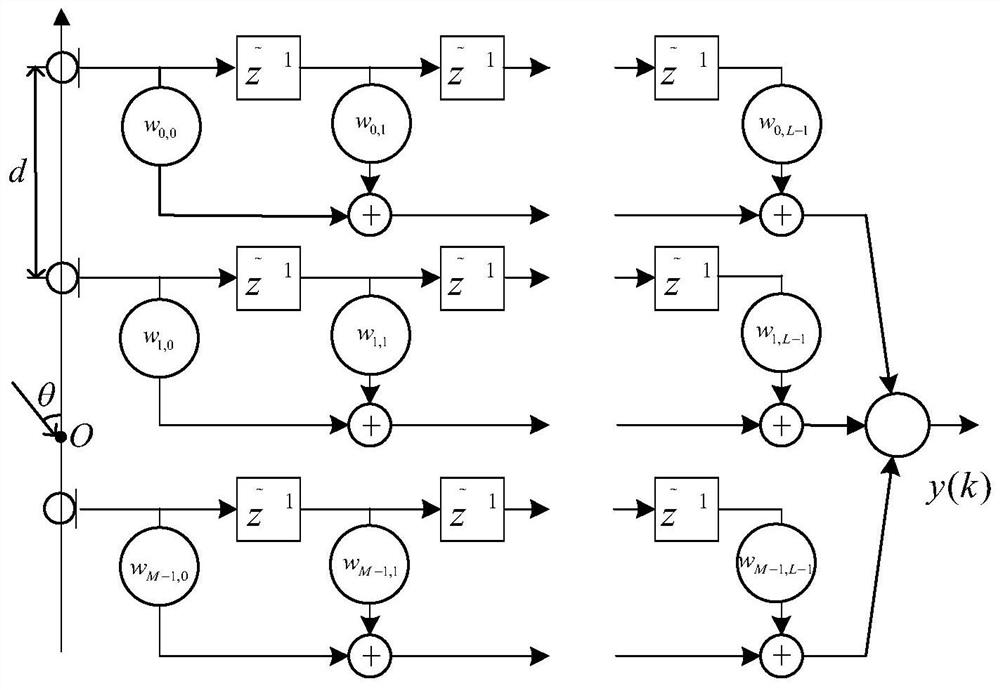
Figure 1 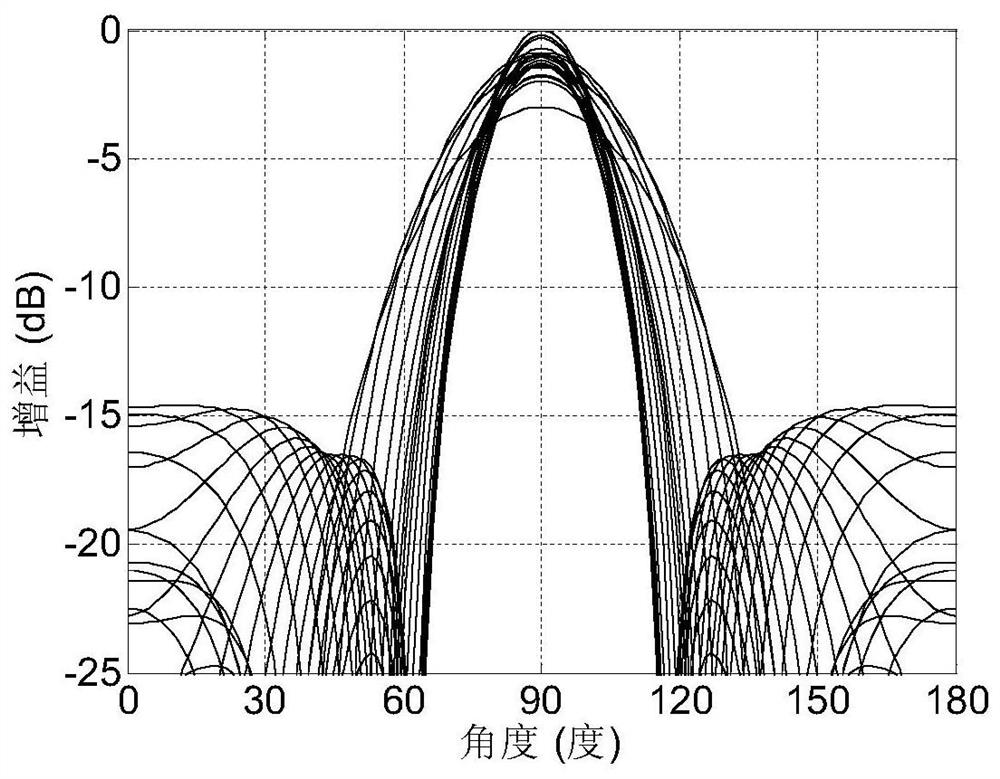
Figure 2 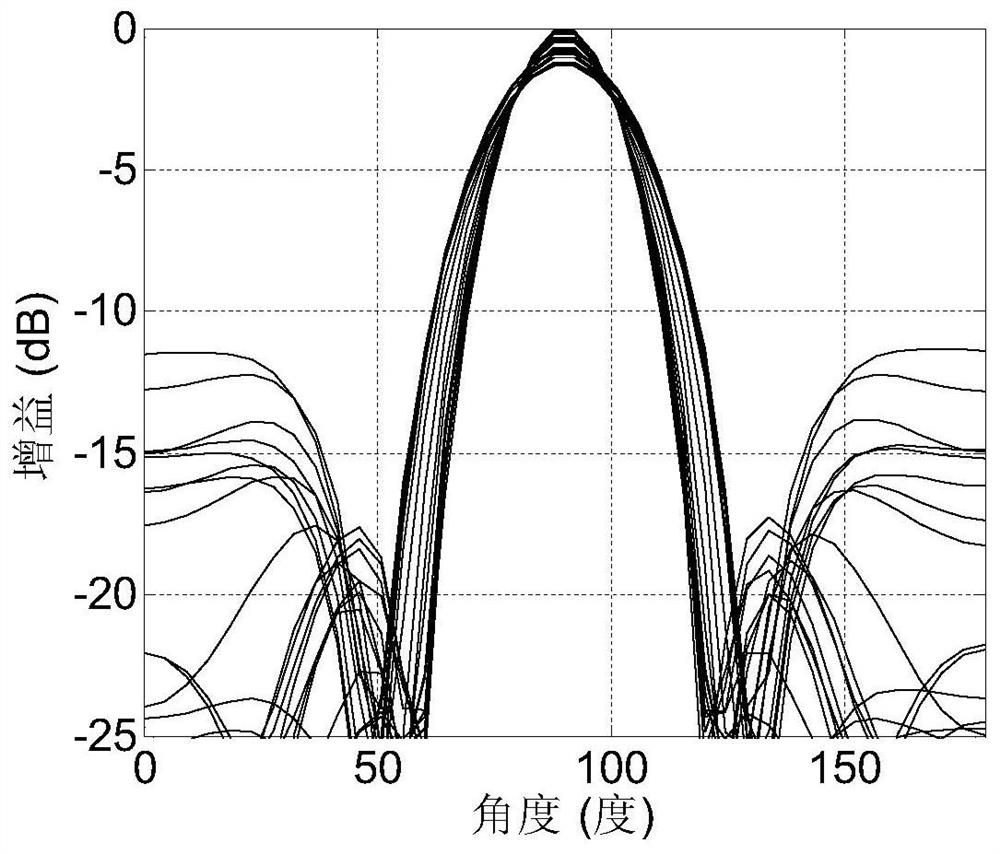
Figure 3
Abstract
Description
technical field
[0001] The invention relates to a method for designing a robust broadband beamformer based on probability constraints, and belongs to the technical field of array signal processing. Background technique
[0002] In audio and speech signal processing, the design of beamformers using microphone arrays is an important research direction. Fixed-weight beamformers are widely used because they do not depend on received data, are simple in design, easy to implement, and have good real-time performance. However, in fact, the fixed-weight beamforming design will be affected by the microphone mismatch error in the actual environment, which will lead to a substantial decrease in the performance of the fixed-weight beamformer, which not only leads to the inability to effectively suppress interference or noise, but also leads to serious attenuation of the desired signal. . Therefore, designing broadband fixed-weight beamformers with robust performance is an important res...
Examples
Embodiment 1
[0099] Comparison diagram of passband frequency invariant energy and WNG comparison between the robust design method based on probability constraints and the conventional robust design method based on stop-band constraint optimization and the conventional worst performance optimization design method under different conditions
[0100] Consider a linear array composed of M=7 array elements, the array element spacing d=0.04m, and the number of filter taps connected to each array element is L=20. Set the sampling frequency f s =8000Hz, and the considered frequency band range is [1500,3500]Hz, the angle range of the passband is [80°,100°], and the angle range of the stopband is [0°,60°]∪[120°,180° ]. The passband expected response is P d (θ p ,f)=exp{-j2πf(L-1)f s -1 / 2}, while the stopband parameter Γ sb =-6dB. For the microphone error information, we assume |E[Δa m ]|≤0.02, |E[Δd m ]|≤0.0007, |Var[Δa m ]|≤0.015, and |Var[Δd m ]|≤2×10 -6 m 2 . K=40, N p = 20. ...