
Cable force testing method based on support stiffness of unknown damper under complicated boundary condition
A technology of boundary conditions and testing methods, which is applied to rubber shock absorbers, frequency method to measure cable force, and cable force testing based on unknown shock absorber support stiffness. Conservation and other issues, to achieve the effect of fast speed, improved efficiency, and improved accuracy of cable force calculation
- Summary
- Abstract
- Description
- Claims
- Application Information
AI Technical Summary
Problems solved by technology
Method used
Image

Examples
Embodiment
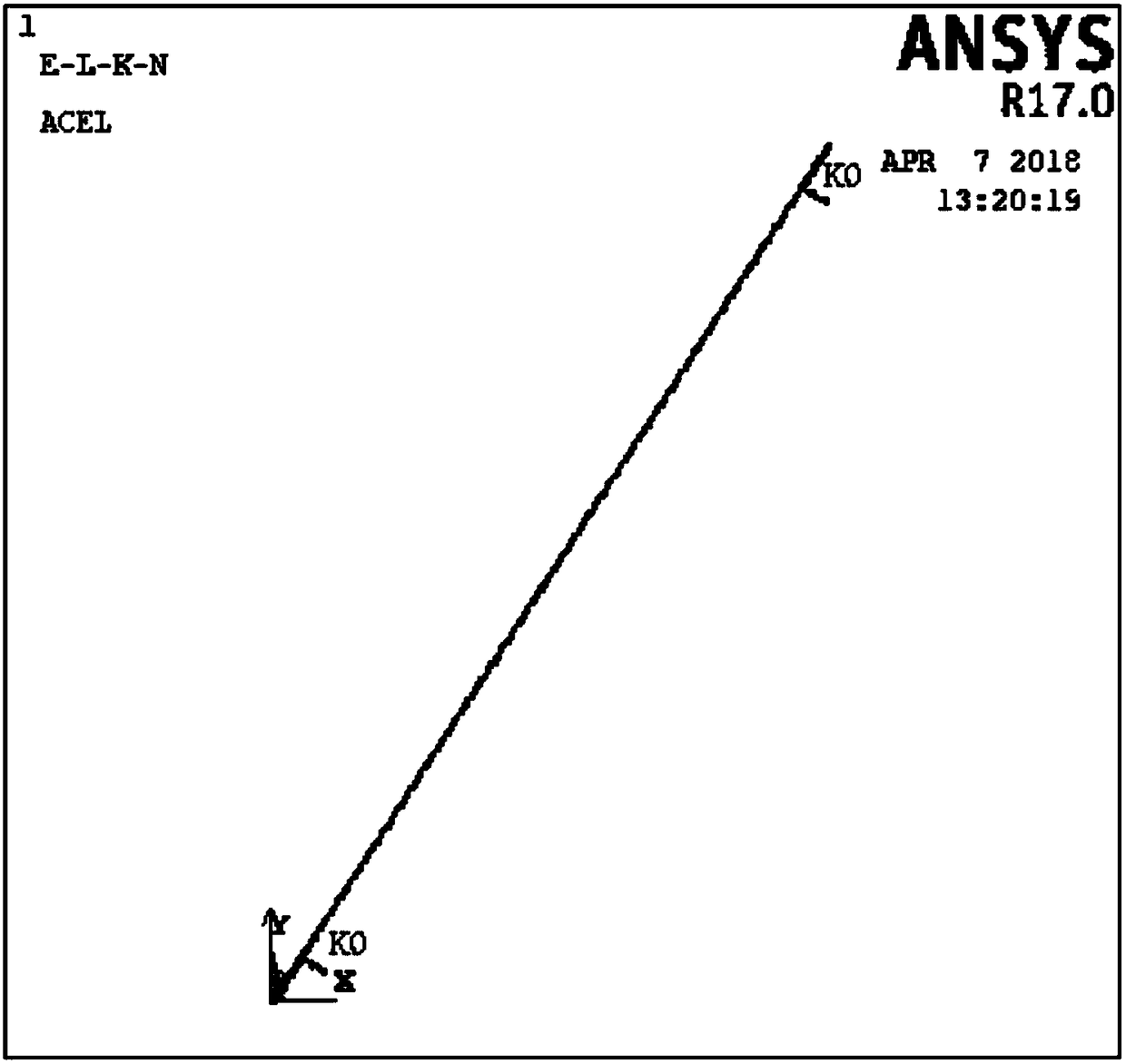
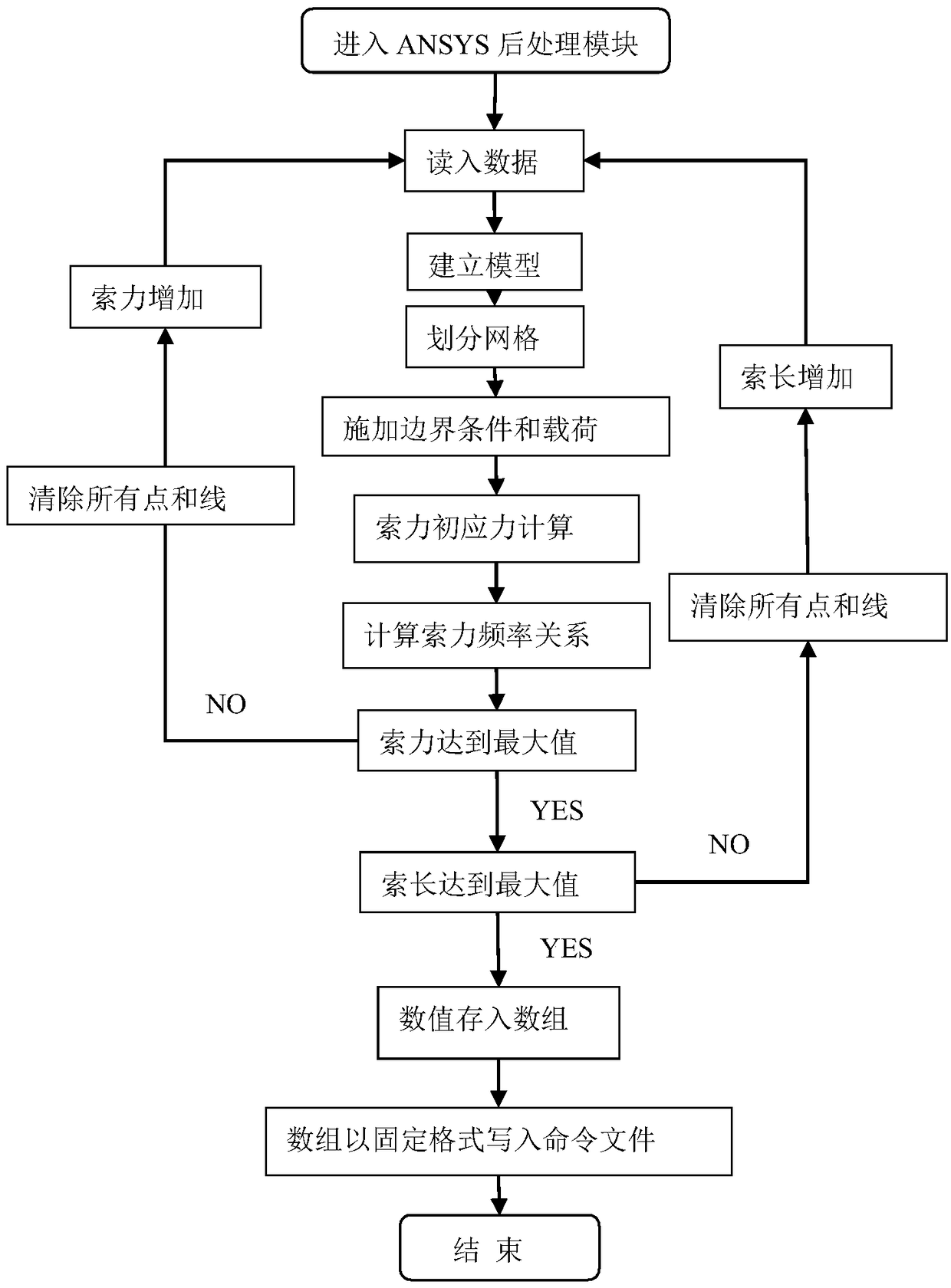
[0045] This embodiment is mainly based on the finite element software ANSYS to establish a heterogeneous cable, identify the support stiffness of the vibration damping device, and correct the cable force measurement method after the frequency relationship of the cable force. The specific steps are as follows:
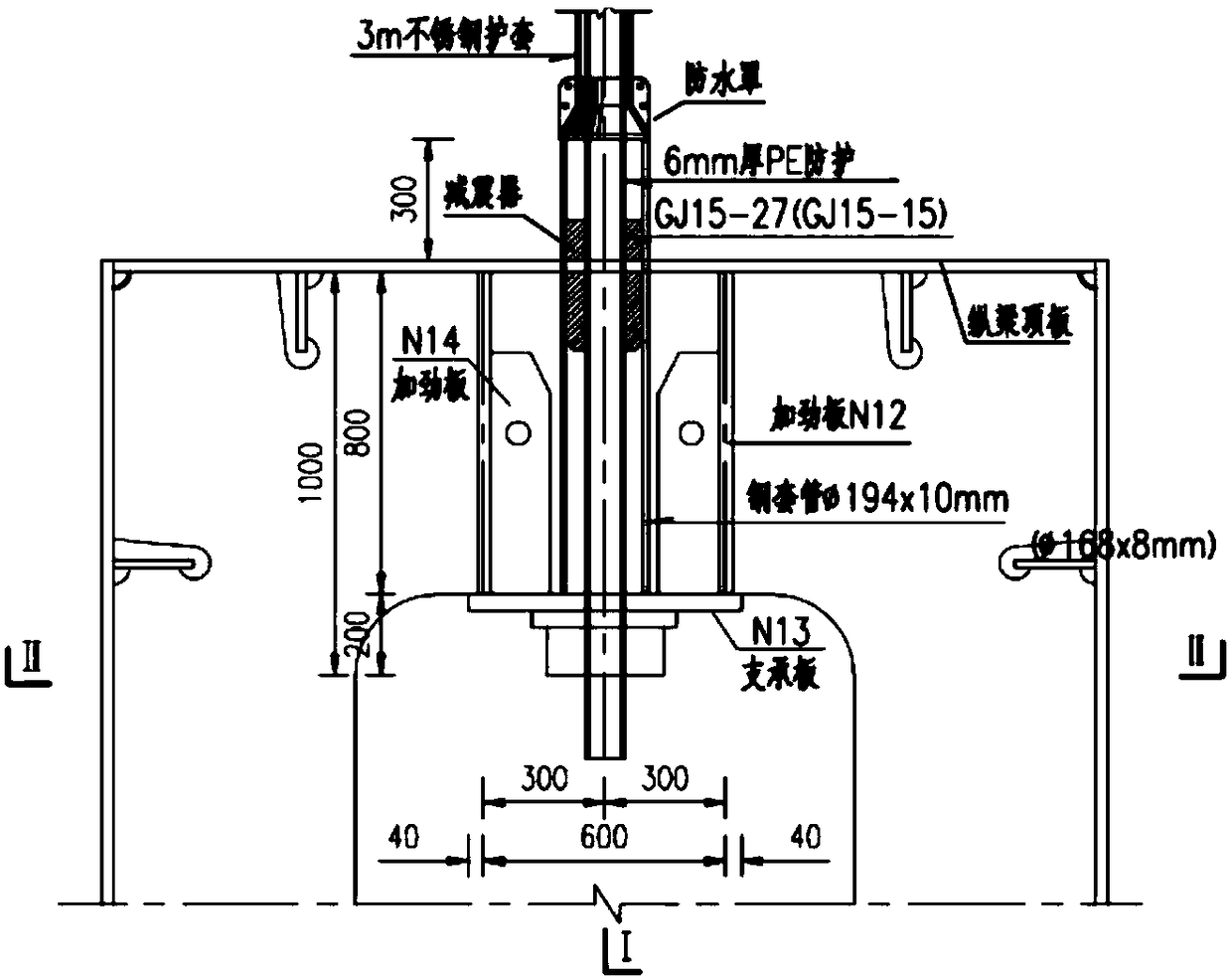
[0046] R1. After the cable has been installed with a vibration damping device, measure the first three-order frequency f of the vibration of a cable1 1 , f 1 2 , f 1 3 ;
[0047] R2. Assuming that the damping device is simplified as an elastic support, calculate the cable force-frequency relationship of the pull cables with different support stiffnesses;
[0048] R3. Use formula (3) to calculate the residual sum of squares of the measured first three order frequencies obtained in step R2 and the theoretical first three orders under each support stiffness.
[0049] R4. According to the calculation result of step R3, find the support stiffness of the damping device c...
PUM
 Login to View More
 Abstract
Description
Claims
Application Information
 Login to View More