
Fast approximate K neighbor method based on tree strategy and balanced K-means clustering
A technology of K-means and K-nearest neighbors, which is applied to instruments, character and pattern recognition, computer components, etc., can solve the problems of low algorithm efficiency and achieve the elimination of uncertainty, reduction of search time, strong robustness and practicability Effect
Patent Information
- Authority / Receiving Office
- CN · China
- Current Assignee / Owner
- Publication Date
- 2019-07-30
Smart Images
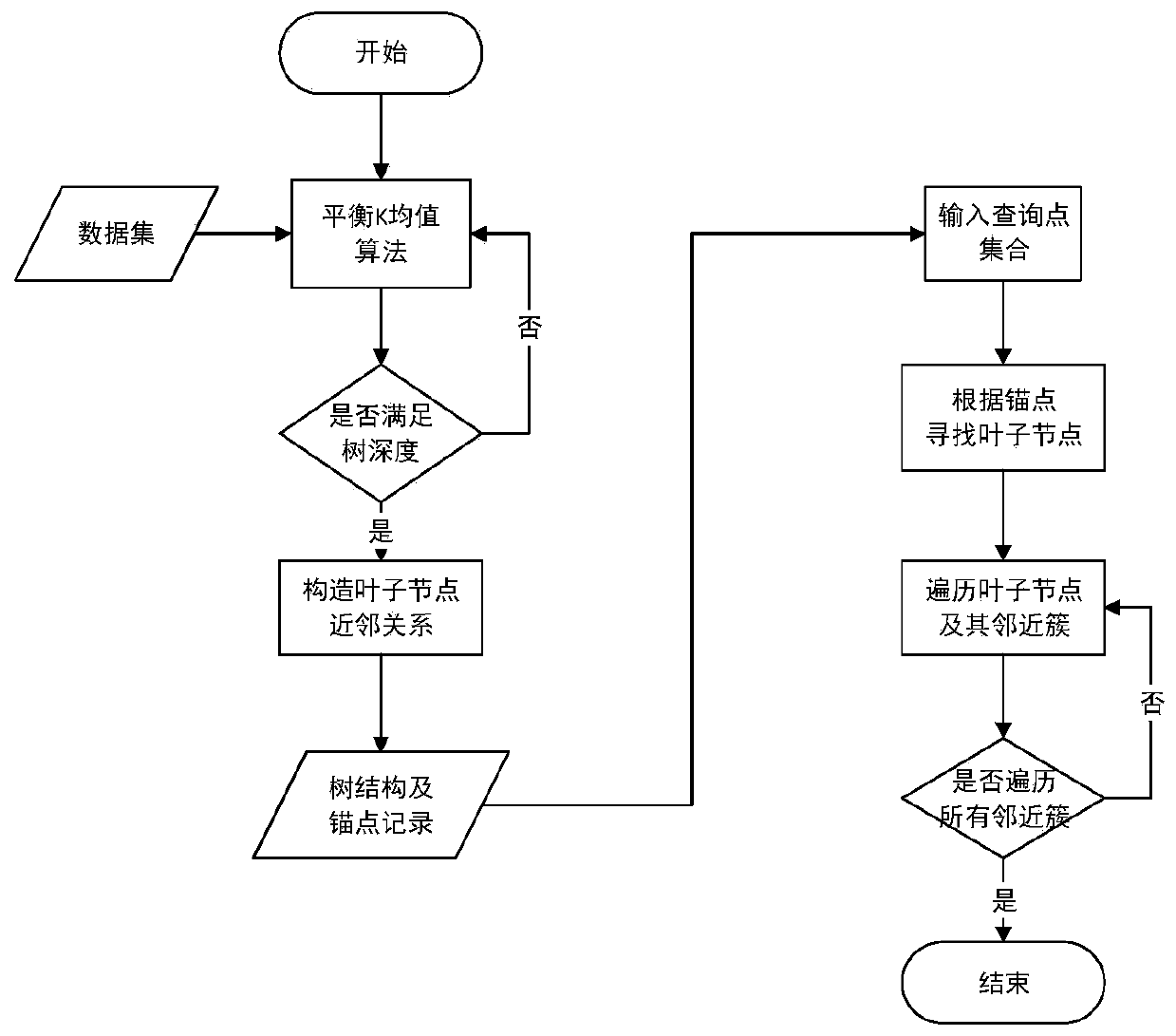
Figure 1 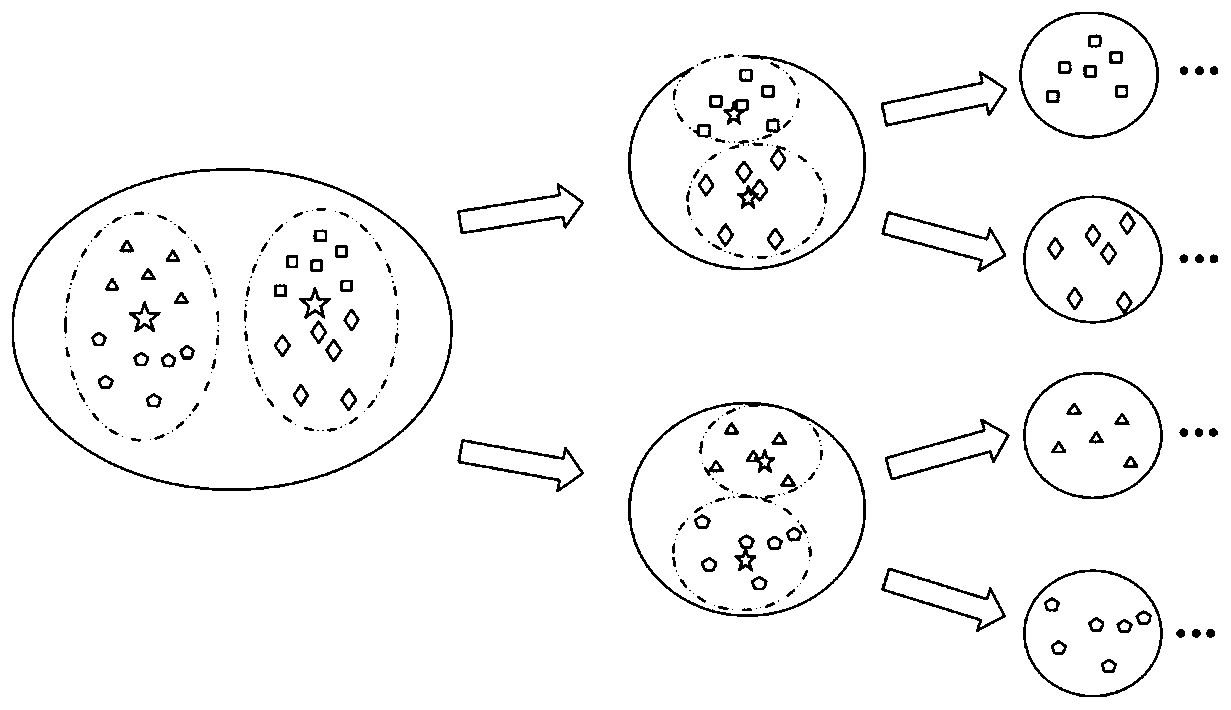
Figure 2 
Figure 3
Abstract
Description
technical field
[0001] The invention belongs to the technical field of machine learning and data mining, and in particular relates to a fast approximate K nearest neighbor method based on tree strategy and balanced K-means clustering. Background technique
[0002] In the era of mobile Internet, people's daily life is faced with the impact of massive data every day, such as personal information, video records, image collection, geographic information, log files, etc., in the face of such a large and growing data information, how to process all The effective storage, indexing and querying of the required information is a hot research topic both at home and abroad.
[0003] Approximate K-nearest neighbor retrieval was initially applied to document retrieval systems as a method for finding similar document information, and then in geographic information systems, K-nearest neighbor retrieval was also widely used in location information, query, analysis and statistics of spatial d...
Examples
Embodiment Construction
[0012] The present invention will be further described below in conjunction with the accompanying drawings and embodiments, and the present invention includes but not limited to the following embodiments.
[0013] Such as figure 1 As shown, the present invention provides a fast approximate K-nearest neighbor method based on the tree strategy and balanced K-means clustering, which mainly consists of two main steps of building a balanced tree and finding K-nearest neighbors. The basic implementation process is as follows:
[0014] 1. Building a Balanced Tree
[0015] First, the input data set is clustered using the balanced K-means clustering algorithm, and the cluster centers of the two types of samples with equal sample numbers are obtained. Specifically:
[0016] The two types of balanced K-means clustering algorithm models are as follows:
[0017]
[0018] Among them, C is the center of the cluster, G is the index matrix, and X is the input data set, where the i-th row...