
Active load reducing device for sudden load of aero-engine tester
An aero-engine and active load reduction technology, which is applied in the field of aero-engines, can solve problems such as the inability to meet the needs of fan blade fly-off load vibration reduction and load reduction, and achieve good economy, low cost, and good repeatability.
- Summary
- Abstract
- Description
- Claims
- Application Information
AI Technical Summary
Problems solved by technology
Method used
Image

Examples
Embodiment Construction
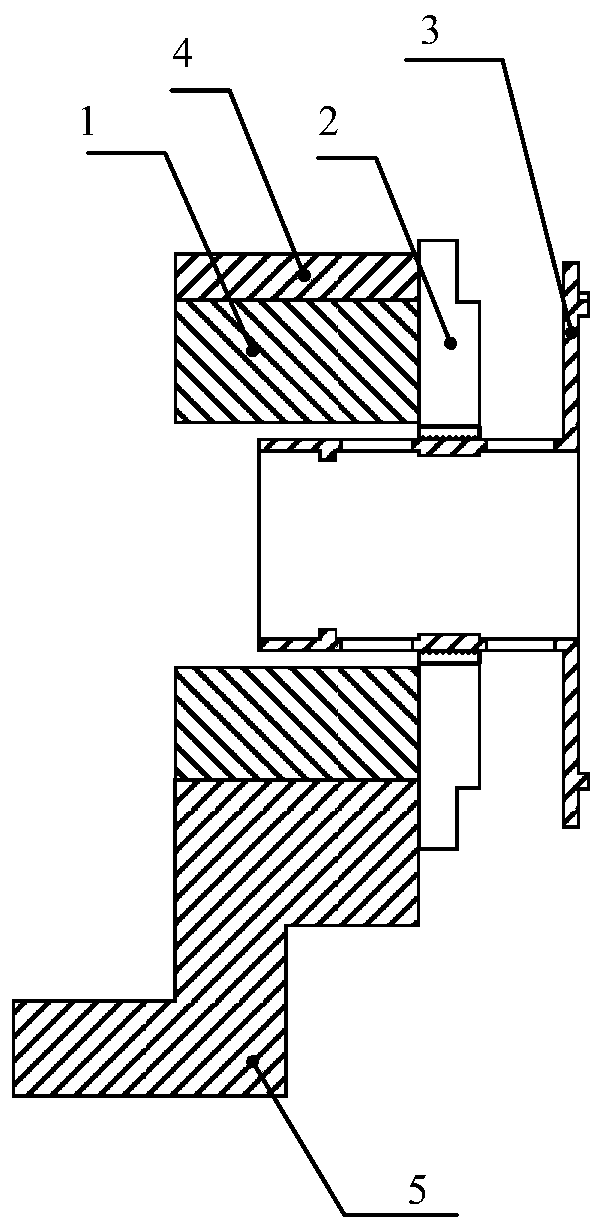
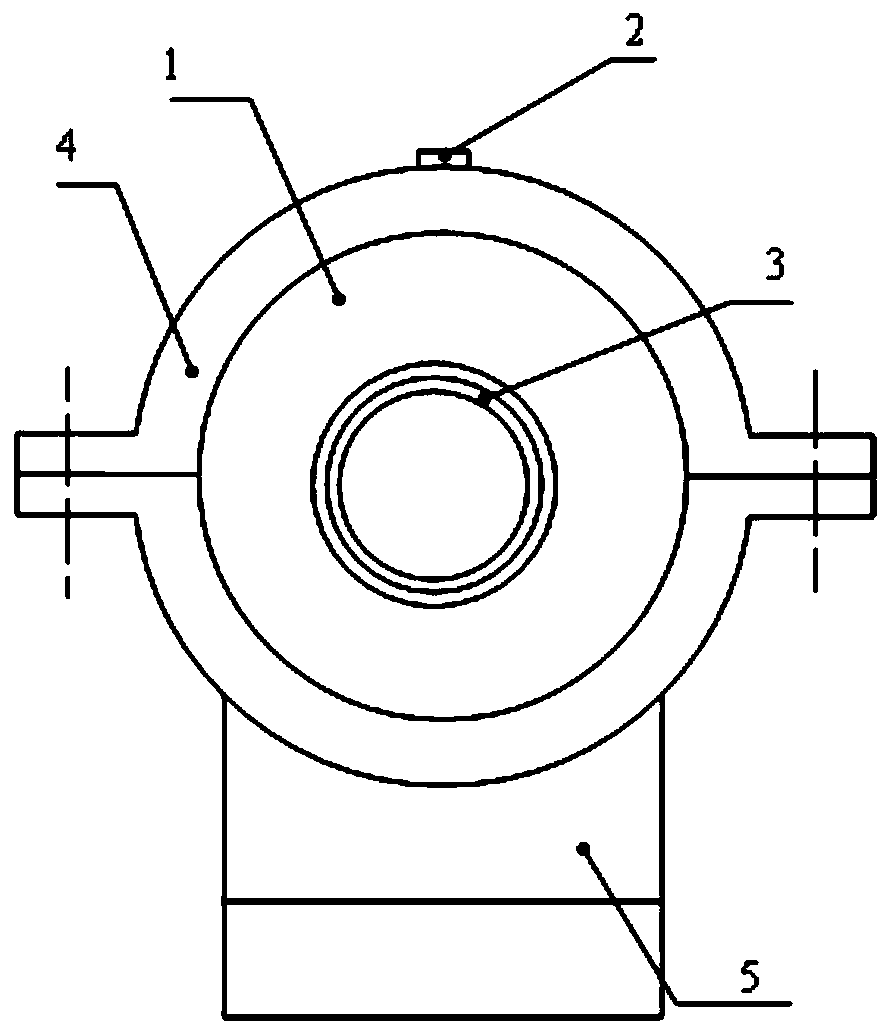
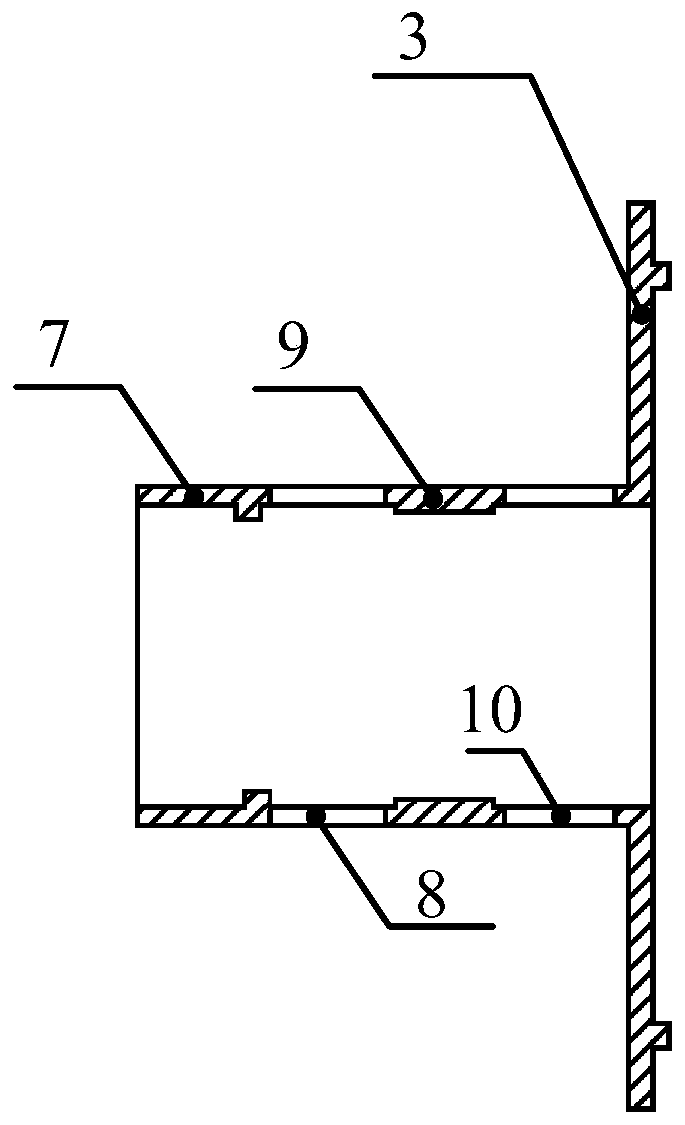
[0032] This embodiment is an active load-reducing device for an aero-engine experimenter after sudden loading, including a pneumatic chuck 1 , chuck jaws 2 , variable stiffness elastic support 3 , collar 4 and chuck support 5 . Wherein: the pneumatic chuck 1 is placed on the upper surface of the chuck support 5 and fixed by the collar 4 . The working sleeve at one end of the variable stiffness elastic support 3 is loaded into the inner surface of the pneumatic chuck, and the flange at the other end of the variable stiffness elastic support is connected with the simulated experimenter.
[0033] The pneumatic chuck 1 is a hollow rotary body. The inner diameter of the pneumatic chuck is 5-10 mm larger than the outer diameter of the working section of the variable stiffness elastic support 3 . There is a three-jaw chuck on one end face of the pneumatic chuck, and the three-jaw chuck adopts the prior art. The pneumatic chuck 1 is electrically controlled: when the power is on, the...
PUM
 Login to View More
 Abstract
Description
Claims
Application Information
 Login to View More