High-noise image denoising method based on deep convolutional network

A deep convolution and high-noise technology, applied in the fields of image processing and computer vision, to achieve the effect of solving covariate transfer, reducing boundary artifacts, and improving denoising efficiency

CN110648292AActive Publication Date: 2020-01-03KUNMING UNIV OF SCI & TECH
7 Cites 6 Cited by

Patent Information

Authority / Receiving Office
CN · China
Patent Type
Applications(China)
Current Assignee / Owner
Publication Date
2020-01-03

Smart Images

  • Figure 1
    Figure 1
  • Figure 2
    Figure 2
  • Figure 3
    Figure 3
Patent Text Reader

Abstract

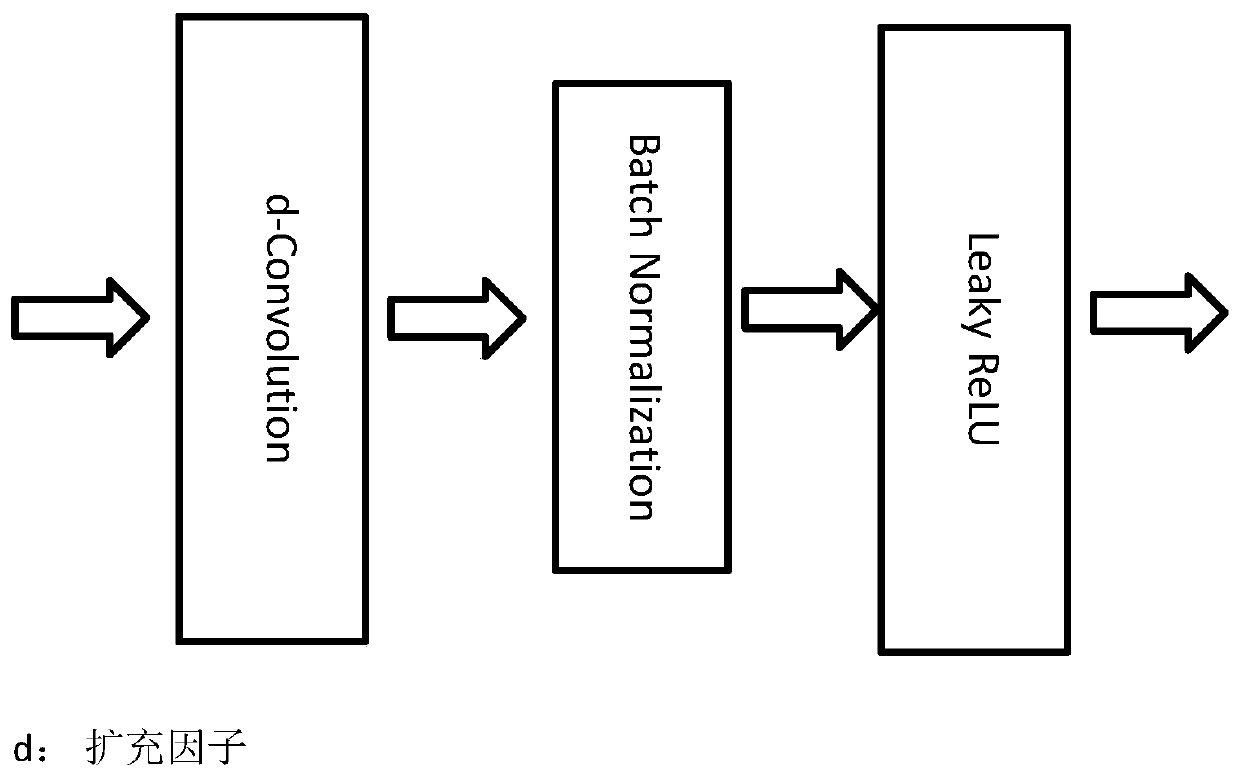
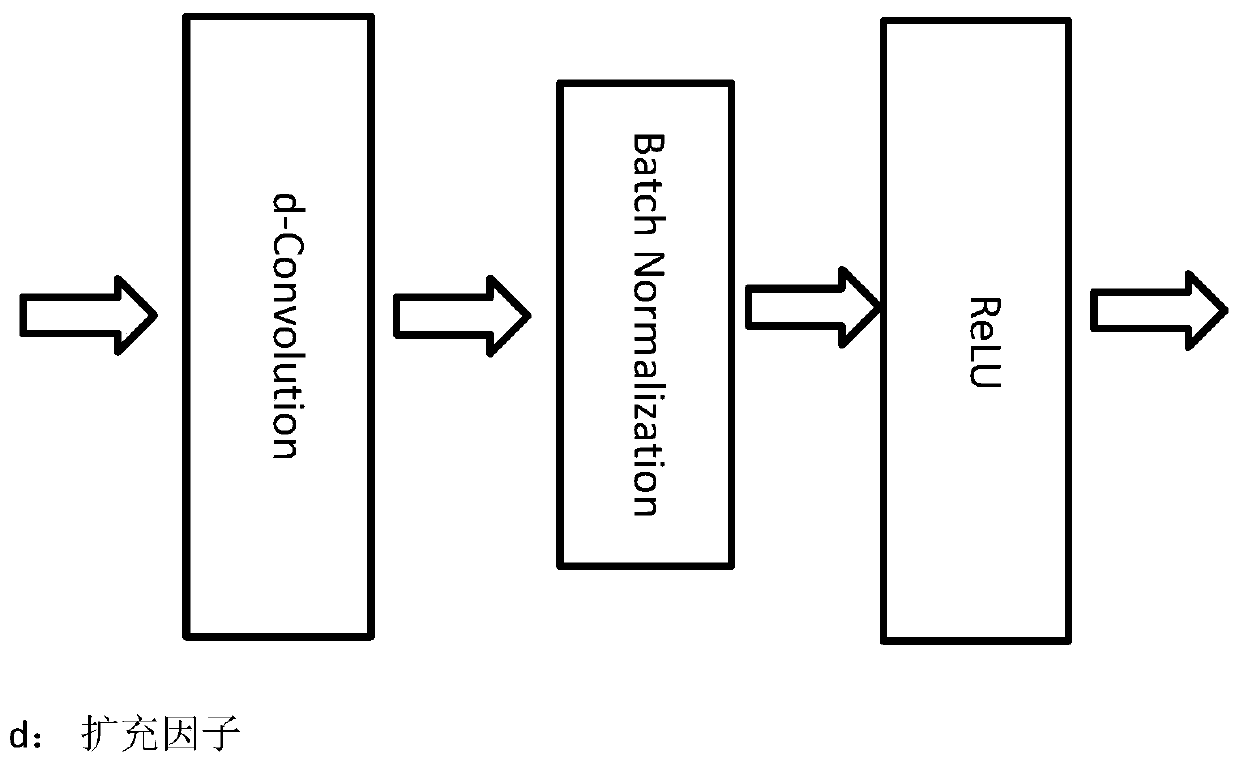
The invention relates to a high-noise image denoising method based on a deep convolutional network. The method comprises the following steps: firstly, carrying out feature extraction on an image accommodating noise by adopting incremental expansion convolution, batch standardization operation and a Leakly ReLU function; then the image is recovered, and a mode of combining decreasing expansion convolution and a ReLU activation function is adopted; realizing separation of image noise and content by the network model through combination of residual learning and batch standardization operation; and finally, the optimal weight parameter of the network model is learned by solving the value of the minimized loss function (adopting different loss functions for different noise distributions). And finally, denoising the noise image by using the trained network model. The method can effectively remove the image noise in a high-noise environment, improves the visual effect of the image, and is better in practicality.
Need to check novelty before this filing date? Find Prior Art

Description

technical field

[0001] The invention relates to the fields of image processing and computer vision, and mainly relates to an image denoising method in the field of deep learning, especially a high-noise image denoising method based on a deep convolutional network. Background technique

[0002] With the successful application of deep learning, especially the convolutional neural network in the fields of image feature extraction and recognition, it provides a new direction for image denoising, especially in high-noise environments. Compared with the traditional classic image denoising method, the denoising method based on deep convolutional network has a stronger learning ability. By using a large number of noisy image sample data for training, it can effectively improve the network model's ability to adapt to different noise distributions and different Adaptability to noise level, better denoising generalization ability. In 2012, Xie et al. applied the stacked sparse denoisi...

Examples

Embodiment Construction

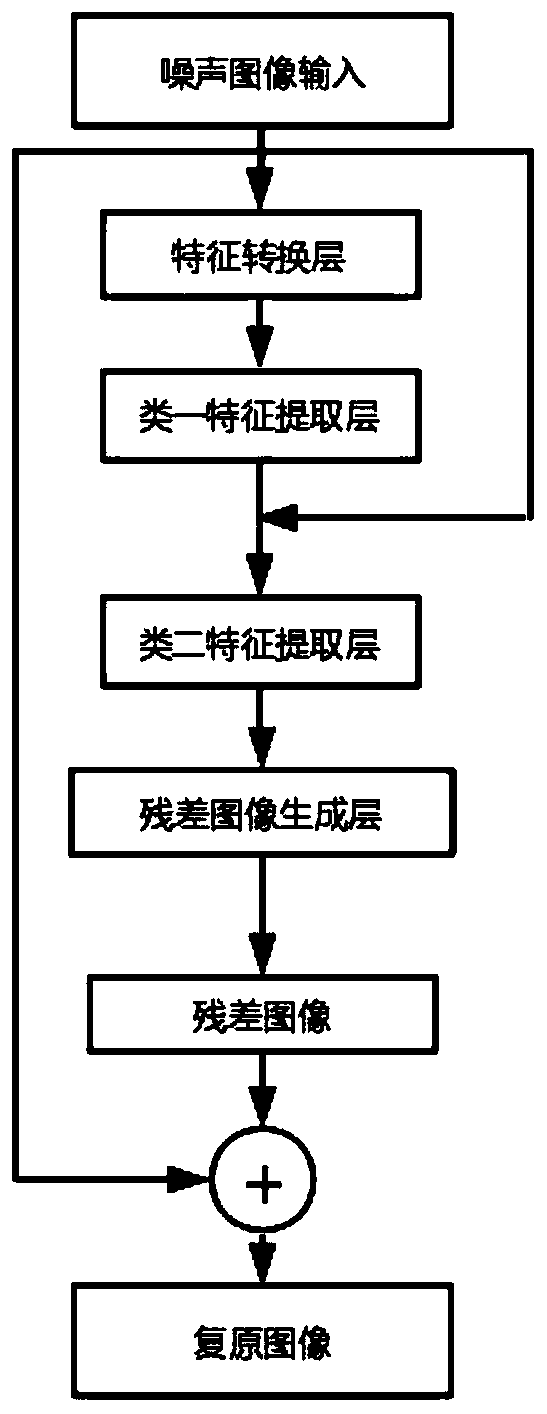
[0050] like figure 1 As shown, this embodiment provides a method for denoising a high-noise image based on a deep convolutional network, and the process includes:

[0051] Step S1: selection of data set;

[0052] Step S2: Preprocessing the selected data set;

[0053] Step S3: Combining with the noise type in the image, establish a symmetrical expanded convolutional residual network;

[0054] Step S4: sending the noisy image and the corresponding clear label image into the symmetrical expanded convolutional residual network to obtain an image denoising network model;

[0055] Step S5: By solving the value of the minimized loss function, the optimal parameters of the network model are learned, and the noise image is restored by using the trained network model.

[0056] In step S1, in this embodiment, 300 images in BSDS300 are used as a training set, and Set68 is used as a test set, which contains 68 natural images.

[0057] In step S2, this embodiment uses additive Gaussian ...