
New heteroaryl amide derivatives as selective inhibitors of histone deacetylases 1 and 2 (hdac1-2)
A kind of heteroaryl, C1-C3 technology, applied in the field of new heteroaryl amide derivatives, can solve the problem of not showing HDAC isozyme selectivity and the like
Patent Information
- Authority / Receiving Office
- CN · China
- Patent Type
- Applications(China)
- Current Assignee / Owner
- Publication Date
- 2020-04-21
Smart Images
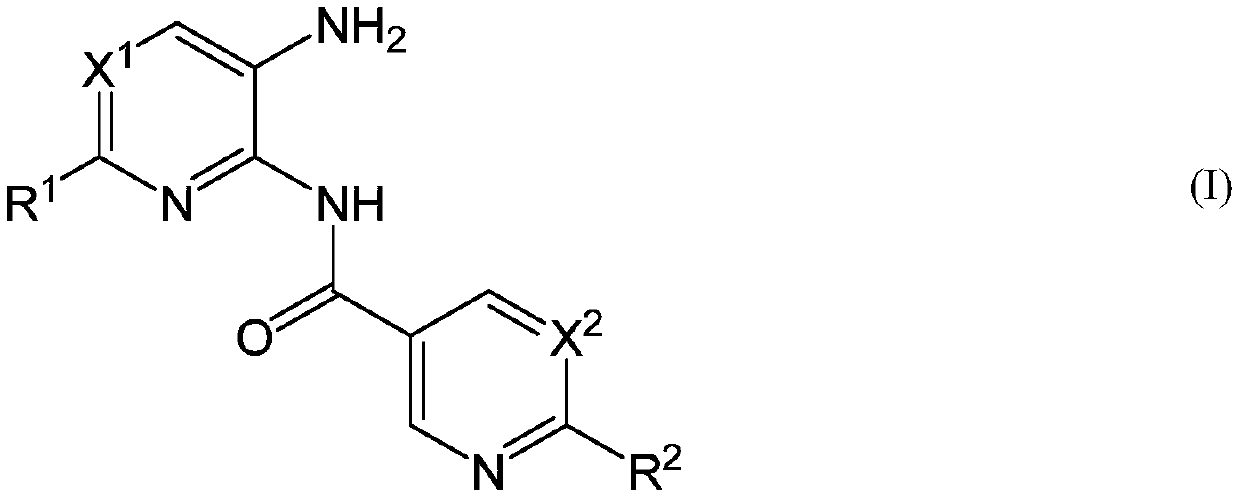
Figure 1 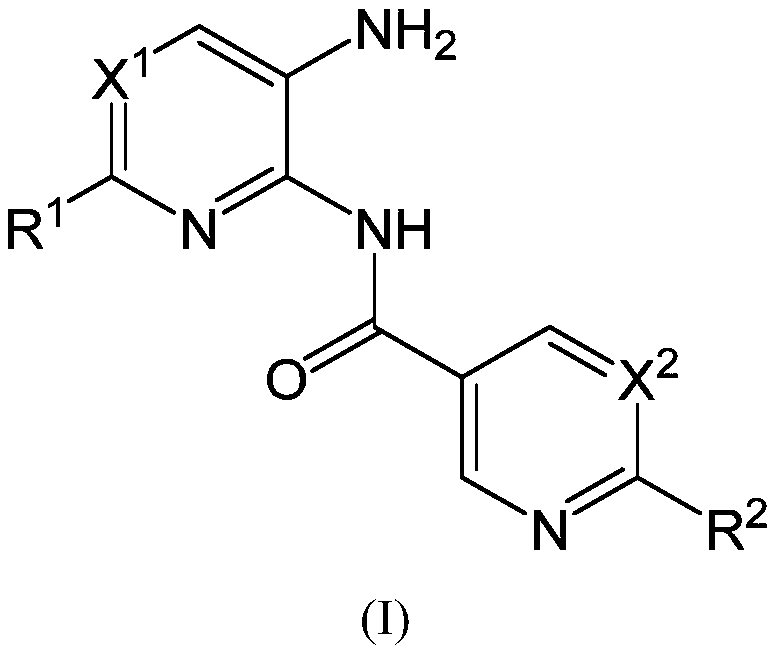
Figure 2 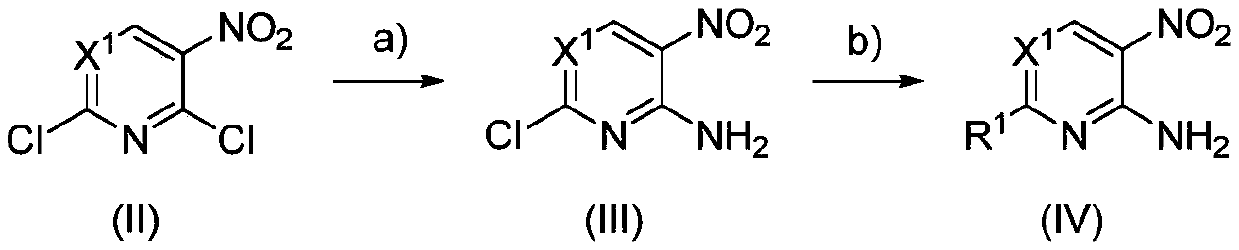
Figure 3
Abstract
Description
technical field
[0001] The present invention relates to novel heteroarylamide derivatives as selective inhibitors of class I histone deacetylases of at least one enzyme selected from HDAC1 and HDAC2.
[0002] Other objects of the present invention are to provide methods for the preparation of these compounds; pharmaceutical compositions comprising an effective amount of these compounds; compounds for the treatment of pathological conditions, disorders or diseases which can be achieved by inhibiting at least one member selected from HDAC1 and HDAC2 The activity of the enzyme histone deacetylase class I is improved, such as cancer, neurodegenerative diseases, infectious diseases, inflammatory diseases, heart failure and cardiac hypertrophy, diabetes, polycystic kidney disease, sickle cell disease and beta - Thalassemia disease. Background technique
[0003] Histone deacetylases (HDACs) catalyze the removal of acetyl groups from histones (proteins that organize and regulate ch...
Examples
Embodiment 1
[0225] To a solution of Intermediate 5 (310 mg) in ethanol (20 ml) and ethyl acetate (35 ml) was added Pd / C (10%) (46 mg, 15% (w / w)) and the reaction was stirred under hydrogen overnight. After completion of the reaction as monitored by TLC, the reaction mixture was filtered through celite and evaporated to a residue. The residue was purified by preparative HPLC to obtain Example 1 as an off-white solid (20 mg, 10% yield).
[0226] 1 H-NMR (400MHz, DMSO-d 6 ):δ=10.25(br,s,1H),8.80(d,J=4.4Hz,1H),8.15(d,J=11.6Hz,1H),7.955(d,J=7.2Hz,2H),7.68 (d, J=8.0Hz, 1H), 7.42(t, J=7.6Hz, 2H), 7.31(m, 2H), 6.92(d, J=9.2Hz, 1H), 5.14(br,s, 2H) , 3.65 (t, J = 4.8Hz, 4H), 2.40 (t, J = 4.8Hz, 4H), 2.22 (s, 3H).
[0227] HPLC-MS: Rt 11.120m / z 389.6 (MH + ).
[0228] The following examples were synthesized using the procedure described in Scheme 6, starting from the corresponding pyridin-2-amine and nicotinic acid derivatives.
Embodiment 2
[0229] Example 2: N-(3-amino-6-phenylpyridin-2-yl)nicotinamide
[0230] 1 H-NMR (400MHz, DMSO-d 6 ):δ=10.60(s,1H),9.18(s,1H),8.77(dd,J=6.0,1.2Hz,1H),8.37(d,J=8.0Hz,1H),7.94(d,J= 7.6Hz, 2H), 7.71(d, J=8.4Hz, 1H), 7.58(m, 1H), 7.42(t, J=7.6Hz, H), 7.31(m, 2H), 5.29(br s, 2H ).
[0231] HPLC-MS: Rt 9.891m / z 291.0 (MH + ).
Embodiment 3
[0232] Example 3: N-(3-amino-6-(4-fluorophenyl)pyridin-2-yl)nicotinamide
[0233] 1 H-NMR (400MHz, DMSO-d 6)δ=10.59(s,1H),9.17(d,J=2.0Hz,1H),8.77(dd,J=6.8,1.6Hz,1H),8.37(m,1H),7.98(m,2H), 7.69 (d, J=8.4Hz, 1H), 7.58 (m, 1H), 7.26 (m, 3H), 5.29 (br, s, 2H).
[0234] HPLC-MS: Rt 10.590m / z 309.0 (MH + ).