Determination of Taxin in Red Heart Duck Eggs by High Performance Liquid Chromatography Tandem Mass Spectrometry
A high-performance liquid chromatography and tandem mass spectrometry technology, which is applied to the field of high-performance liquid chromatography and tandem mass spectrometry determination of taxane in red-hearted duck eggs, can solve problems such as no reports, and achieves simple operation, good accuracy and large application. Effects of potential and economic value
- Summary
- Abstract
- Description
- Claims
- Application Information
AI Technical Summary
Problems solved by technology
Method used
Image

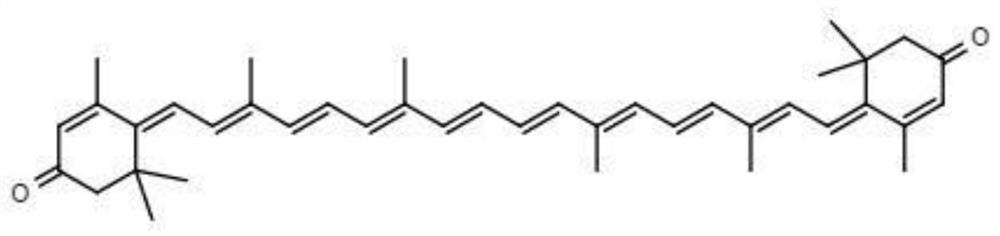
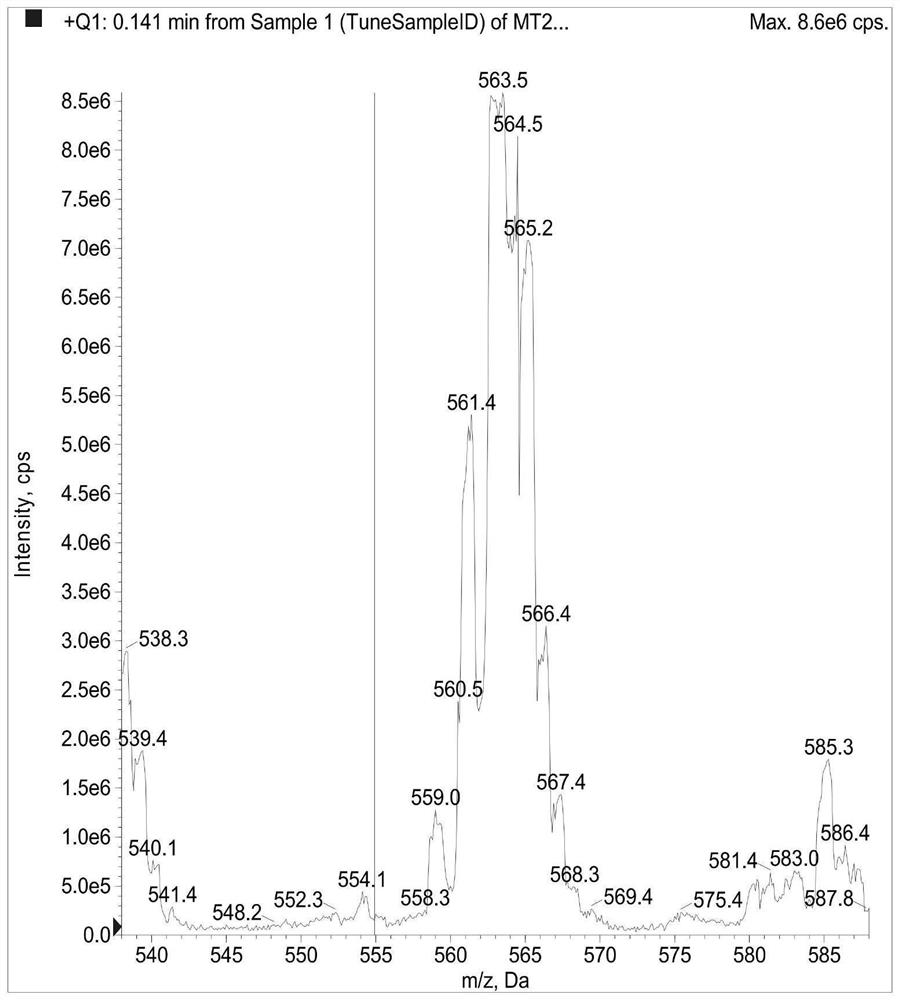
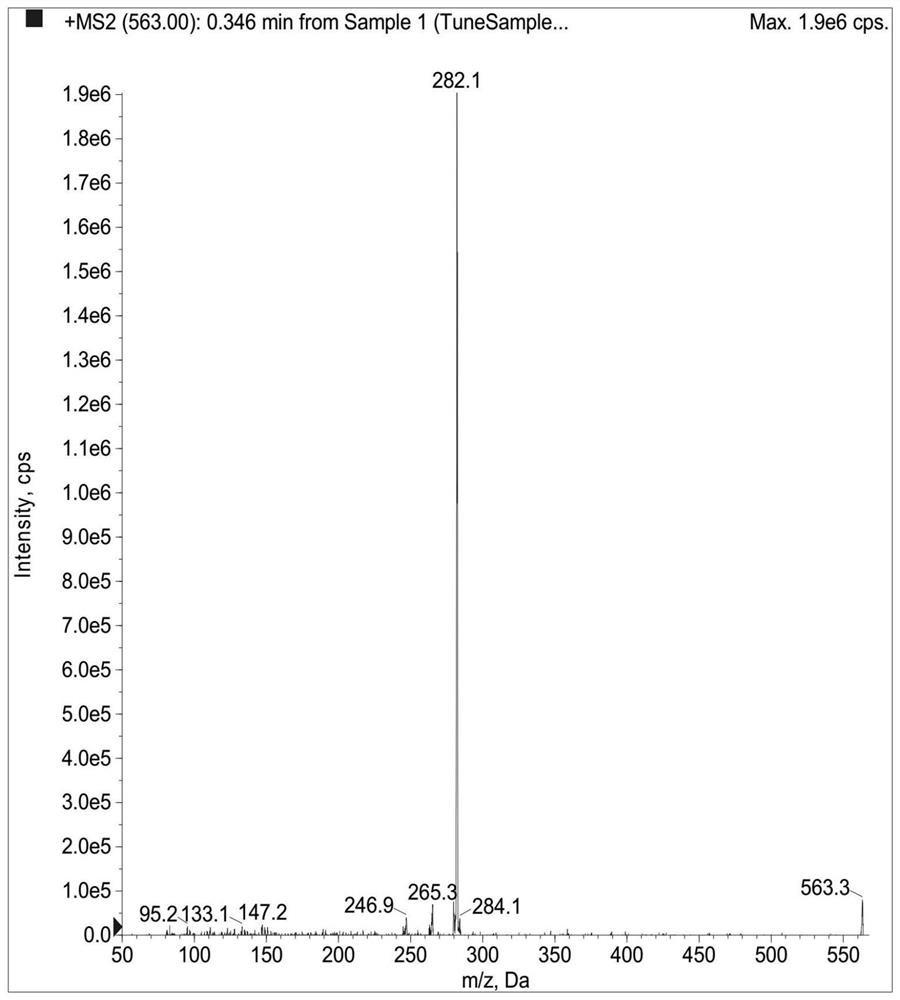
Examples
Embodiment 1
[0035] A high-performance liquid chromatography tandem mass spectrometry method for determination of taxane in red-hearted duck eggs, the specific steps are:
[0036] I, standard solution preparation
[0037] Precisely weigh 10 mg of taxane standard substance into 100 mL volumetric flasks, dissolve with a small amount of dichloromethane, and then make up to the mark with acetonitrile, prepare a standard stock solution with a concentration of 100 μg / mL, and store at -20 °C. When used, dilute it with acetonitrile into a series of standard working solutions of appropriate concentration according to the specific situation;
[0038] II. Sample pretreatment
[0039] Accurately weigh 5.0 g (accurate to 0.01 g) of a homogeneous sample into a 50 mL centrifuge tube, add 20 mL of acetonitrile and 5 g of anhydrous sodium sulfate, vortex and mix for 1 min, ultrasonically extract for 15 min, and then centrifuge at 4000 r / min for 5 min. The supernatant was transferred to a 100 mL rotary ev...
Embodiment 2
[0051]The high-performance liquid chromatography tandem mass spectrometry method for the determination of taxane in red-hearted duck eggs is the same as in Example 1, except that the acetonitrile in step II is replaced with dichloromethane.
Embodiment 3
[0053] The high-performance liquid chromatography tandem mass spectrometry method for the determination of taxane in red-hearted duck eggs is the same as in Example 1, except that the acetonitrile in step II is replaced with acetone.
PUM
 Login to View More
 Abstract
Description
Claims
Application Information
 Login to View More