
Polyester resin having improved adhesion strength for binder and polyester fiber using same
A technology of polyester resin and polyester fiber, which is applied in the field of polyester resin for adhesives, can solve the problems of reducing the uniformity of the physical properties of polyester fibers, high fluidity, and reduced melt viscosity, etc., so as to improve the spinning process. The effect of uniformity, uniformity of physical properties, and improved adhesive strength
- Summary
- Abstract
- Description
- Claims
- Application Information
AI Technical Summary
Problems solved by technology
Method used
Image

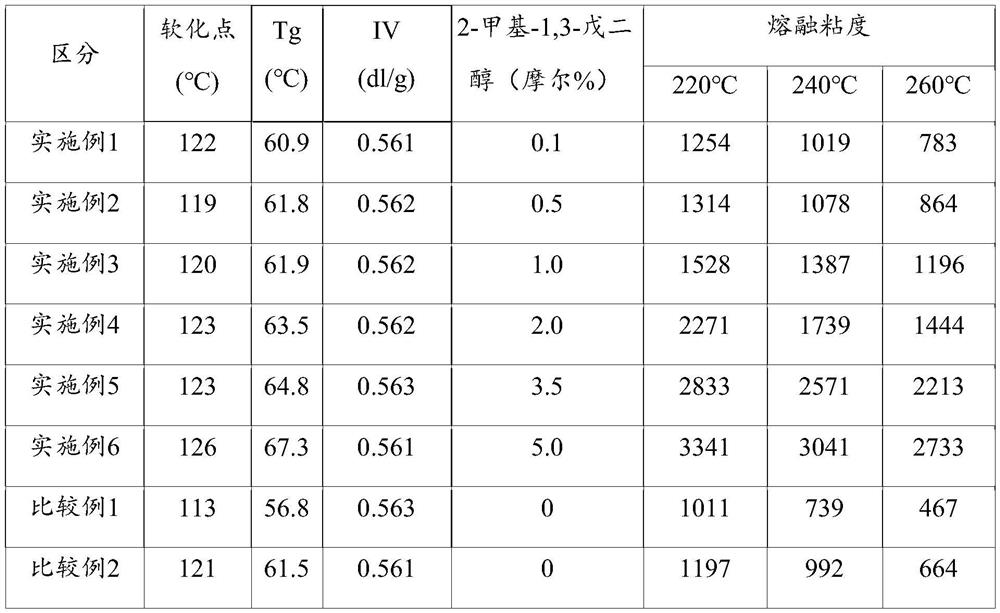
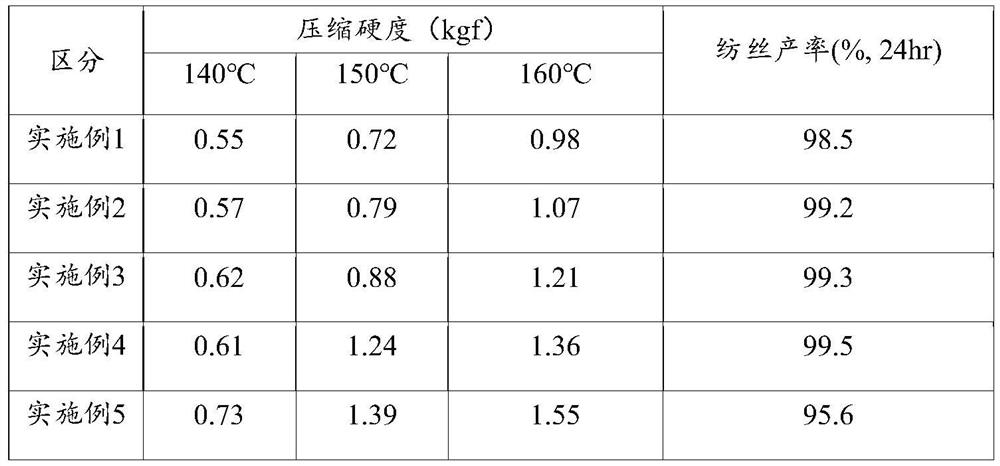
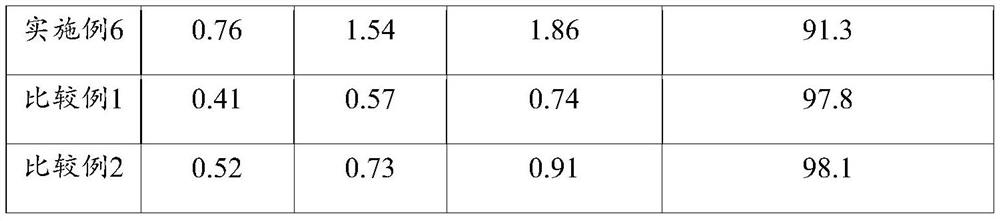
Examples
Embodiment 1 to 6
[0058] The core layer uses polyethylene terephthalate with a melt viscosity of about 2300 poise at 280°C, and the skin layer uses polyester resin for adhesives. The weight ratio of the skin layer to the core layer is 50:50 through conventional The composite spinning process of the present invention produced the polyester fiber for binders with improved processability.
[0059] The polyester resin for the adhesive is prepared through the following steps: adding terephthalic acid (TPA) and ethylene glycol (EG) to an ester reaction kettle, and performing conventional polymerization at 258°C to prepare a poly Ethylene phthalate polymer (PET oligomer), the reaction rate is about 96%. The obtained polyethylene terephthalate (PET) contains 2-methyl-1,3-propanediol accounting for about 42 mol% of diol components, and 2-methyl-1,3- Pentanediol was mixed at the content ratio shown in Table 1 below, and then a transesterification catalyst was added, and transesterification was performed...
PUM
| Property | Measurement | Unit |
|---|---|---|
| melt viscosity | aaaaa | aaaaa |
| melt viscosity | aaaaa | aaaaa |
| melt viscosity | aaaaa | aaaaa |
Abstract
Description
Claims
Application Information
 Login to View More