

Preparation method of nicotinamide liposome
A technology of nicotinamide and liposome, which is applied in the fields of biochemistry and cosmetics, can solve the problems of restricting the application of nicotinamide, increasing unpredictability, and complicated effects, so as to reduce melanin production, improve skin texture, and increase the action time. Effect
- Summary
- Abstract
- Description
- Claims
- Application Information
AI Technical Summary
Problems solved by technology
Method used
Image

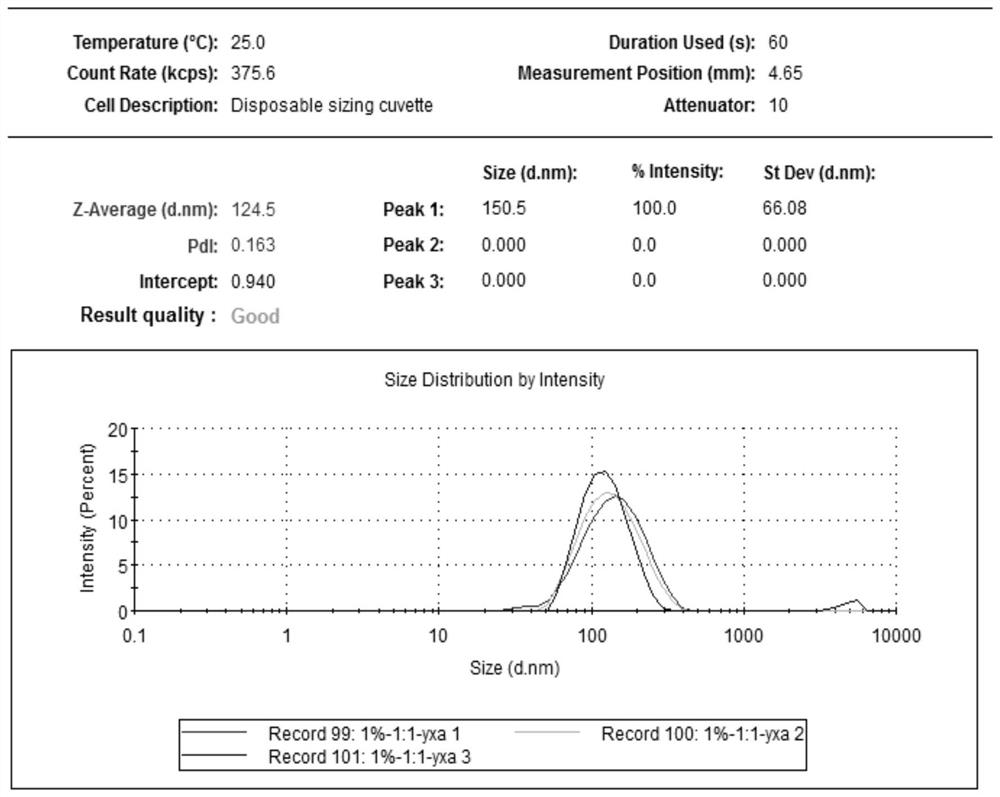
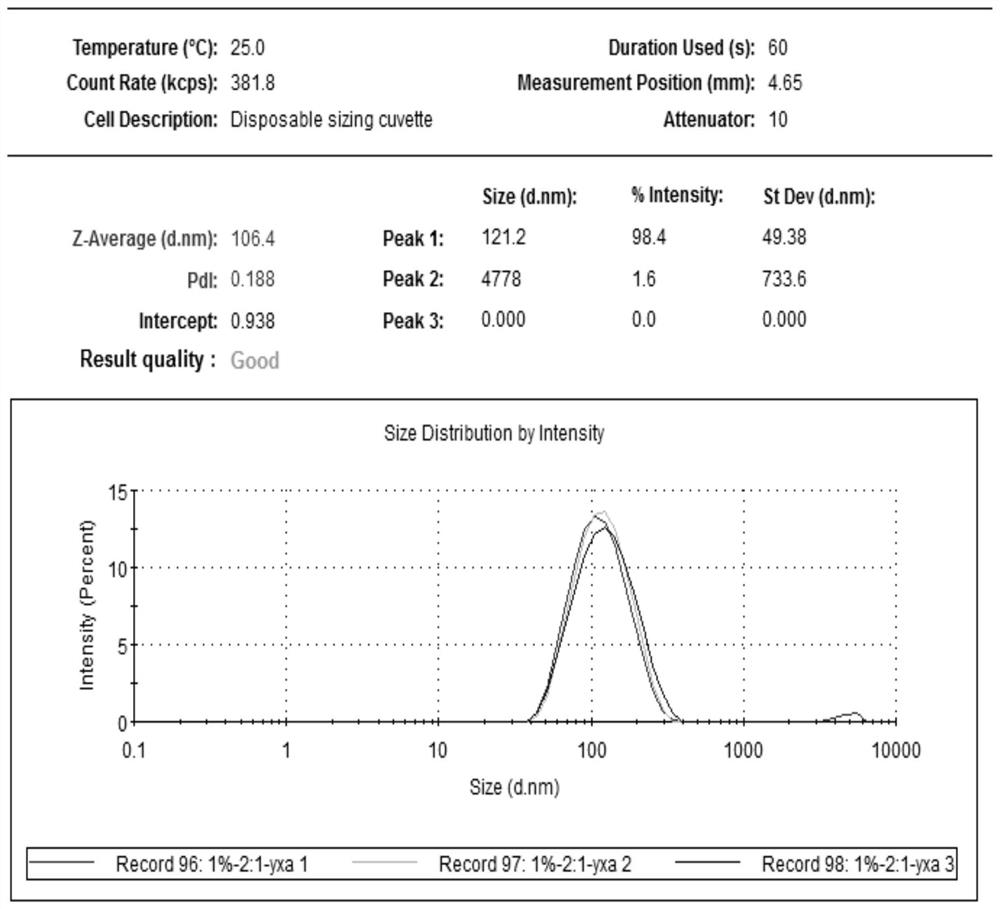
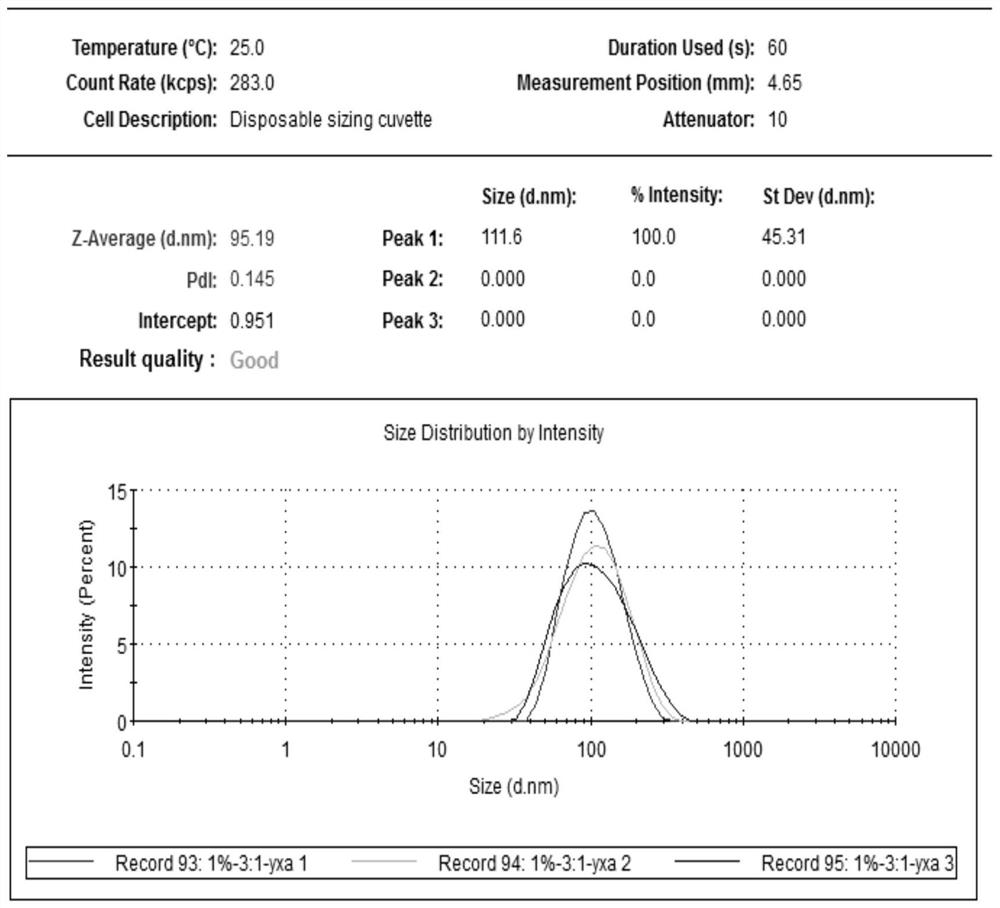
Examples
Embodiment 1
[0029] Embodiment 1: the preparation of nicotinamide liposome when membrane material concentration 10 μ M
[0030] (1) Preparation of nicotinamide liposomes:
[0031] By film dispersion method, egg yolk lecithin and cholesterol were dissolved in 9ml of chloroform according to the mass ratio in Table 1, the chloroform was removed by evaporation under reduced pressure, and a lipid film was formed in a round bottom flask, and 9ml of the ingredients in Table 1 were added during hydration. The nicotinamide solution shown, after ultrasonication in an ice bath, was filtered sequentially with filter membranes with a pore size of 0.45 μm and 0.22 μm to obtain nicotinamide liposomes numbered 1-7 in Table 1.
[0032] Table 1. Nicotinamide liposome formula table with a membrane material concentration of 10 μM
[0033]
[0034] (2) Determination of encapsulation efficiency and particle size potential of nicotinamide liposomes:
[0035] The nicotinamide content in the 7 different formu...
Embodiment 2
[0044] Example 2: Preparation of nicotinamide liposomes when the membrane material concentration is 15 μM
[0045] (1) Preparation of nicotinamide liposomes:
[0046] Dissolve egg yolk lecithin and cholesterol in 9ml of chloroform at a mass ratio of 2:1 by thin film dispersion method, remove chloroform by evaporation under reduced pressure, form a lipid film in a round bottom flask, add 9ml of 10mg / mL for hydration , 20mg / mL, and 30mg / mL nicotinamide solutions, after ultrasonication in an ice bath, were filtered sequentially with filter membranes with a pore size of 0.45 μm and 0.22 μm to obtain different nicotinamide liposomes, numbered 8, 9, and 10. See Table 3 below for specific ratios.
[0047] Table 3. Nicotinamide liposome formula table with membrane material concentration of 15 μM
[0048]
[0049](2) Determination of encapsulation efficiency and particle size potential of nicotinamide liposomes:
[0050] See Example 1 for the determination of the encapsulation ef...
Embodiment 3
[0057] Embodiment 3: Animal skin sensitivity test of nicotinamide liposome
[0058] With 3% nicotinamide gelatin solution (gelatin purchased from Aladdin (Shanghai, China)) as a control, the toxicity and sensitization of the prepared number 5 nicotinamide liposome and 3% nicotinamide gelatin solution to guinea pig skin were carried out simultaneously experiment. Select 6 healthy adult male guinea pigs (purchased from Qinglongshan Animal Breeding Farm, Jiangning District, Nanjing), with a body weight of 250-300g. After the guinea pigs adapt to the environment, 24 hours before the experiment, use depilatory agents on both sides of the spine to remove hair symmetrically. The area should be at least 3cm×3cm. After depilation, the animals should be adapted to feeding for one day. Before the experiment, check whether the skin in the depilation area is damaged. The experiment was carried out at a room temperature of 18-29°C and a relative humidity of 40%-70%. 24 hours after hair rem...
PUM
| Property | Measurement | Unit |
|---|---|---|
| particle diameter | aaaaa | aaaaa |
| electric potential / voltage | aaaaa | aaaaa |
| encapsulation rate | aaaaa | aaaaa |
Abstract
Description
Claims
Application Information
 Login to View More