Check patentability & draft patents in minutes with Patsnap Eureka AI!

Glass panel surface defect detection method based on small sample learning

A glass panel, defect detection technology, applied in neural learning methods, image data processing, image enhancement and other directions, can solve the problem of inaccurate labeling of small objects, etc., to improve detection accuracy, improve performance indicators, and enhance the effect of robustness

Pending Publication Date: 2022-02-25
ZHEJIANG UNIV
View PDF0 Cites 10 Cited by
  • Summary
  • Abstract
  • Description
  • Claims
  • Application Information

AI Technical Summary

Problems solved by technology

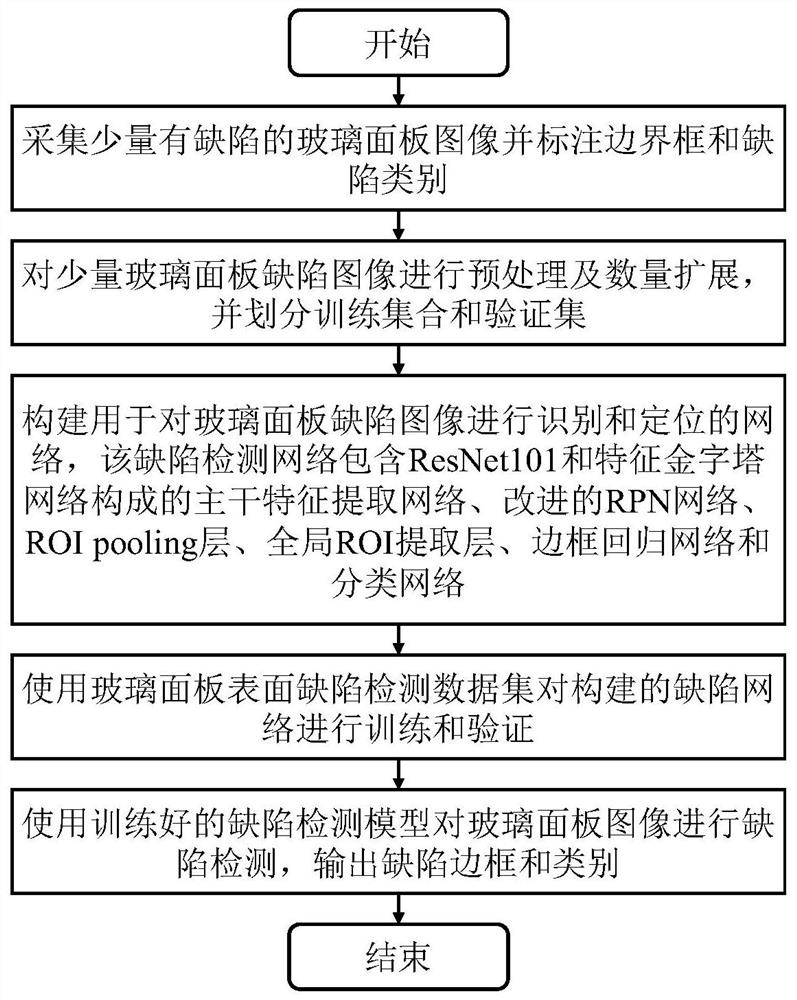
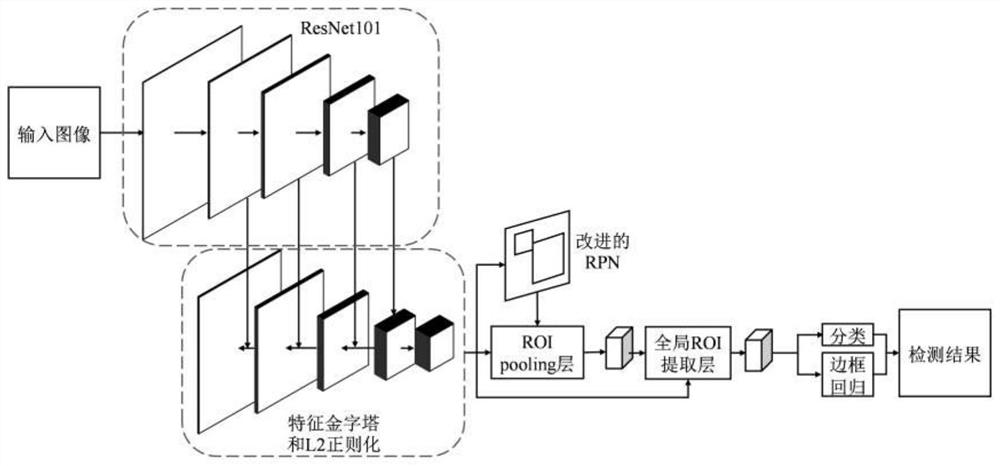
[0007] In order to solve the above problems, the present invention proposes a glass panel surface defect detection method based on small sample learning, which realizes efficient and accurate detection of glass panel defects when there are only a small number of sample images of glass panel defects, the labels are not accurate enough, and there are many small targets. Panel surface defects, the specific steps are as follows:

Method used

the structure of the environmentally friendly knitted fabric provided by the present invention; figure 2 Flow chart of the yarn wrapping machine for environmentally friendly knitted fabrics and storage devices; image 3 Is the parameter map of the yarn covering machine
View more

Image

Smart Image Click on the blue labels to locate them in the text.
Viewing Examples
Smart Image
  • Glass panel surface defect detection method based on small sample learning
  • Glass panel surface defect detection method based on small sample learning
  • Glass panel surface defect detection method based on small sample learning

Examples

Experimental program
Comparison scheme
Effect test

Embodiment Construction

[0026] The present invention will be further elaborated and illustrated below in conjunction with the accompanying drawings and specific embodiments. The technical features of the various implementations in the present invention can be combined accordingly on the premise that there is no conflict with each other.

[0027] The overall flow chart of a glass panel surface defect detection method based on small sample learning disclosed by the present invention is as follows figure 1 As shown, the specific implementation process is as follows:

[0028] (1) Collect a small number of defective glass panel images. Use the labeling software labelImg to label each picture and generate an xml file. The xml file contains the bounding box of the defect and the defect category. The defect categories include bubbles, tin dust, pinholes, and scratches.

[0029] (2) Preprocess and expand the number of glass panel images to construct a glass panel surface defect detection data set.

[0030]...

the structure of the environmentally friendly knitted fabric provided by the present invention; figure 2 Flow chart of the yarn wrapping machine for environmentally friendly knitted fabrics and storage devices; image 3 Is the parameter map of the yarn covering machine
Login to View More

PUM

No PUM Login to View More

Abstract

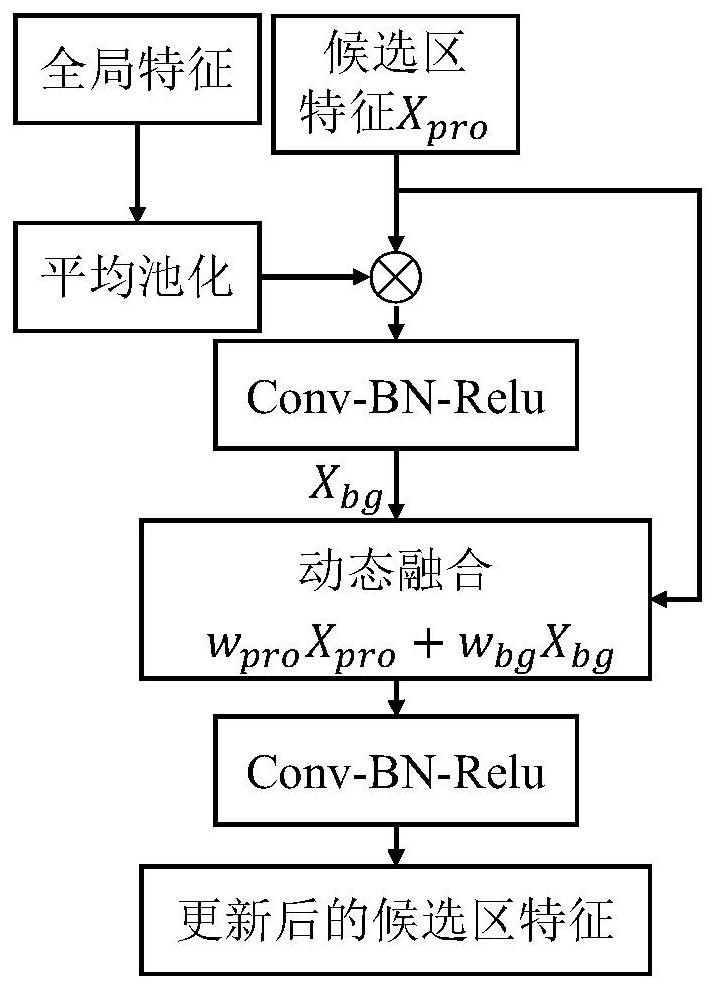
The invention discloses a glass panel surface defect detection method based on small sample learning. The method comprises the following steps: collecting a small number of defect glass panel images and marking bounding boxes and defect categories; carrying out preprocessing and quantity expansion on the small number of glass panel defect images; constructing a network for identifying and positioning the defect images of the glass panel; and performing defect detection on the glass panel image by using the trained defect detection model, and outputting a defect frame and a defect type. According to the method, data enhancement, transfer learning and L2 regularization are used for relieving a small sample problem, random jitter is carried out on a labeling box to increase diversity of a frame so as to improve model robustness, a global ROI extraction layer is used for introducing background information for candidate region features, and the weight of each sample in loss is adaptively changed so as to improve model performance. The method is suitable for a surface defect detection task with only a small number of glass panel images, and the detection precision is high.

Description

technical field [0001] The invention relates to the technical field of glass panel detection, in particular to a method for detecting surface defects of glass panels based on small sample learning. Background technique [0002] Glass panels are in great demand in industries such as computers, communications, and consumer electronics. With the continuous growth of market demand, the requirements for the quality of glass panels are also getting higher and higher. Traditional manual inspection methods require a large number of well-trained workers, often consume a lot of manpower, are inefficient, and due to individual subjectivity, standards may vary greatly. In addition, due to the special optical properties of glass, long-term inspection work is harmful to The workers' eyes have some damage. With the development of optical technology and computer technology, many automatic optical inspection solutions have been proposed for surface defect inspection tasks. This non-contact...

Claims

the structure of the environmentally friendly knitted fabric provided by the present invention; figure 2 Flow chart of the yarn wrapping machine for environmentally friendly knitted fabrics and storage devices; image 3 Is the parameter map of the yarn covering machine
Login to View More

Application Information

Patent Timeline
no application Login to View More
Patent Type & Authority Applications(China)
IPC IPC(8): G06T7/00G06K9/62G06N3/04G06N3/08
CPCG06T7/0004G06N3/08G06T2207/20081G06T2207/30108G06N3/045G06F18/23213G06F18/241
Inventor 刘妹琴周超凡张森林董山玲吴争光郑荣濠
Owner ZHEJIANG UNIV
Features
  • R&D
  • Intellectual Property
  • Life Sciences
  • Materials
  • Tech Scout
Why Patsnap Eureka
  • Unparalleled Data Quality
  • Higher Quality Content
  • 60% Fewer Hallucinations
Social media
Patsnap Eureka Blog
Learn More