
Pennisetum sinese and amorphophallus bulbifer intercropping method
A technology of giant Juncao and pearl buds, applied in the field of crop cultivation, can solve the problems of reducing the utilization rate of land and light energy, rough management of cultivation methods, affecting the growth environment of konjac, etc., so as to promote green sustainable development, improve land utilization, increase The effect of biodiversity
- Summary
- Abstract
- Description
- Claims
- Application Information
AI Technical Summary
Problems solved by technology
Method used
Image

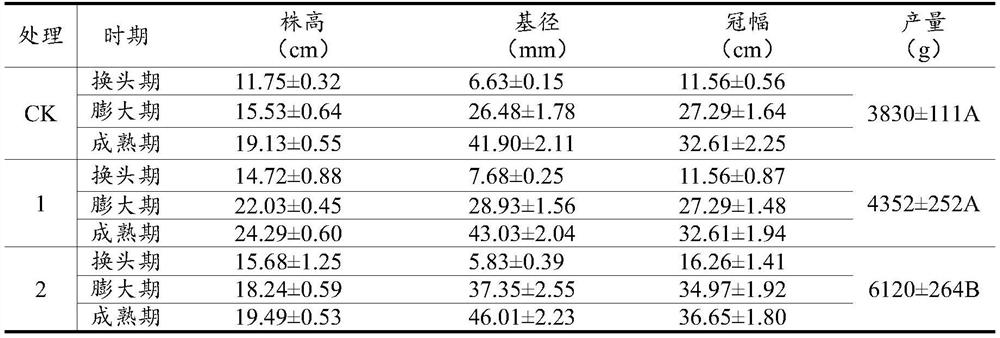

Examples
Embodiment 1
[0033] (1) material selection: select the underground bulb of bulbil yellow konjac as propagation material;
[0034] (2) Soil preparation: Before planting, apply 80kg of nitrogen, phosphorus and potassium compound fertilizer, 1250kg of organic fertilizer, 80kg of calcium magnesium and phosphate fertilizer, and 100kg of quicklime into the surface soil; The width is 1.1m, the width of the ridge is 0.90m, the height of the ridge is 30cm, the distance between two ridges is 30cm, and the distance between 3 ridges is 1.0m, and there is no ridge;
[0035] (3) Planting method: Set the row spacing of the yellow konjac bulbils to 50cm×60cm, and the plastic film will be punched in advance according to the row spacing of the plants. In November of the previous year, the giant fungus grass stem section containing 2 cryptocephalic buds will be intercepted, and the row spacing of the plants will be 40cm. Place it horizontally in the middle of the 1.0m reserved position without ridges, ditch ...
Embodiment 2
[0039] (1) material selection: select the bulbil of bulbil yellow konjac as propagation material;
[0040](2) Soil preparation: Before planting, apply 60 kg of nitrogen, phosphorus and potassium compound fertilizer, 1000 kg of organic fertilizer, 60 kg of calcium magnesium phosphate fertilizer, and 75 kg of quicklime, and turn it into the topsoil; The width is 1.0m, the width of the ridge is 0.8m, the height of the ridge is 20cm, the distance between the two ridges is 20cm, and the distance between the two ridges is 0.8m, and there is no ridge;
[0041] (3) Planting method: set the row spacing of the yellow konjac bulbils to 30cm×30cm, and the plastic film will be punched in advance according to the row spacing of the plants. Place it vertically in the middle of the reserved position of 0.8m without ridge, and plant it with 10cm ditch, then cover the soil and compact it, and pour enough water to fix the roots; in May, cover the perforated mulch on the completed ridge, and plan...
Embodiment 3
[0045] (1) material selection: select the tissue culture seedling of bulbil yellow konjac as propagation material;
[0046] (2) Soil preparation: Before planting, apply 100kg of nitrogen, phosphorus and potassium compound fertilizer, 1500kg of organic fertilizer, 100kg of calcium magnesium phosphate fertilizer, and 120kg of quicklime into the surface soil; The width is 1.2m, the width of the ridge is 1.1m, the height of the ridge is 40cm, the distance between the two ridges is 40cm, and the distance between the two ridges is 1.2m, and there is no ridge;
[0047] (3) Planting method: set the row spacing of the yellow konjac bulbils to 30cm×25cm, and the plastic film will be punched in advance according to the row spacing of the plants. Place horizontally in the middle of the 1.2m reserved position without ridges, plant with 30cm trenches, then cover with soil and compact, and pour enough root water; in April, cover the perforated ridges with perforated plastic film, and plant b...
PUM
 Login to View More
 Abstract
Description
Claims
Application Information
 Login to View More