
Self-reconstruction plasma antenna
A plasma antenna and plasma technology, applied in the direction of antenna support/installation device, etc., can solve the problems of large scattering area, inability to electrically adjust the length, and high mutual interference, and achieve low noise performance, mutual interference suppression, and good axial direction. The effect of uniformity
- Summary
- Abstract
- Description
- Claims
- Application Information
AI Technical Summary
Problems solved by technology
Method used
Image

Examples
Embodiment Construction
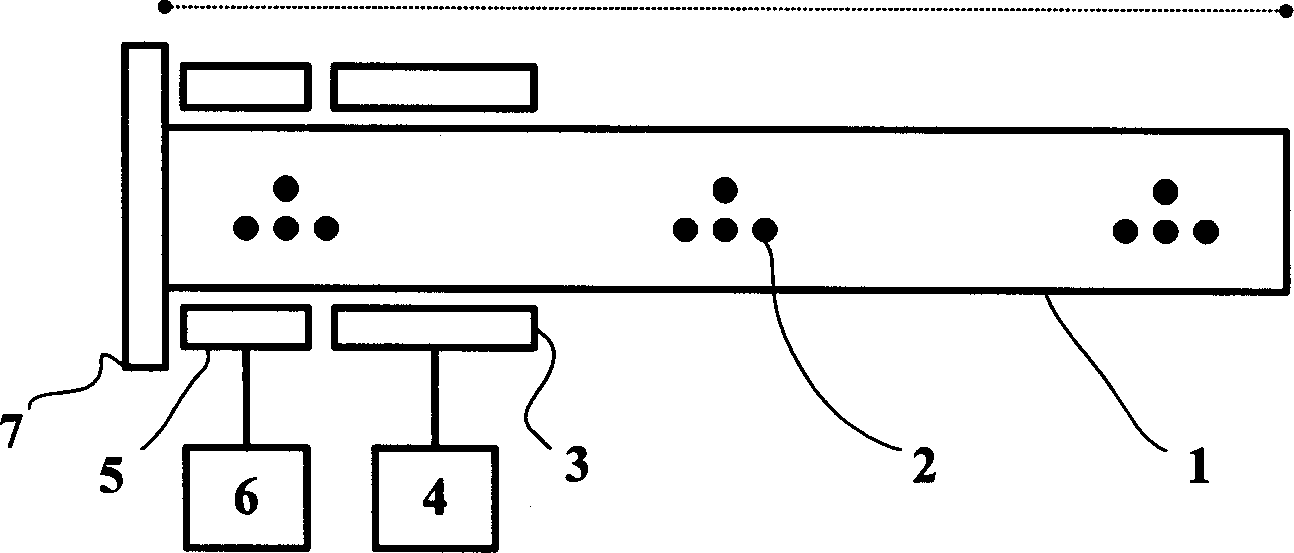
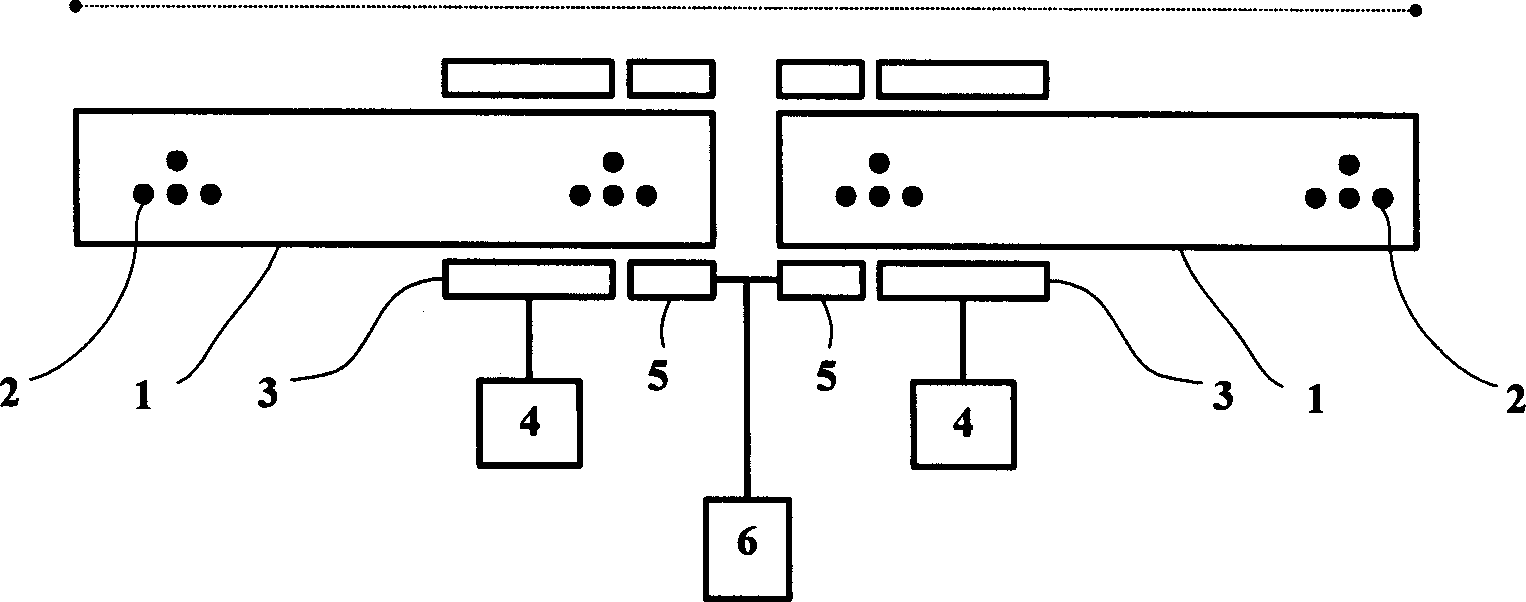
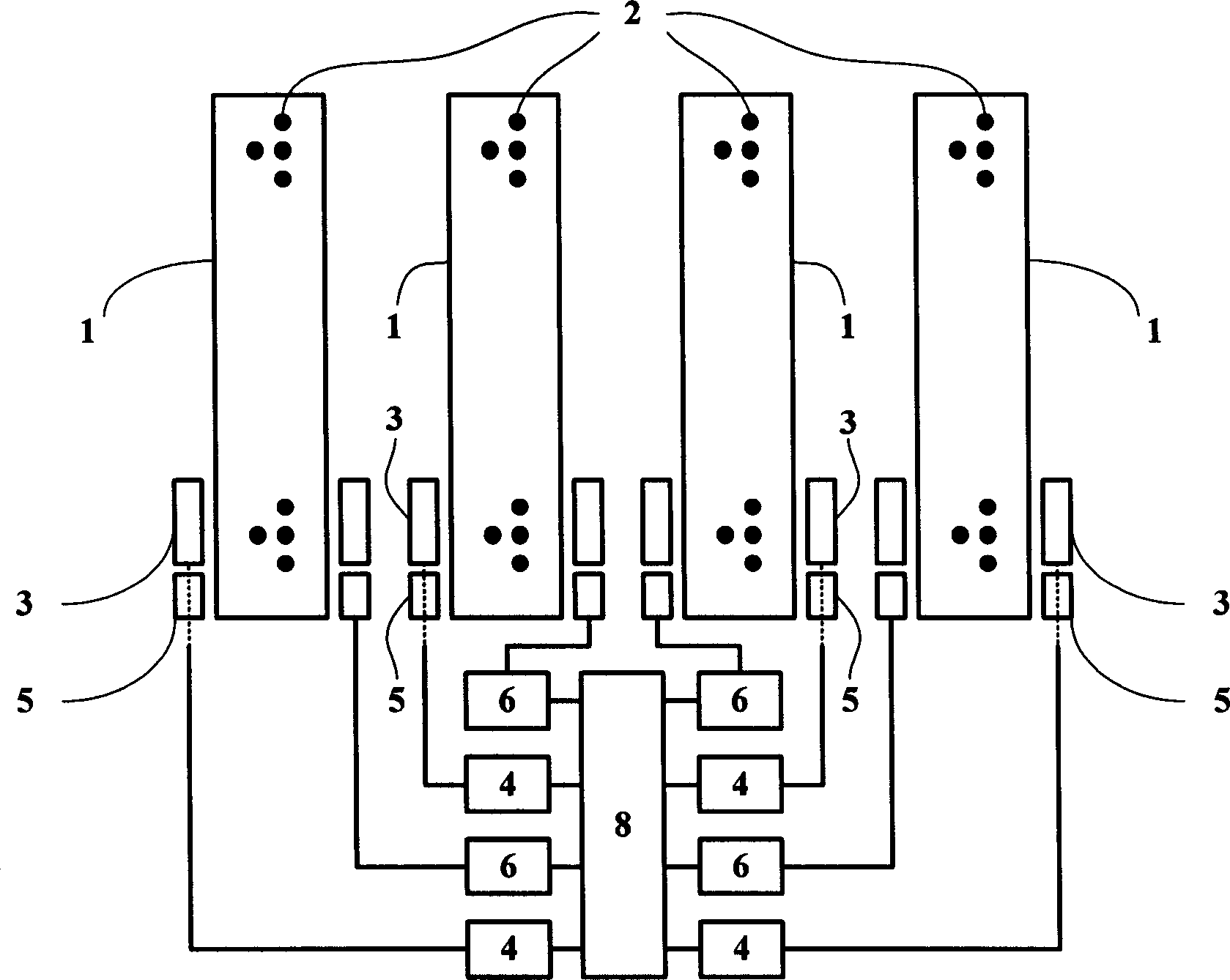
[0014] Such as figure 1 As shown, the present invention includes: a cylindrical container 1 , an inert gas 2 , a radio frequency excitation antenna 3 , a radio frequency excitation source 4 , a signal coupler 5 , a feed port 6 , and a ground plate 7 . The cylindrical container 1 is filled with an inert gas 2. When the gas is ionized, plasma can be formed. At this time, the plasma column in the cylindrical container can be used as a conductor of the antenna to emit or receive electromagnetic waves. The radio frequency excitation source 4 and the radio frequency excitation antenna 3 are used to excite and maintain the plasma. The radio frequency excitation antenna 3 is placed inside or outside the cylindrical container, and its lead wire is connected to the radio frequency excitation source 4 . When the radio frequency excitation source 4 is working, a radio frequency spiral electric field will be generated around the radio frequency excitation antenna 3, and the gas in the cyli...
PUM
 Login to View More
 Abstract
Description
Claims
Application Information
 Login to View More