[0016]The invention is particularly, but not exclusively, advantageous for obtaining an improved chest drainage system for creating and maintaining a sub-atmospheric pressure within the pleural cavity and / or the mediastinum of an associated patient, which is significantly cheaper to implement than hitherto known spectroscopic detection methods, where electromagnetic radiation is scattered and / or absorbed by the carbon dioxide (amount of a few percentages) thereby enabling dedicated optical detectors to determine the presence, and possibly amount, of carbon dioxide in the air arriving at the chest drainage unit or chest drainage canister. It is a particular advantage of the present invention that the carbon dioxide sensor provides a visible color change, which enables direct and simple detection (i.e. color or not?) at the bed side without any complex and / or costly electronic detection of the carbon dioxide level. The carbon dioxide sensor of the present invention is also independent of any continuously supplied power or energy.
[0017]Moreover, preliminary tests performed by the inventor (and presented below) have demonstrated that the present invention is very effective in determine whether, or not, carbon dioxide is present in the air passing through the chest drainage unit, this information being highly important in the subsequent decision of continuing the treatment with the chest drainage system, terminating the treatment with the chest drainage system, and / or doing a surgical replacement of the chest tube in the patient. Thereby, risks are eliminated, averted and / or reduced to the overall benefit of the patient by improved medical treatment by a chest drainage system according to the present invention. In particular, a chest tube is a risk factor due to possible infections in the connection with the inserted chest tube.
[0018]Beneficially, the present invention also improves assessment and / or implementation of the chest drainage treatment so that there is less need for experts in determining a possible pleural leakage, in fact nurses may immediately see if there is leakage, which has hitherto been a rather difficult task, possibly even requiring a very experienced doctor. Thus, for the clinic or hospital performing thorax surgery or for general hospitals treating uncomplicated collapses of the lung etc., the present invention provides numerous advantages.
[0019]In the context of the present invention, it is to be understood that the present invention is related to a chest drainage system, or chest drainage unit, for creating and maintaining a sub-atmospheric pressure within the pleural cavity and / or the mediastinum of an associated patient, but it will also be understood that the invention may also be applied in related medical conditions with similar situations and / or causes, as it will be understood by the person skilled in thorax surgery and neighbouring technical fields, once the teaching and general principle of the present invention is fully understood.
[0020]In the context of the present invention, the patient is not part of the drainage system and, hence, in the above definition of the invention, the patient is mentioned merely for clarity and completeness of the invention without being part of the system itself, i.e. the patient is ‘associated’ with the system—not part of it.
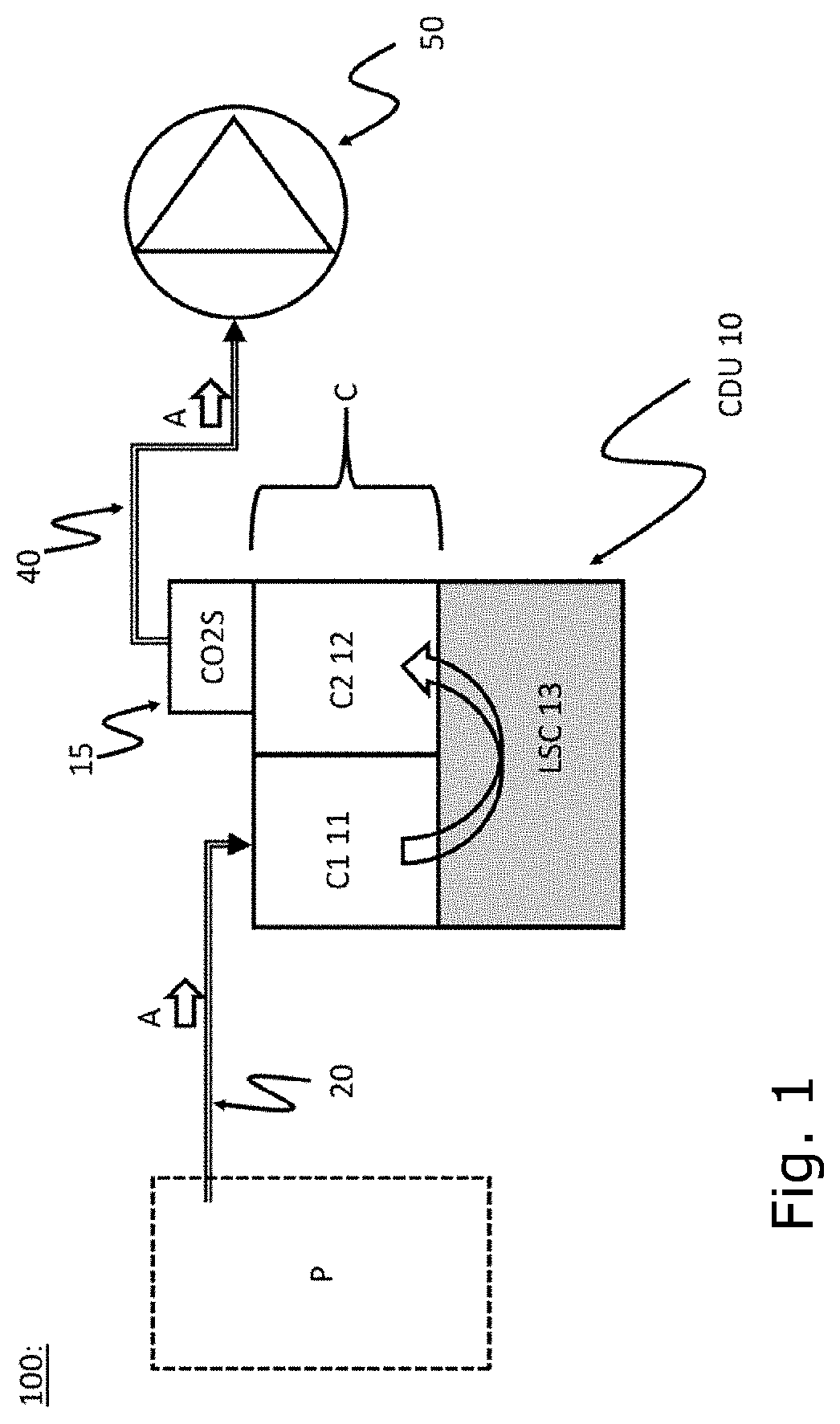
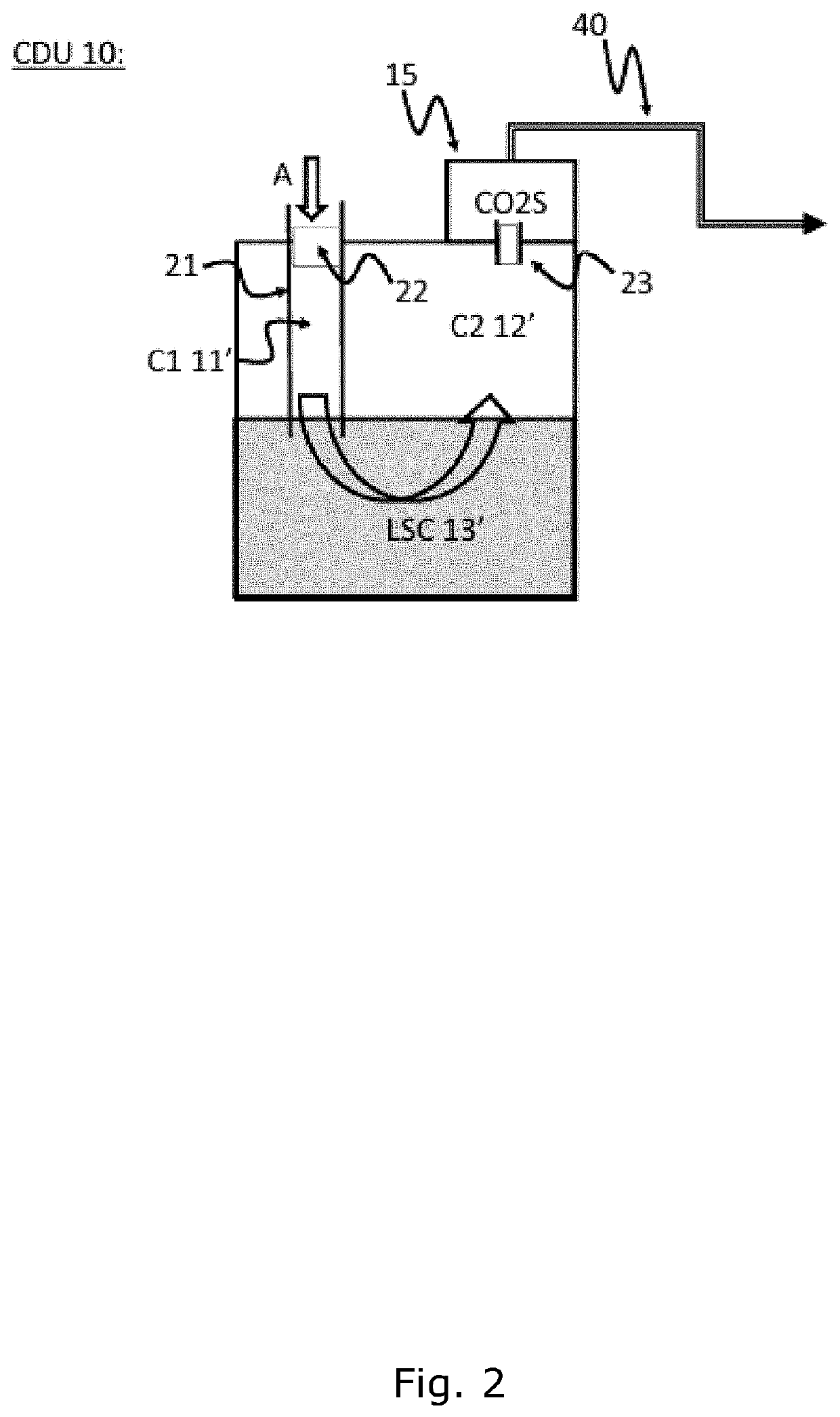
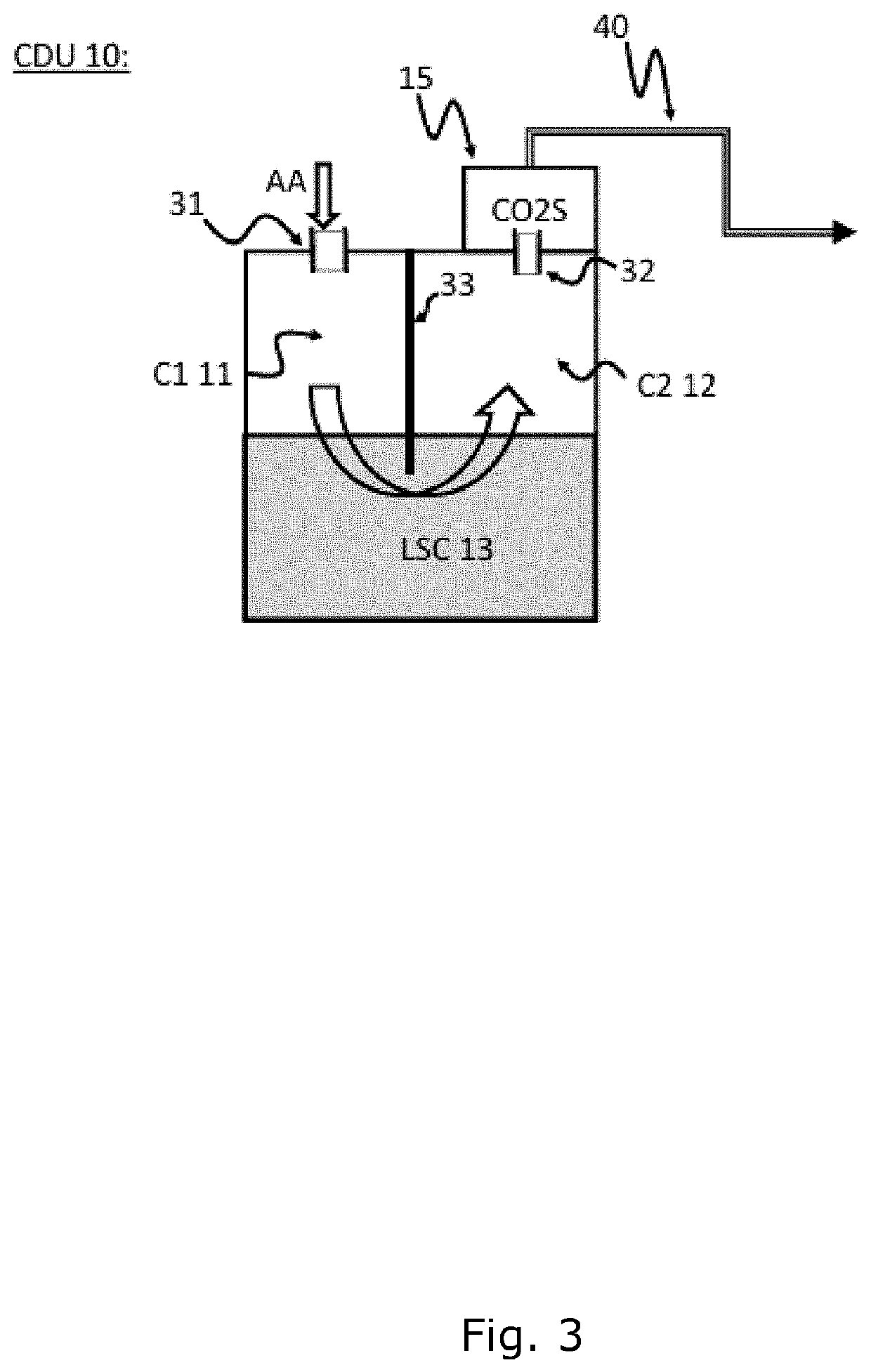
[0021]In the context of the present invention, it is further to be understood that the internal cavity in the chest drainage unit (CDU) may have at least two chamber parts, i.e. at least the first and the second chamber part, but for some applications or situations more chamber parts are envisioned within the scope of the present invention.



 Login to View More