
Container uncapping mechanism and method
a container and uncapping technology, applied in mixer accessories, flat carrier supports, ultrafiltration, etc., can solve the problems of insufficient consistency, reliability, speed and automation of automated equipment for processing liquid-based specimens, and add time, material and labor costs to the processing required, etc., to meet current and projected needs in cancer screening and other cytology-based medical, analytical, screening and diagnostic procedures. , the effect of simple and inexpensive releasable coupling and avoiding contamination
- Summary
- Abstract
- Description
- Claims
- Application Information
AI Technical Summary
Benefits of technology
Problems solved by technology
Method used
Image

Examples
Embodiment Construction
[0092] A full description of this vial-based specimen handling and processing system must begin with the vial itself, which consists of a container, a cover and a processing assembly (stirrer) in the vial.
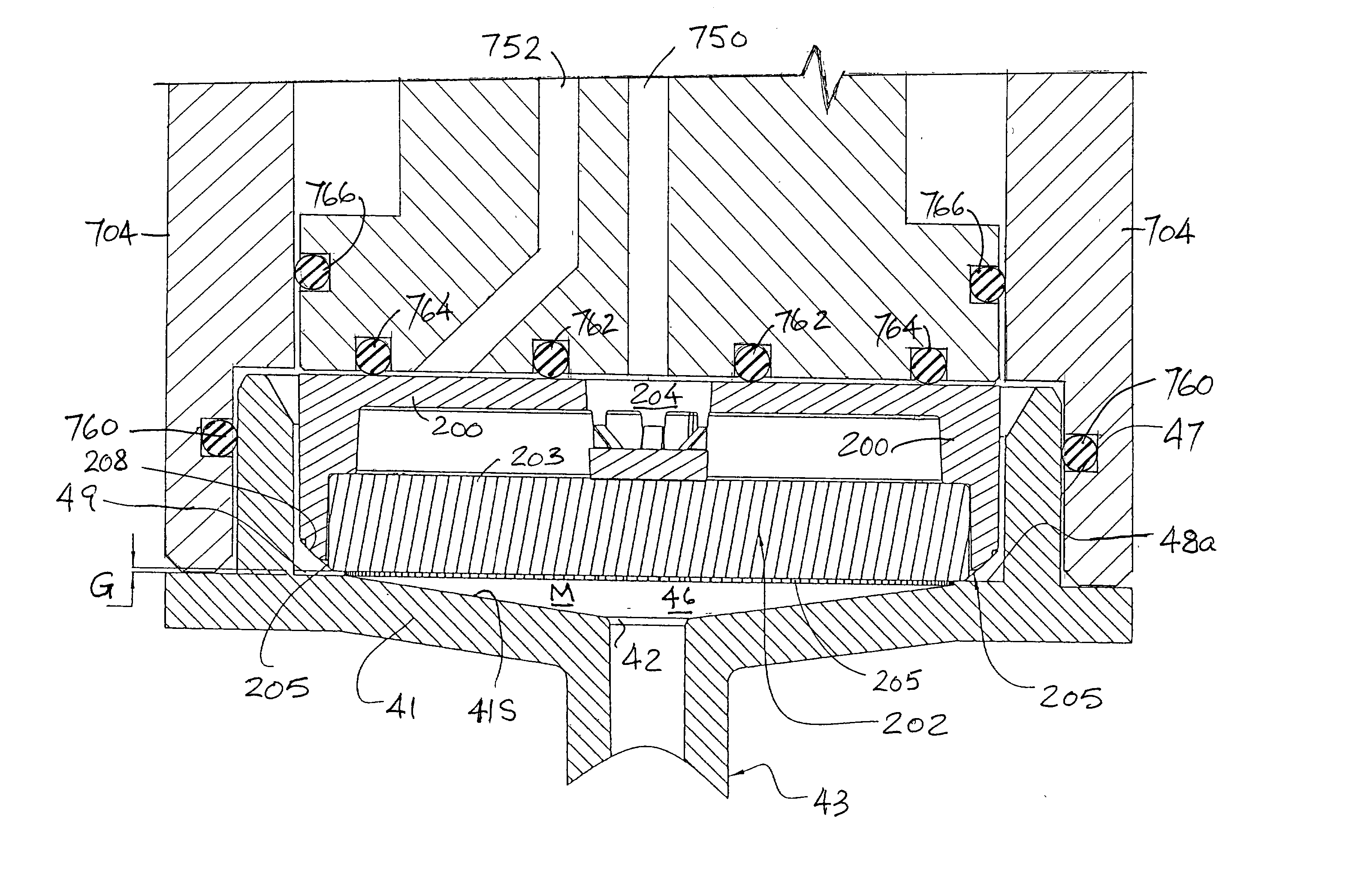
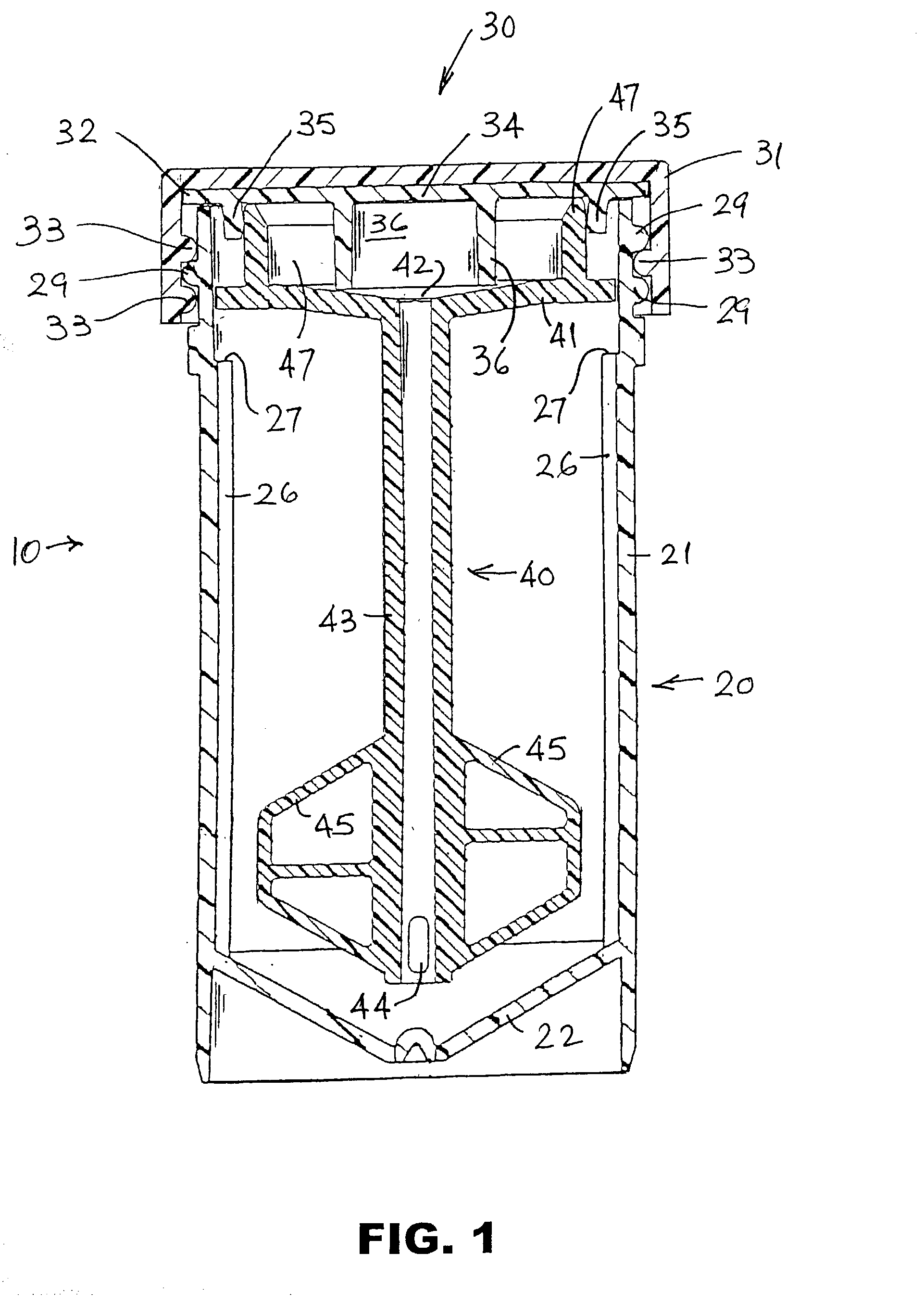
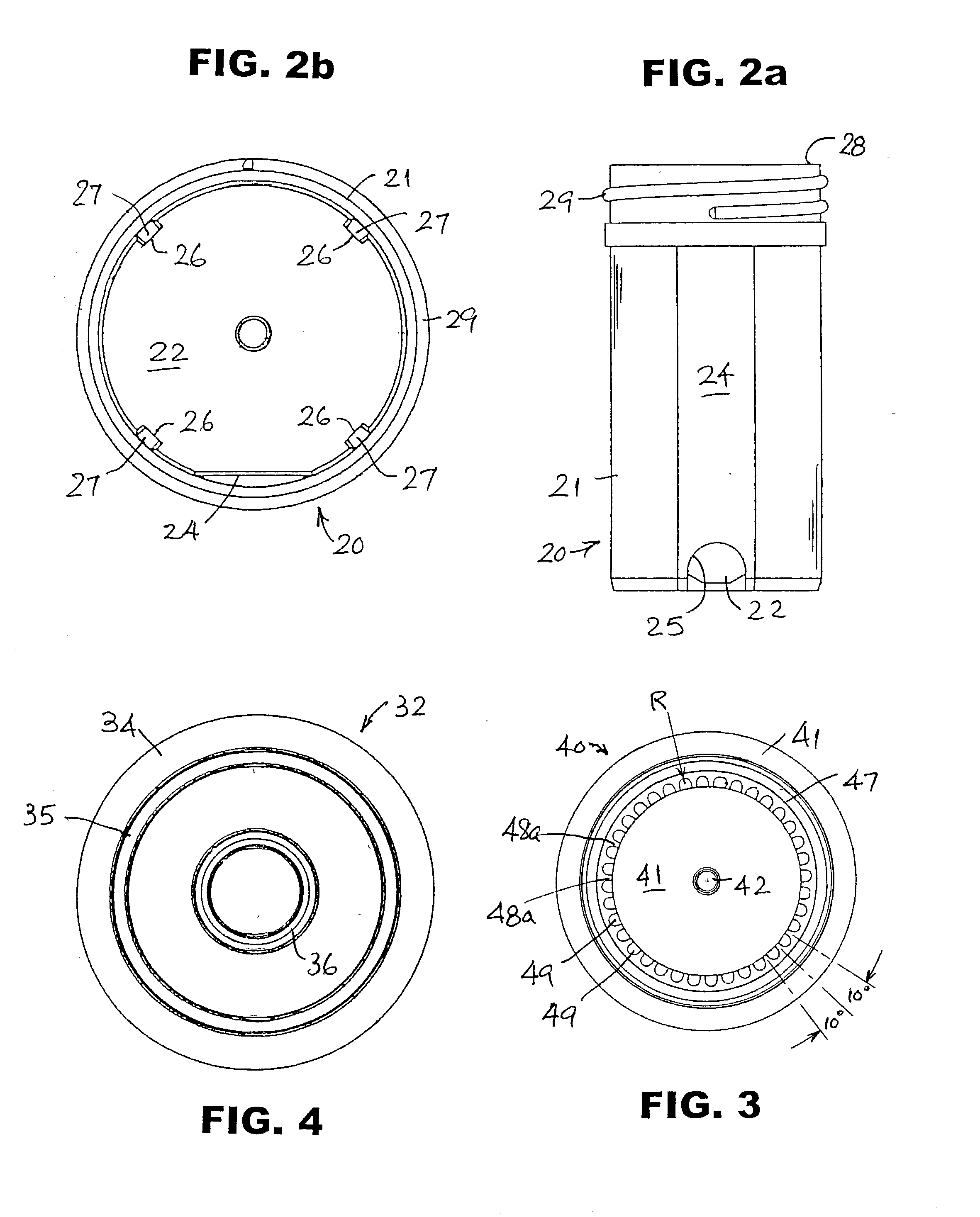
[0093] Referring to FIGS. 1, 2a and 2b, the vial 10 comprises a container 20, a cover 30 and a processing assembly 40. Processing assembly 40 is designed to carry out several functions, among them mixing, and for this preferred rotary embodiment will be referred to as a stirrer for the sake of convenience. Container 20 preferably is molded of a translucent plastic, preferably polypropylene, and has a substantially cylindrical wall 21, surrounding its longitudinal axis, joined to a conical bottom wall 22. Possible alternative plastics include ABS and polycyclohexylenedimethylene terephthalate, glycol (commercially available from Eastman Kodak Co. under the name EASTAR.RTM. DN004). A small portion 24 of wall 21 preferably is flat, the outer surface of the flat portion ad...
PUM
| Property | Measurement | Unit |
|---|---|---|
| angle | aaaaa | aaaaa |
| height | aaaaa | aaaaa |
| inner diameter | aaaaa | aaaaa |
Abstract
Description
Claims
Application Information
 Login to View More