Since the earth exerts greater pressure against seawalls than the water, seawalls are oftentimes damaged or destabilized during their lifetimes as evidenced, for example, by movement, displacement, shifting,
cracking and / or misalignment of the seawalls.
Sometimes seawalls are placed at risk for damage or
instability due to a change in conditions occurring subsequent to installation of the seawalls.
For instance, if a body of water is dredged resulting in a greater depth body of water and a lesser
depth of penetration for the
toe portion of an existing seawall, the lesser
depth of penetration for the
toe portion may no longer be sufficient for the seawall to support the pressure of the retained earth such that the seawall is susceptible to damage or
instability.
In some cases, the height of the retained earth on the earth facing side of an existing seawall may be increased, causing increased pressure of retained earth against the seawall by which the seawall may be damaged or destabilized.
In addition to the pressures of retained earth, seawalls may be damaged or destabilized directly or indirectly due to other conditions including collisions or other impacts,
corrosion, environmental factors, and age.
Prior apparatus and methods for repairing and / or strengthening seawalls and other retaining walls have various disadvantages including complicated structure and installation steps, major disruption, the need for excavating and / or disturbing the earth, partial or complete demolition of existing walls, the need to temporarily hold back or contain water during installation, the need to install additional and / or replacement wall structure, the use of cementitious material to assist in anchoring, the need for backfill, and the inability to execute installation from a body of water.
Prior apparatus and methods which require earth-side access are untenable where homes or other buildings are situated close to seawalls making it undesirable and even prohibitive to disturb the earth on the earth facing sides of the seawalls and / or to conduct seawall maintenance from the earth facing sides.
Prior apparatus and methods for repairing and / or strengthening seawalls and other retaining walls using anchors or tie rods generally lack the ability to rigidly interconnect a plurality of spaced anchors or tie rods installed in a wall to maintain the spacing between the anchors or tie rods in a desired direction.
Furthermore, prior apparatus and methods for repairing and / or maintaining seawalls and other retaining walls using anchors or tie rods do not allow a plurality of spaced anchors or tie rods installed in a wall to be adjustably interconnected to adjust the spacing between the anchors or tie rods.
Prior apparatus and methods for repairing and / or strengthening seawalls and other retaining walls do not contemplate closing openings in the walls by adjustably moving the walls between interconnected anchors or tie rods installed in the walls on opposite sides of the openings.



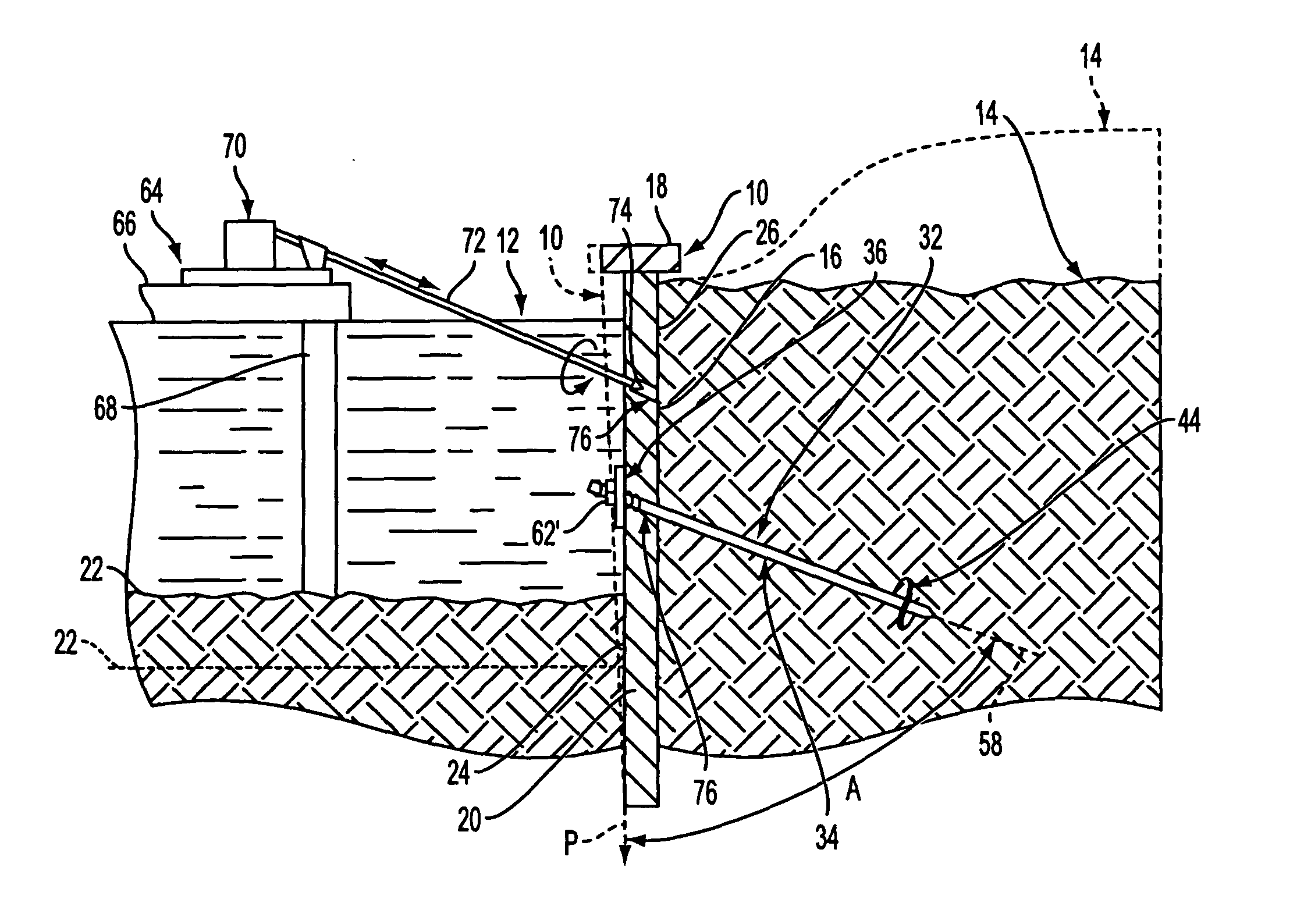
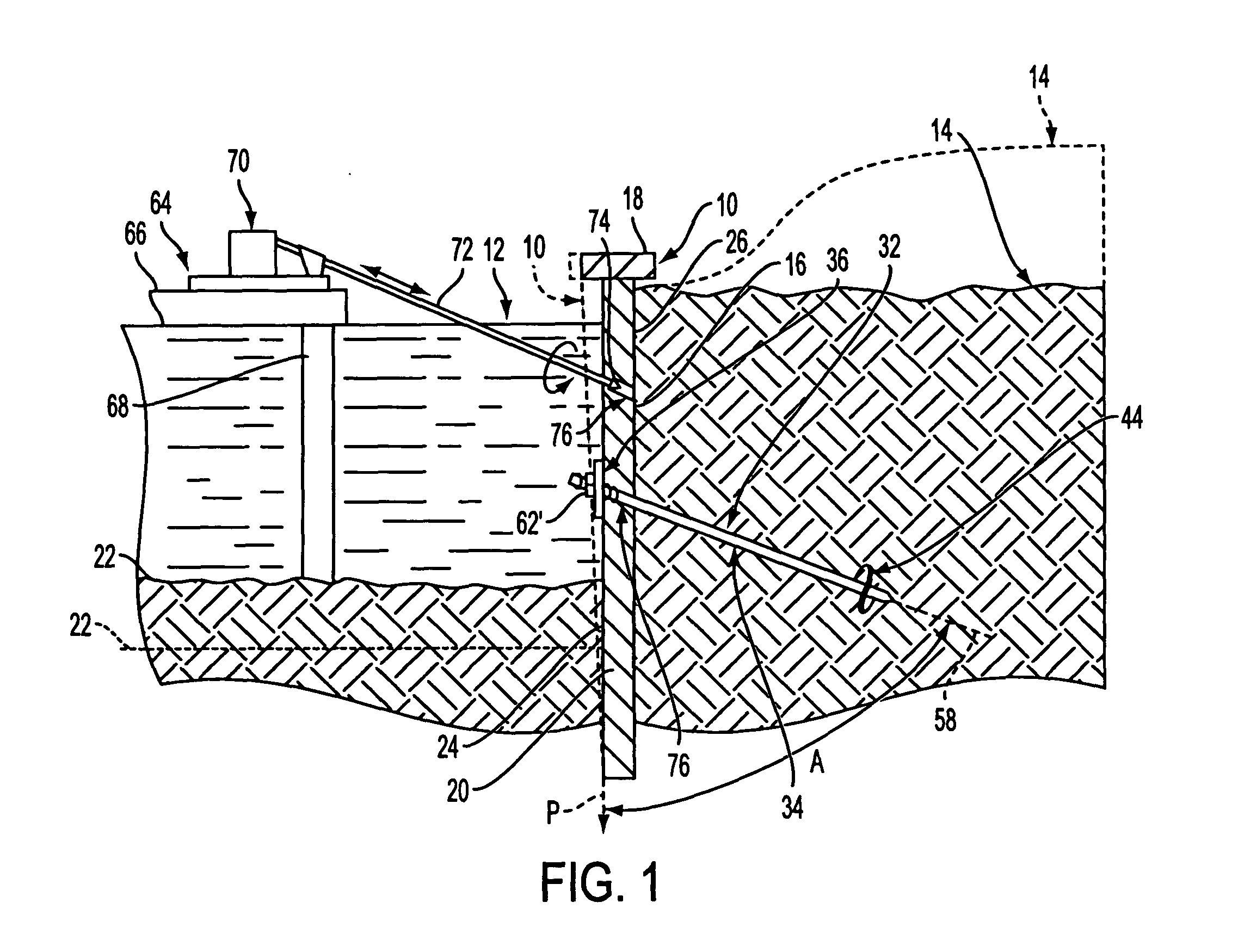
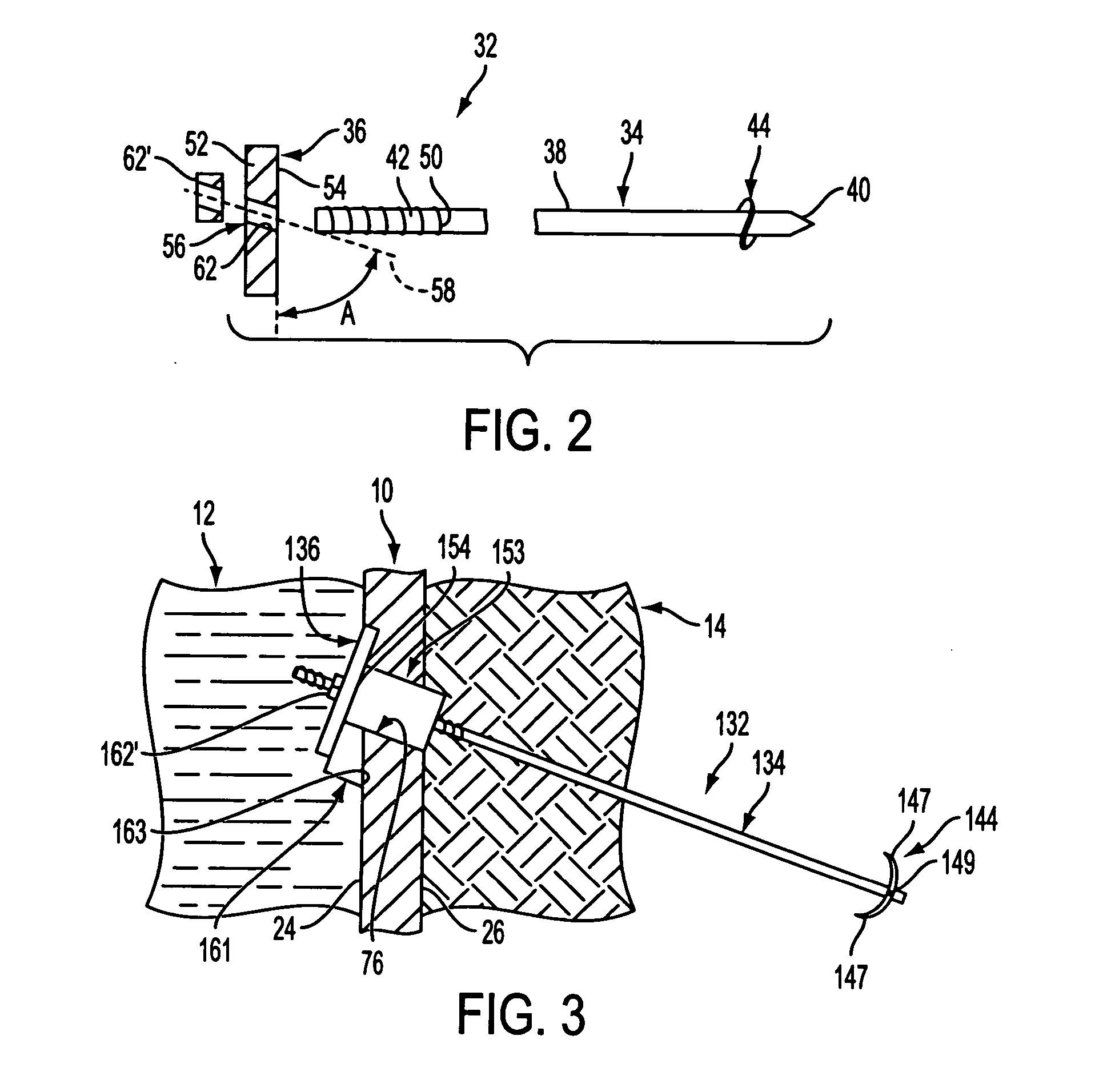
 Login to View More
  Login to View More