
Mobile portal for radio frequency identification of objects
a mobile portal and radio frequency identification technology, applied in the field of application of radio frequency identification (rfid) technology, can solve the problems of inconvenient deployment of a sufficient number of rfid reader portals in a warehouse to locate precisely where a tagged palette is all times, and the present day rfid system is not cost effective for locating assets more precisely, etc., and achieves the same cost disadvantages of fixed rfid reader portal system, and r
- Summary
- Abstract
- Description
- Claims
- Application Information
AI Technical Summary
Benefits of technology
Problems solved by technology
Method used
Image

Examples
Embodiment Construction
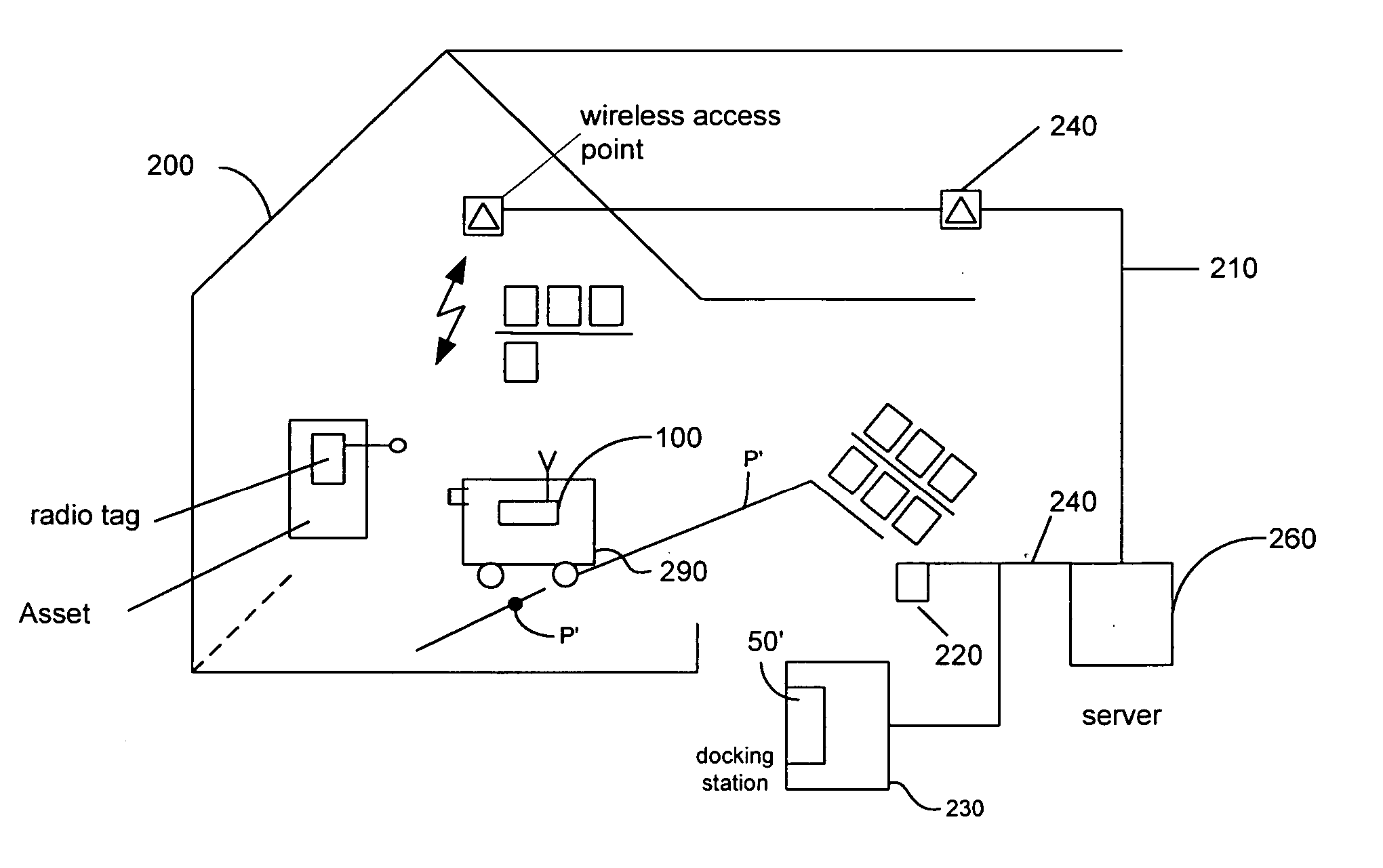
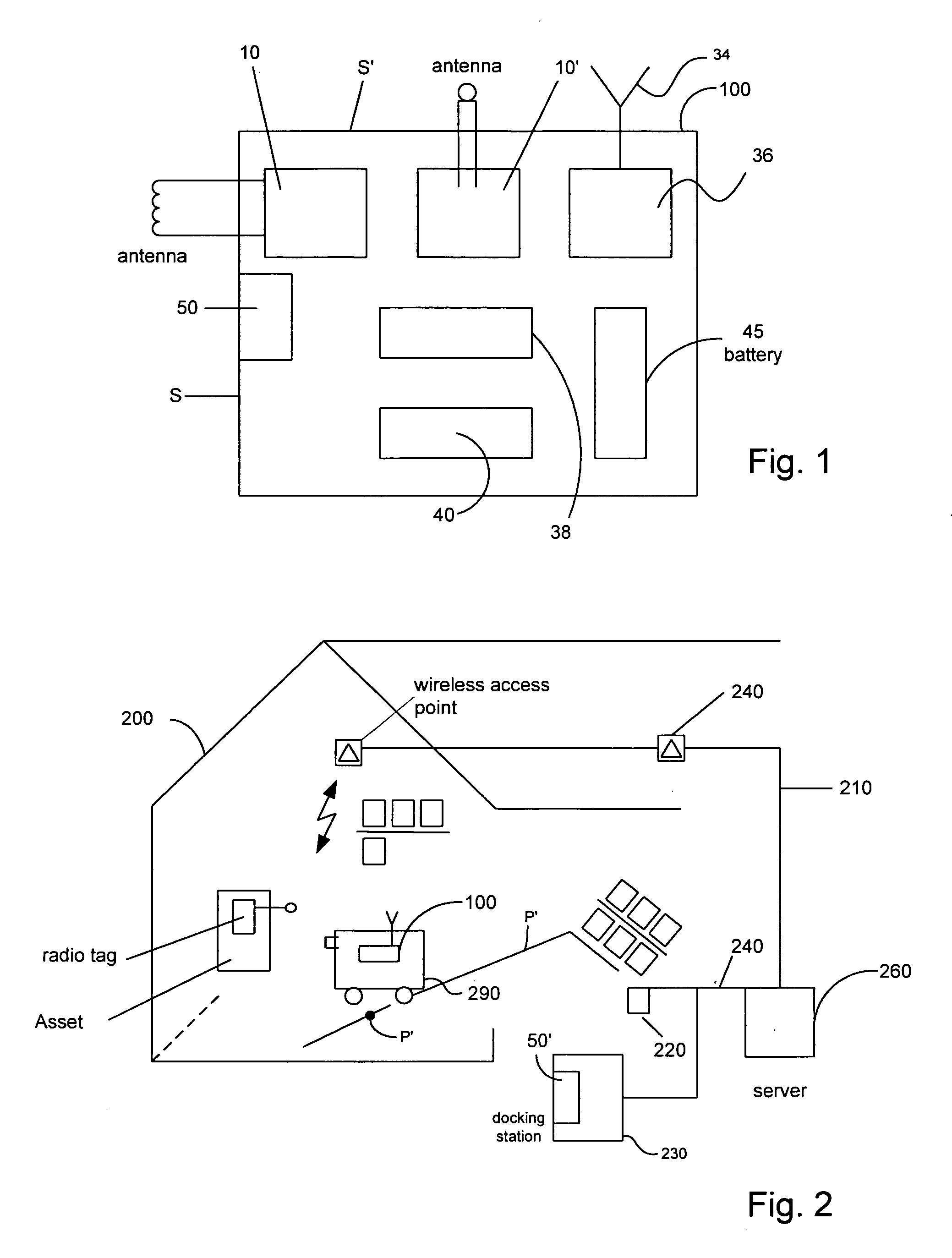
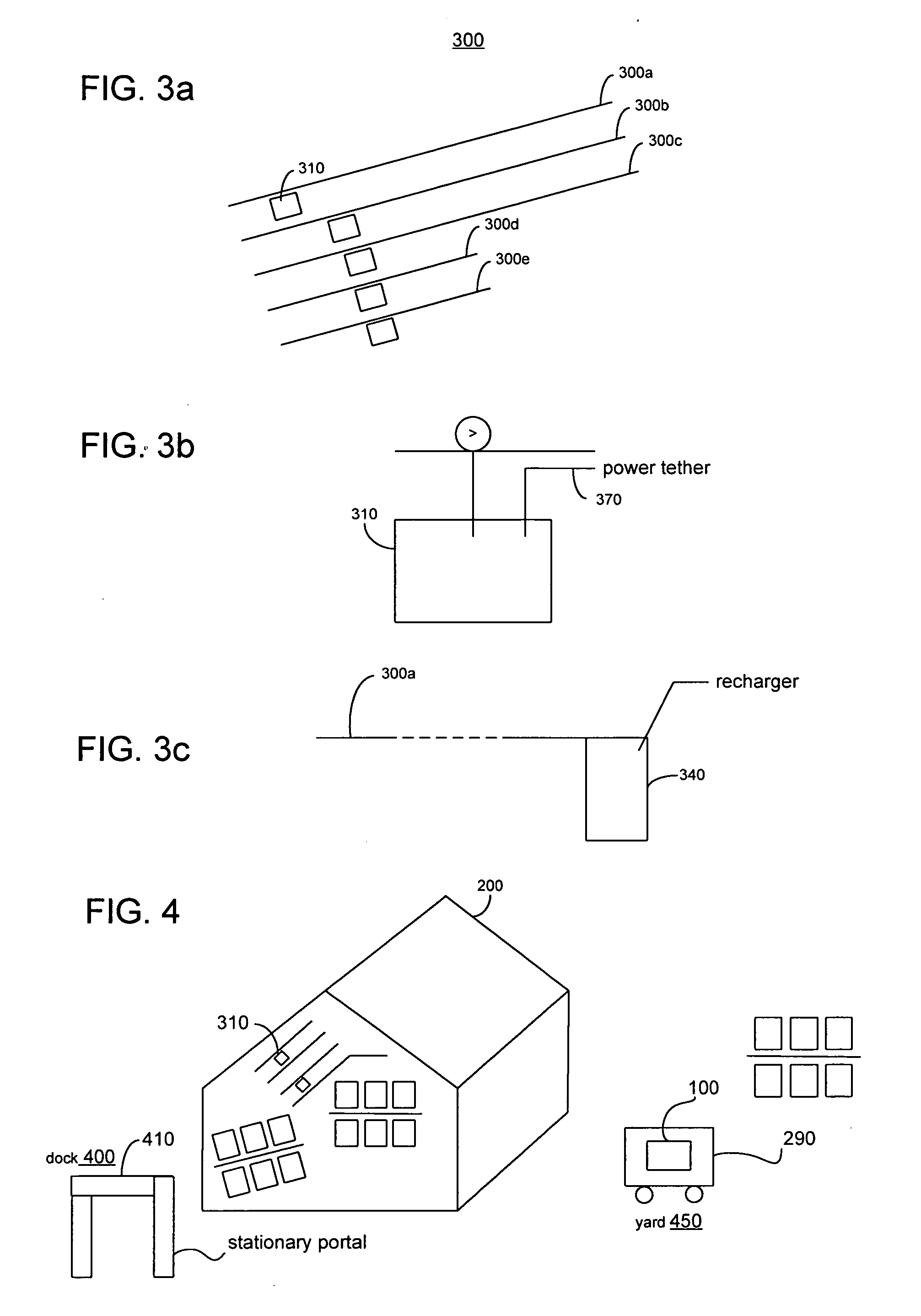
[0022] In accordance with the invention, a configuration of mobile RFID portals is provided for use in the radio frequency identification and location of assets. The configuration of mobile RFID portals may be deployed in an area of interest to determine, on a continuous or periodic basis, the locations of RFID-tagged assets within the area.
[0023] For convenience in the description herein, a warehouse building (building 200FIG. 2) is used as the exemplary area of interest. It will, however, be understood that the area of interest may be any area in which of assets are stored, moved or used (e.g. a transportation yard, retail store, a manufacturing plant, or other buildings or spaces). Warehouse building 200 may be serviced in a conventional manner by wireless and / or wired networks for data communications that, for example, are commonly used in present day business operations. FIG. 2 shows, for example, wireless access points 240 of a wireless data communications network 210, which ...
PUM
 Login to View More
 Abstract
Description
Claims
Application Information
 Login to View More