It however, is susceptible to wear.
In operation, though most all of the displays and touch sensitive devices of these POS systems are similar in display properties to the displays used with traditional computer set-ups (e.g., desktops, business computing uses, etc.), the displays of these POS systems undergo more significant
exposure to
wear and tear, chemicals, physical
impact, and
moisture, in particular.
Similarly, at fast food locations, many of the display devices are often only merely shielded from the elements and must be available for easy access by the customer from their vehicle.
In most environments, and in food service environments in particular, computers are subject to liquids, foods,
grease,
moisture, and other contaminants.
This is particularly a problem in food services where cashiers are often required to consummate transactions as well as provide the customer with the purchased food and drink.
The
point of sale devices that the cashier uses to input transaction information are often subject to liquids, foods,
grease,
moisture from handling of the food and drink by the cashier and other contaminants incident to food service.
Furthermore, food and drink are often spilled or drip on to the device itself.
Contamination of the display and / or display cover is particularly a problem in computer systems that use touch input.
The cleaning fluids can cause additional reactions with the display elements.
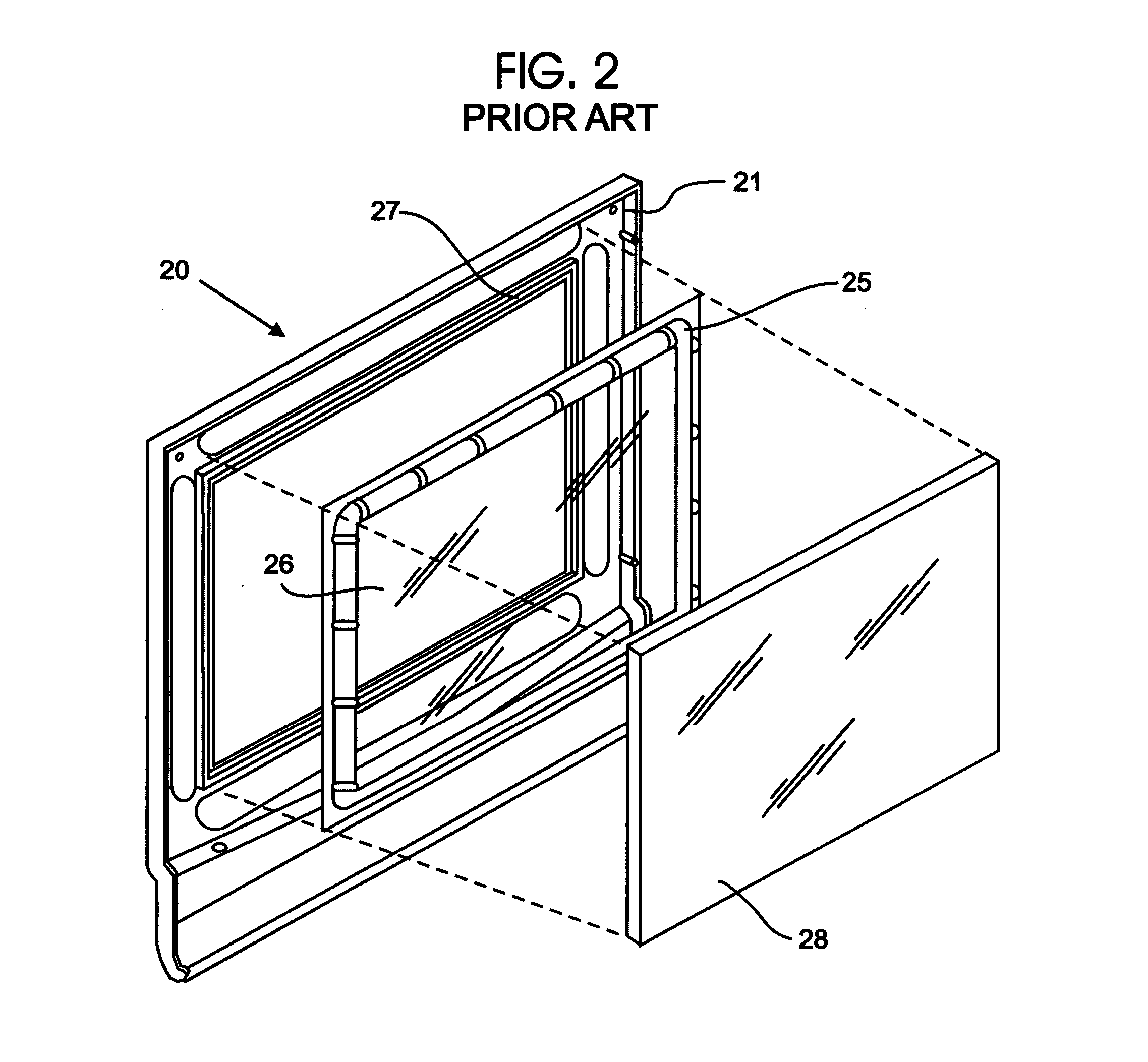
However, for this approach in particular, the protective sheet is not removable without completely removing bezel 25.
The sheet is affixed on the finally assembled display and is unable to effectively prevent seepage of liquids and the elements between the display and the exterior as there is a gap between the end of the protective sheet and the edge of the interface of the device exterior with the display.
Unfortunately, in many of these attempts, the presence of the
adhesive protective sheet only further complicates the design as the
adhesive is often one of the elements most susceptible to chemical damage and the difficulty with properly aligning the protective sheet requires additional skills and time in the manufacturing process.
Similarly, when certain of these protective sheets are deployed with capacitive touch screens, they cause the capacitive touch screen to be inoperable due to the nature of operation of a capacitive touch screen; certain of these attempts also set forth a rigid covering further limiting the ability of a user to input responses to electronic displays.
Further, though some of these attempts may provide some limited covering for the display itself, others of these attempts often fail to adequately prevent chemicals and other exposures from entering the electronic device as these attempts do not incorporate protections that also serve to protect the area between the display and its external casings.


 Login to View More
  Login to View More