[0006] The present invention provides a computer system for the cockpit of an aircraft which can be used during the flight preparation as well as during the complete flight and which can be installed in the cockpit without an intensive certification process. Additionally, in accordance with one aspect of the present invention, the update process and the maintenance processes of the main hardware and the
software of the computer system is simplified and minimizes the time of the aircraft on the ground. Furthermore, the parts of the computer system according to the invention may be, advantageously, small and enable simplified
retrofitting of the computer system in the cockpits of older aircraft.
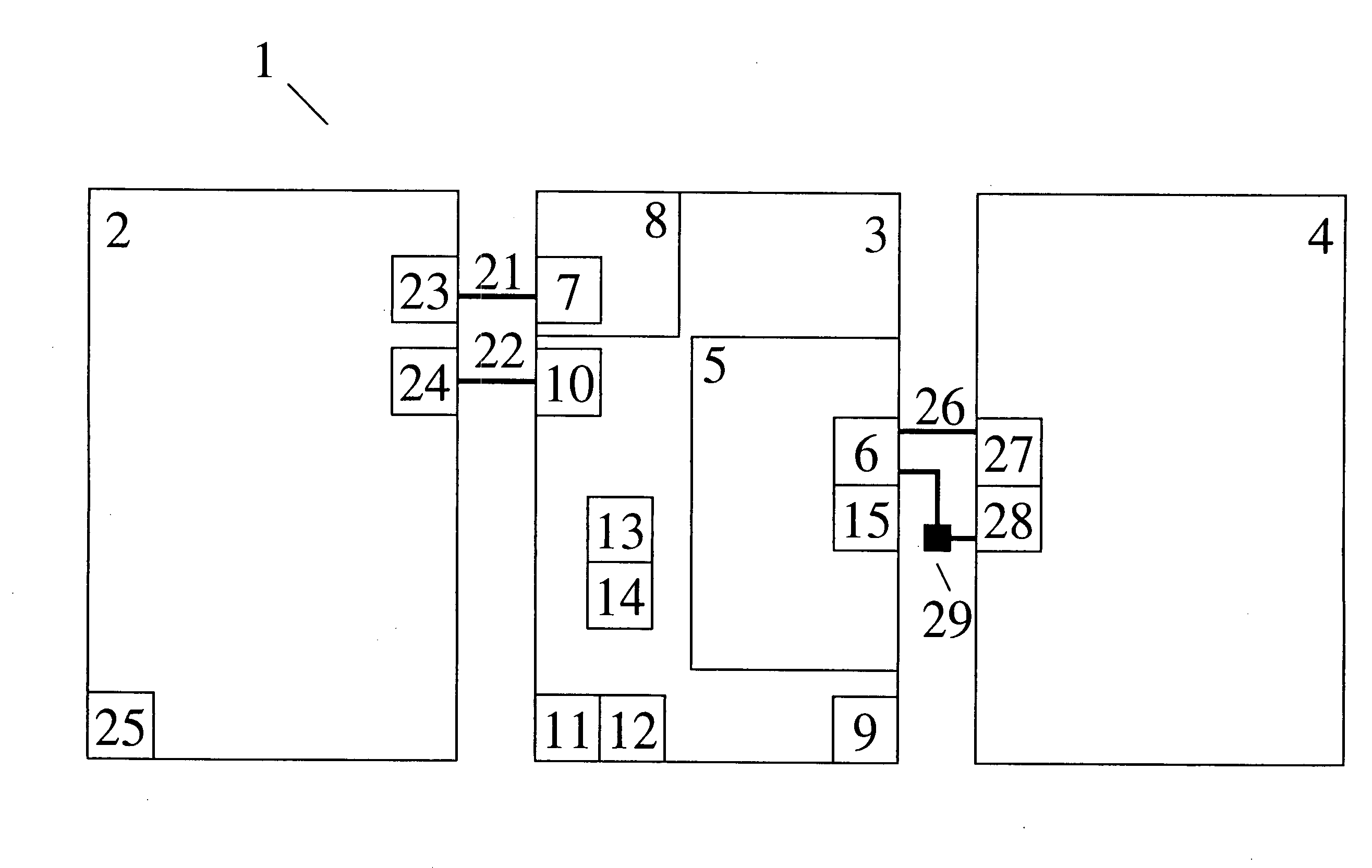
[0010] The embedded computer according to the present invention does not comprise the full functionality of a computer, like the portable computer. The embedded computer comprises all means which are necessary to enable a
network connection between the docking unit and the portable computer. However, the embedded computer itself does not comprise all features of a standard computer and is therefore not capable to carry out all functions. For example, it does not need to host a hard disk or other
moving parts which would make the certification more difficult. In addition, the embedded computer does not need a ventilator, and therefore improves the maintenance cycle due to higher resistance against vibration. Finally, the embedded computer can operate with a small embedded operation system, for example embedded XP.
[0012] In one embodiment, the invention comprises two parts. The first part is realized by the members of the computer system installed in the cockpit of the aircraft, the fixed screen and the docking unit. The second part is an arbitrary computer which is portable and can therefore easily be exchanged. This concept achieves that the computer system easily fulfills the requirements to be certified and that the computer system can be easily and inexpensive adapted to the needs of the user. The screen and the docking unit can undergo a simple certification process whereas the arbitrary portable computer does not need to undergo any certification at all. Following the FAA Advisory Circular ACC 120-75 (Authority regulations for EFB (Electronic Flight Bags)), the invention would fall under a Class 2 EFB category, which does not require any certification for the portable device and its
software. The European
Aviation Authorities JAA are following these recommendations in their TGL 98 Temporary Guidance Leaflet. Using this Class 2 category will create a significant added value to the Airlines, as the
software or any
upgrade or change in hardware of the portable device can be realized at minimum cost. In addition, this first part enables that the information provided by the arbitrary portable computer can be displayed on a screen in the cockpit of the aircraft also during taxi, take off and landing of the aircraft. This is the major task of this part of the computer system. The components, i.e., the hardware, used in this part of the computer system can stay the same for a long period of time, since this task is not response-
time critical. The software in the docking unit can also stay the same for a long period of time, since only the
operating system of the embedded computer is used. The soft- and hardware of the docking unit do not need to undergo the regular
upgrade cycles as the portable computer unit does (almost weekly for data and software, 2-3 years for hardware).
[0013] All elements which may need an update or should be replaced in short time intervals are placed in the other part, the portable computer. The portable computer houses the important hardware, namely the processor, the RAM and the hard drive. These pieces of hardware are important for the speed with which, for example, the flight charts are calculated. Therefore, it may be desirable to exchange these pieces with faster ones in order to improve the system. The portable computer houses also the important software, namely the applications which are used by the
pilot, for example, the application which calculates the flight chart base on the data stored on the hard disk. Such software may be improved in short time periods and therefore should be updated as soon as possible. In addition, new software may be developed to support the pilot. Since these elements are part of the portable computer, these elements can be updated or replaced simply by exchanging the portable computer. The time intensive process of exchanging the hardware and updating the software itself does not affect the standing time of the aircraft on the ground, since the computer system in the aircraft can be used with another portable computer. Then, the software and hardware of the portable computer can be updated without stopping the complete aircraft.
[0015] The inventive computer system also enables that the pilot has the possibility to have all
relevant information by hand. For example, every pilot has his own portable computer which he uses also during a flight as part of the inventive computer system. Therefore, the pilot can prepare himself for the flight wherever he wants, since all necessary information is stored in his portable computer. The pilot can also select already the relevant flight charts for the next flight at home which may reduce the preparation time in the cockpit significantly.



 Login to View More
  Login to View More