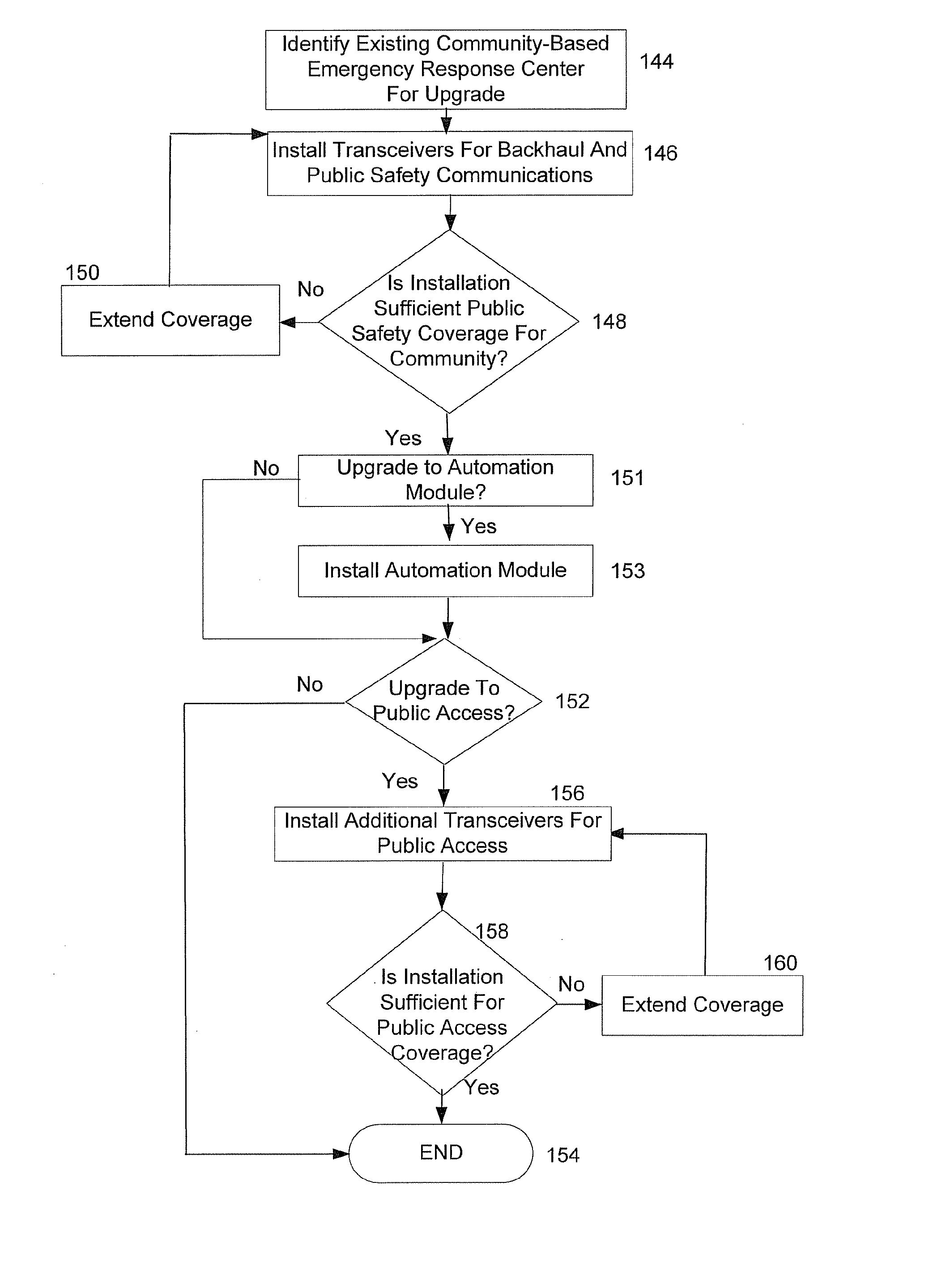
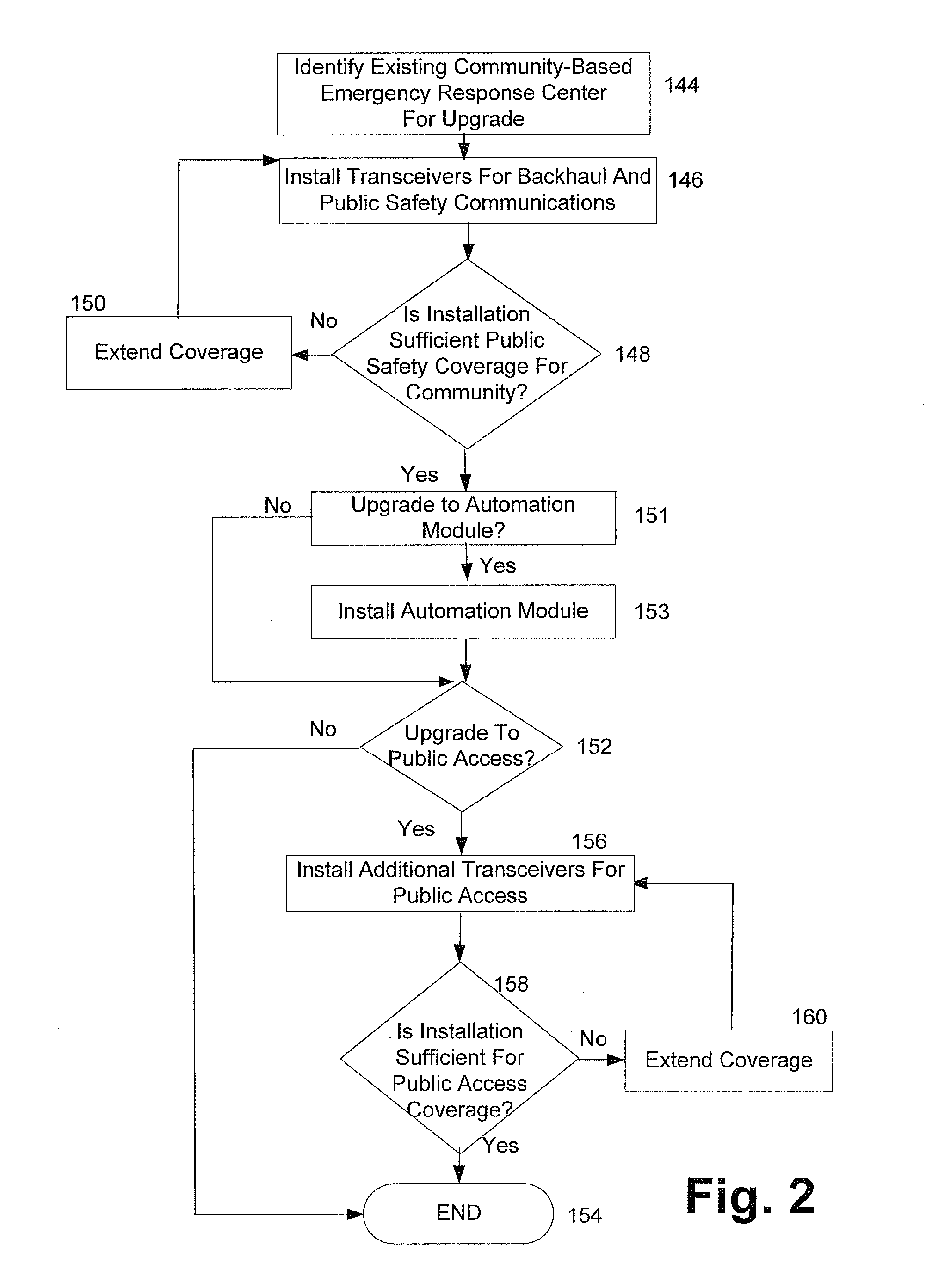
[0010] An
automation module can be installed at the
emergency response center. For example, a fire
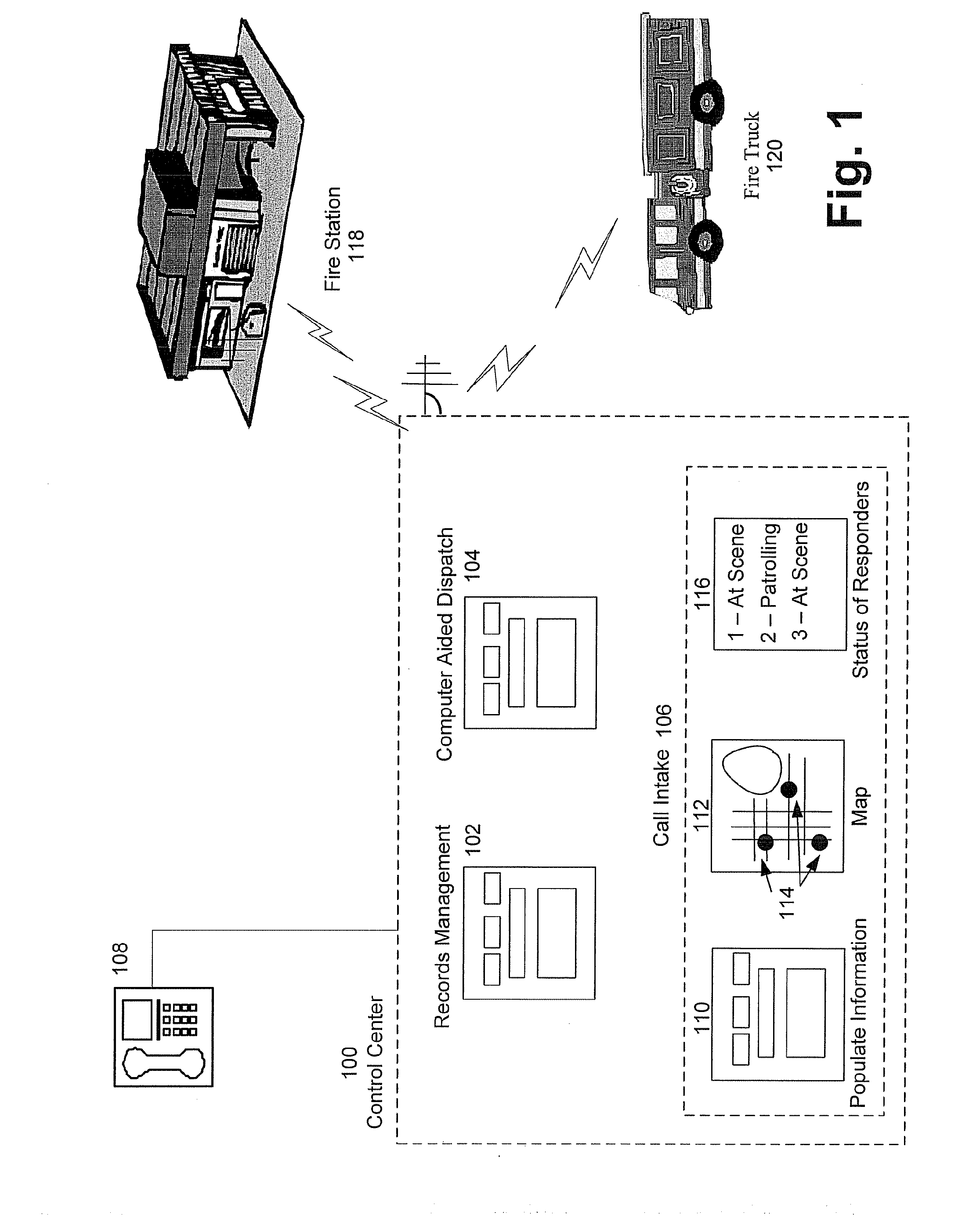
station may install modules to automatically perform a number of routine functions when an emergency alert is received. Example routine functions that can be automated include opening the
station's bay
doors, turning on exhaust fans, sounding an audible alarm to alert fire fights, turning on room lighting, displaying pertinent information on a terminal in the fire
station and send information to a local printer. Traffic lights outside the fire station can also be part of the
automation in order to clear traffic in the path of fire equipment heading to
a site of an emergency. In other public safety environments,
automation modules may be installed to control functionality of other types of local resources and assets. For example,
Supervisory Control And
Data Acquisition (
SCADA) systems such as a
system for monitoring and controlling a municipal
water supply can be upgraded to include automation modules. These modules include control systems at the
SCADA site that automatically react to commands delivered over the
network connection. An outdoor warning siren can be upgraded to include control systems that may, for example, automatically monitor and report battery life and react to commands delivered over the network—e.g, run self-diagnostics and report results. Security gates can be automated by a
network connection to react to
emergency situations detected at other network nodes in order to secure vulnerable areas or open them for quick evacuation.
Flood control and monitoring systems can be integrated into the
public safety network to inform other public safety systems and devices of dangerous flooding conditions and to automatically respond to commands from a central control station that integrated information from various public safety devices and systems to synthesize commands for the
flood control and
monitoring system and other public safety device and systems in the community. Alarm monitoring for businesses, municipal buildings and schools can be integrated into the public safety network to inform police and fire of burglary or fire condition to improve
response time and help reduce the
loss of life and property. Additional traffic control devices can be added to traffic lights within a municipality to control the traffic lights to improve
traffic flow for responding emergency vehicles or ingress and egress for major events held within a municipality. Meteorological weather stations can be integrated into the public safety network to monitor the
wind speed and direction for creating plume model tracking of harmful chemical or biochemical threats. Likewise, chemical, radiological and biological sensors distributed in a community can be network enabled and include controls that respond automatically to commands from a
remote control center.


 Login to View More
  Login to View More