
System for controlling flight direction
a flight direction and control system technology, applied in the field of fixed-wing aircrafts, can solve the problems of single-propeller aircrafts without additional airflow over the stabilizers and rudders, slow flying gliders or flapping wing aircraft like ornithopters, and lack of twin-engine airplanes. the effect of low cos
- Summary
- Abstract
- Description
- Claims
- Application Information
AI Technical Summary
Benefits of technology
Problems solved by technology
Method used
Image

Examples
Embodiment Construction
[0026]In the following the present invention will be discussed and the preferred embodiment described by referring to the accompanying drawings. Alternative embodiments will also be discussed, however, people skilled in the art will realize other applications and modifications within the scope of the invention as defined in the enclosed independent claims.
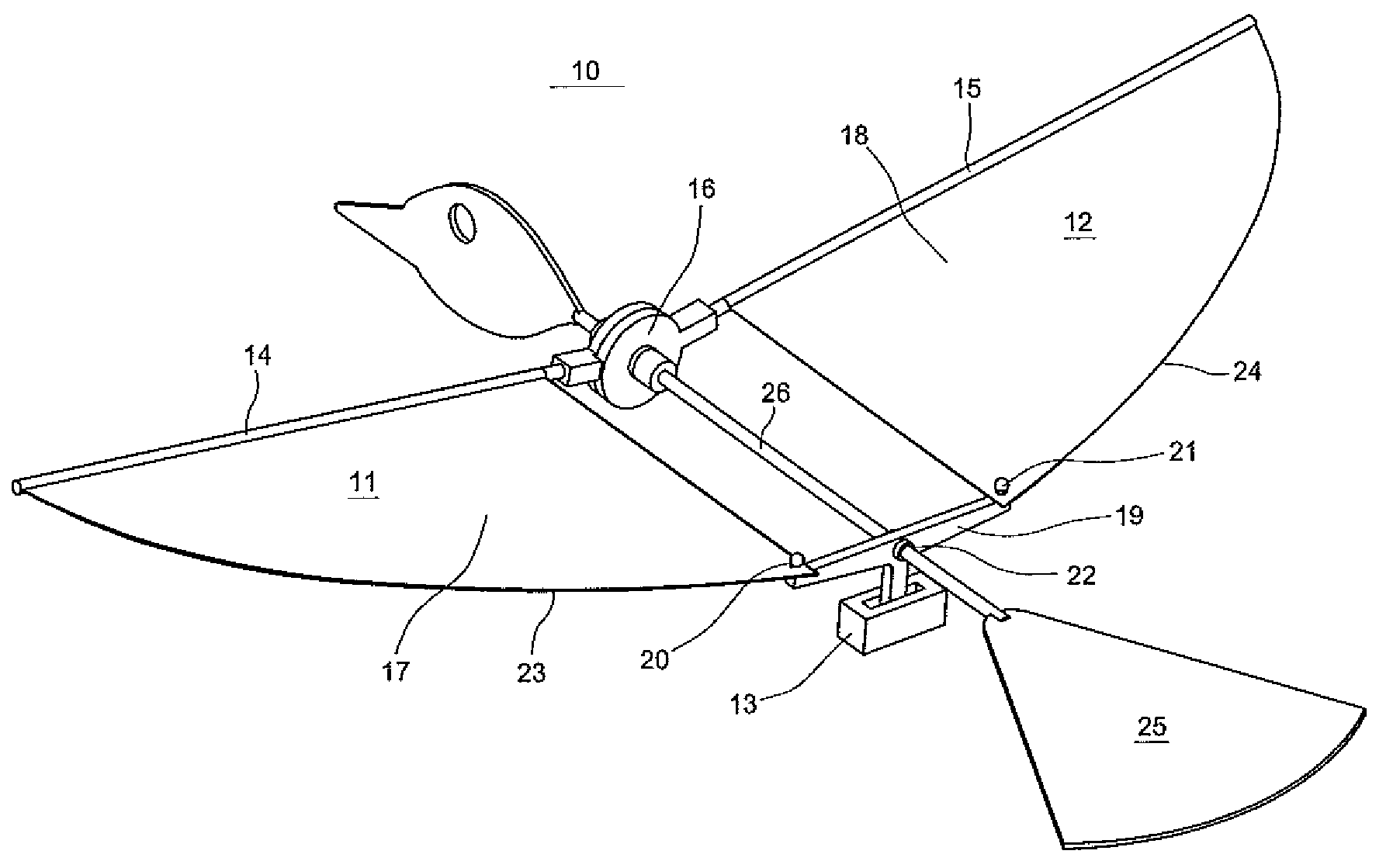
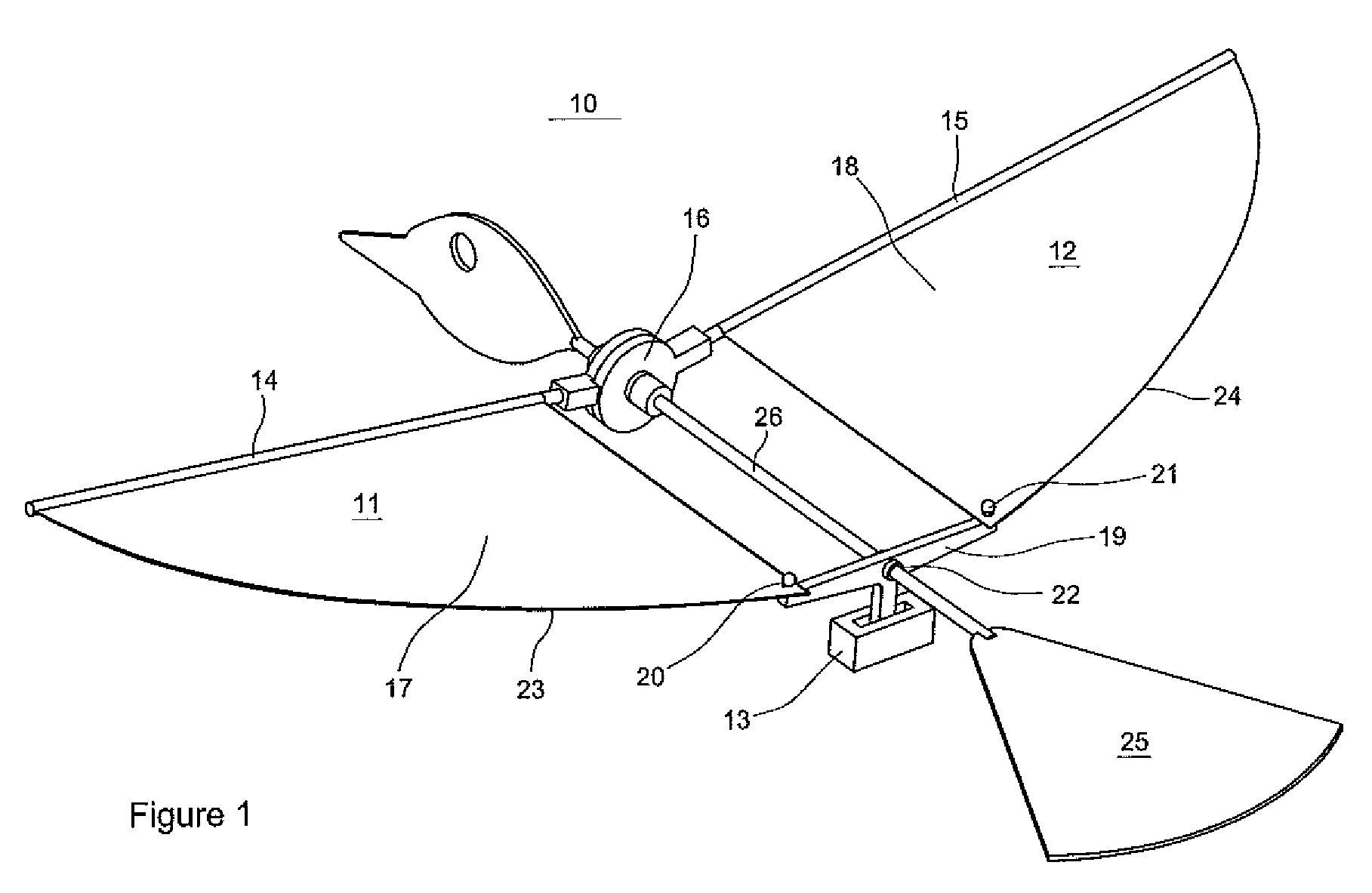
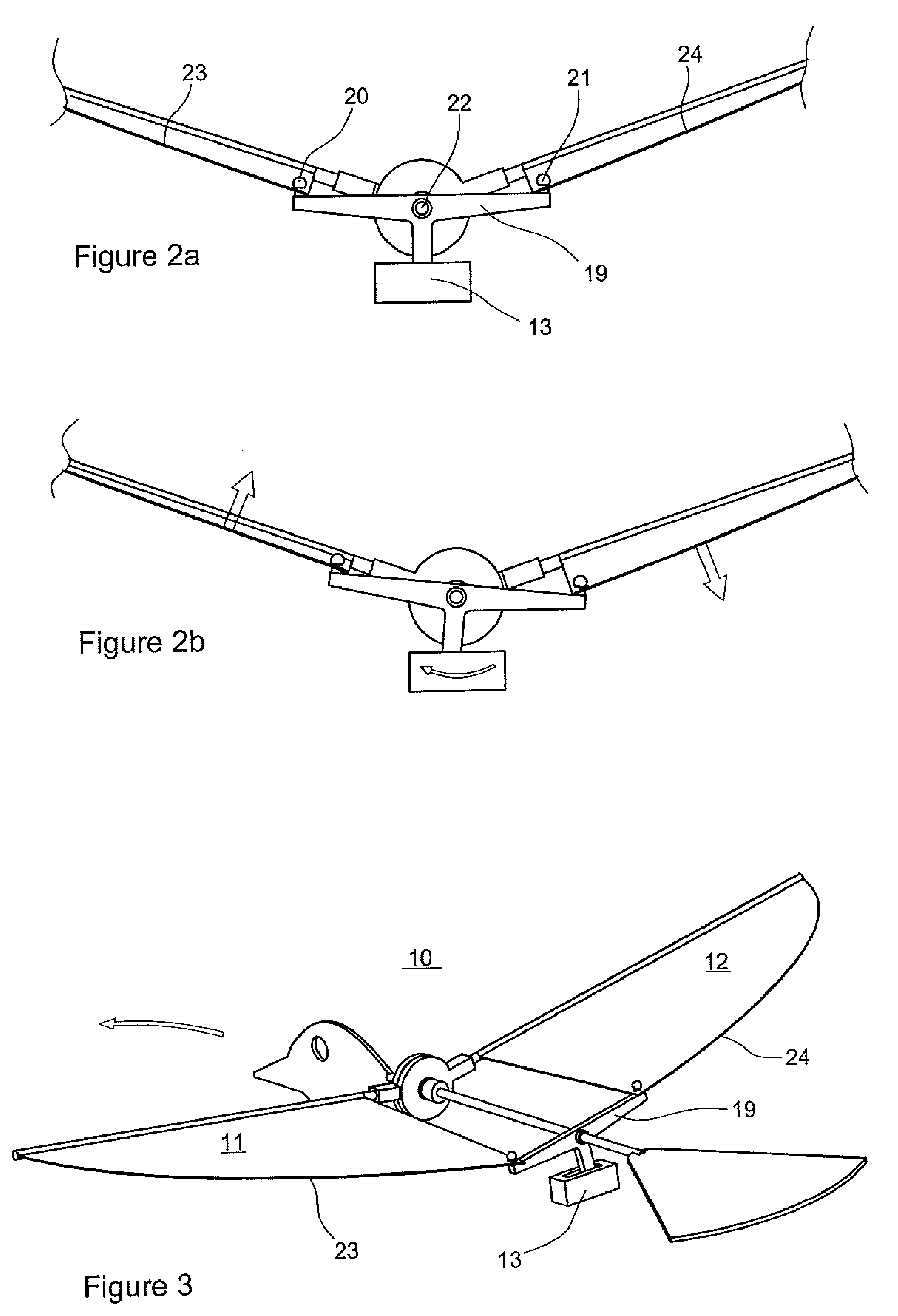
[0027]In FIG. 1 the preferred embodiment of an aircraft (10) according to the present invention is shown. It is a flapping wing aircraft, an ornithopter, utilizing a control means to control the flight direction. The present invention aims at fulfilling the need for a very simple, low cost and effective way of controlling the flight direction of an aircraft flying slowly or with a high angle of attack.
[0028]Normally an aircraft depends on changes in the lift on its wings to control the flight direction. Utilizing the current invention it is, however, possible to manoeuvre mainly based on drag differences between the left and right ...
PUM
 Login to View More
 Abstract
Description
Claims
Application Information
 Login to View More