Using Triggers with Video for Interactive Content Identification

a technology of interactive content and triggers, applied in the field of interactive encoded video, can solve the problems of low processing efficiency, low processing efficiency, and limited cell phone hardware for content providers who wish to produce interactive content on the go

US20080201736A1Inactive Publication Date: 2008-08-21ACTIVE VIDEO NETWORKS INC
98 Cites 131 Cited by

Patent Information

Authority / Receiving Office
US · United States
Patent Type
Applications(United States)
Current Assignee / Owner
Publication Date
2008-08-21
Estimated Expiration
Not applicable · inactive patent

Smart Images

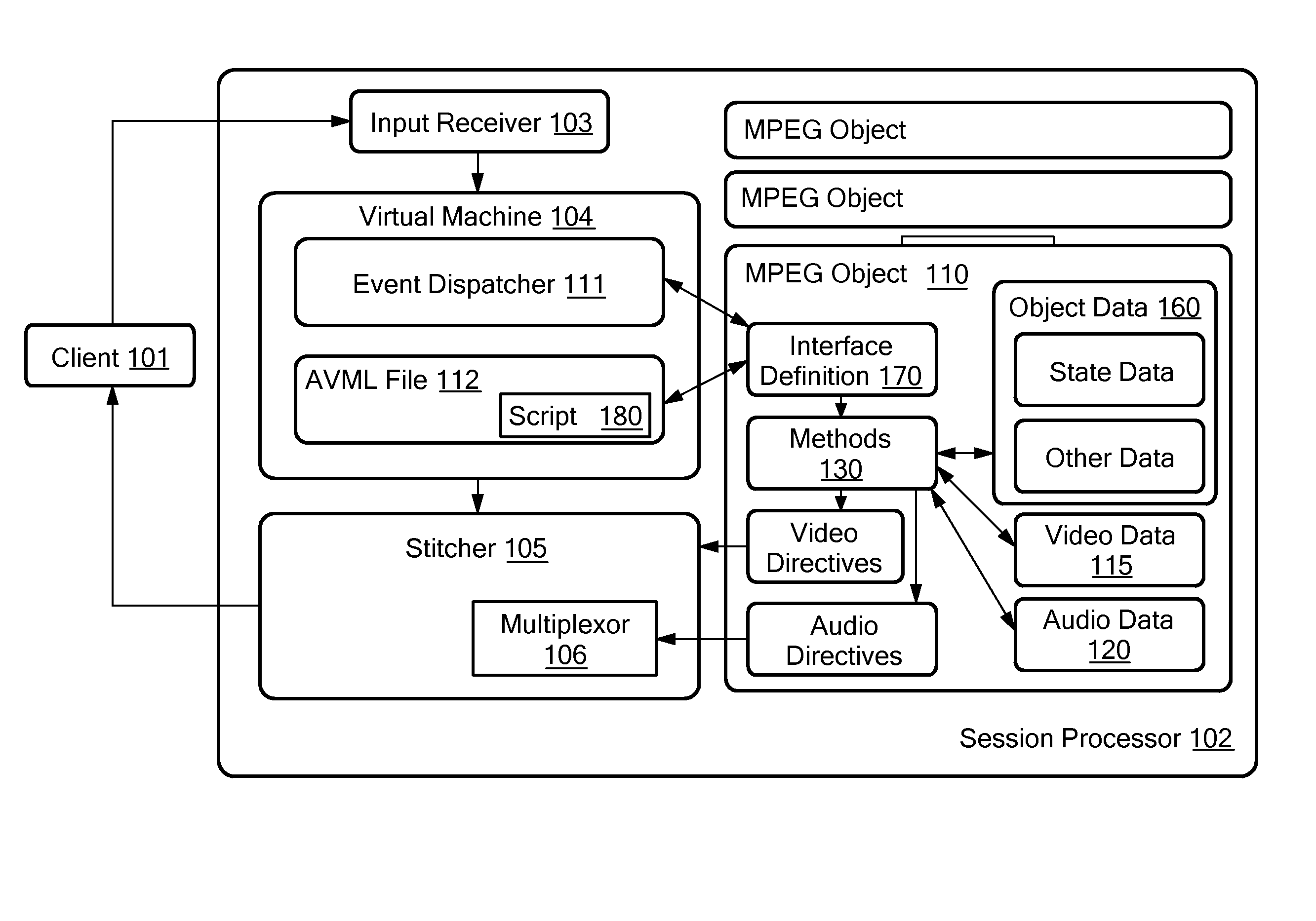
  • Figure 1
    Figure 1
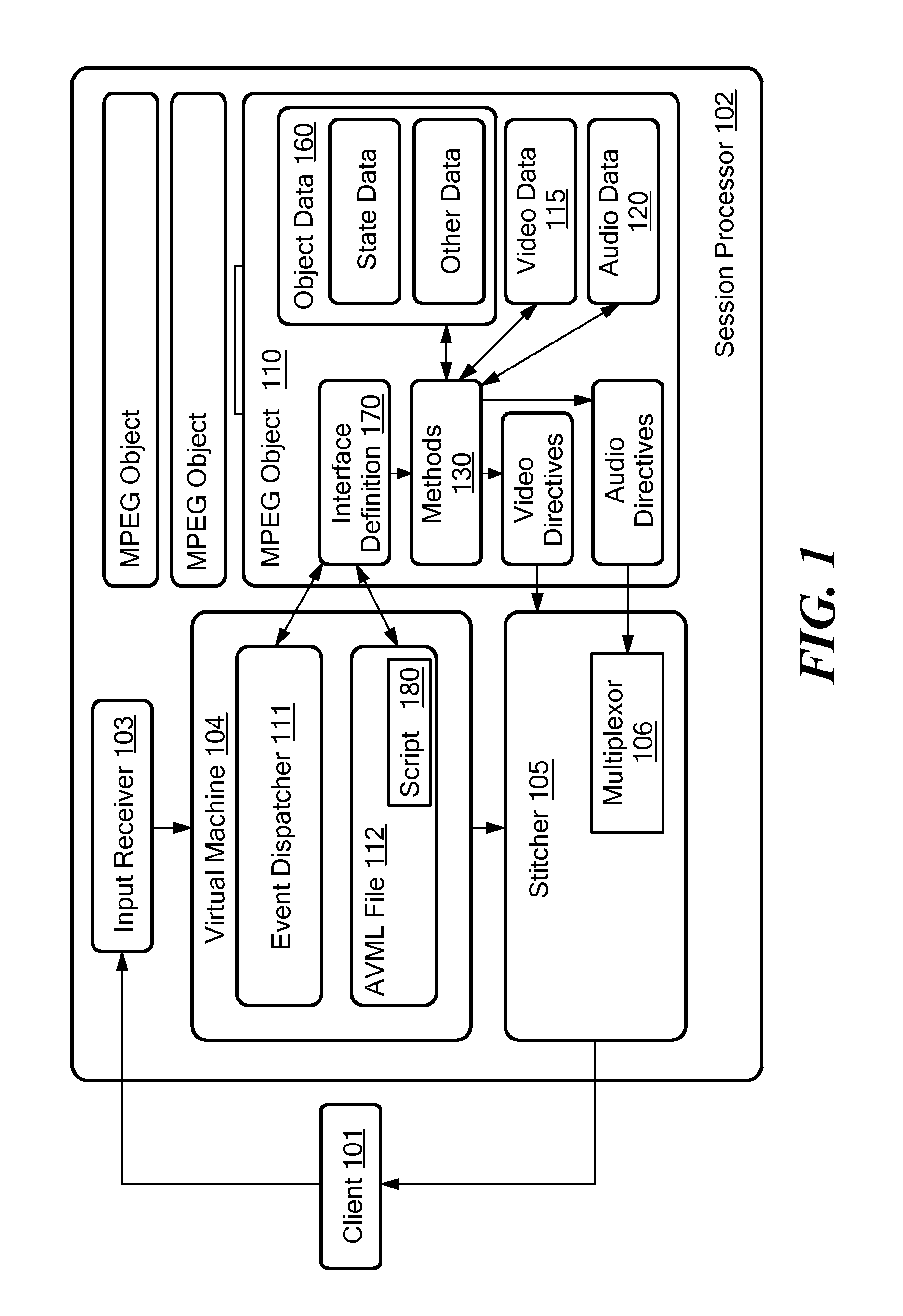
  • Figure 2
    Figure 2
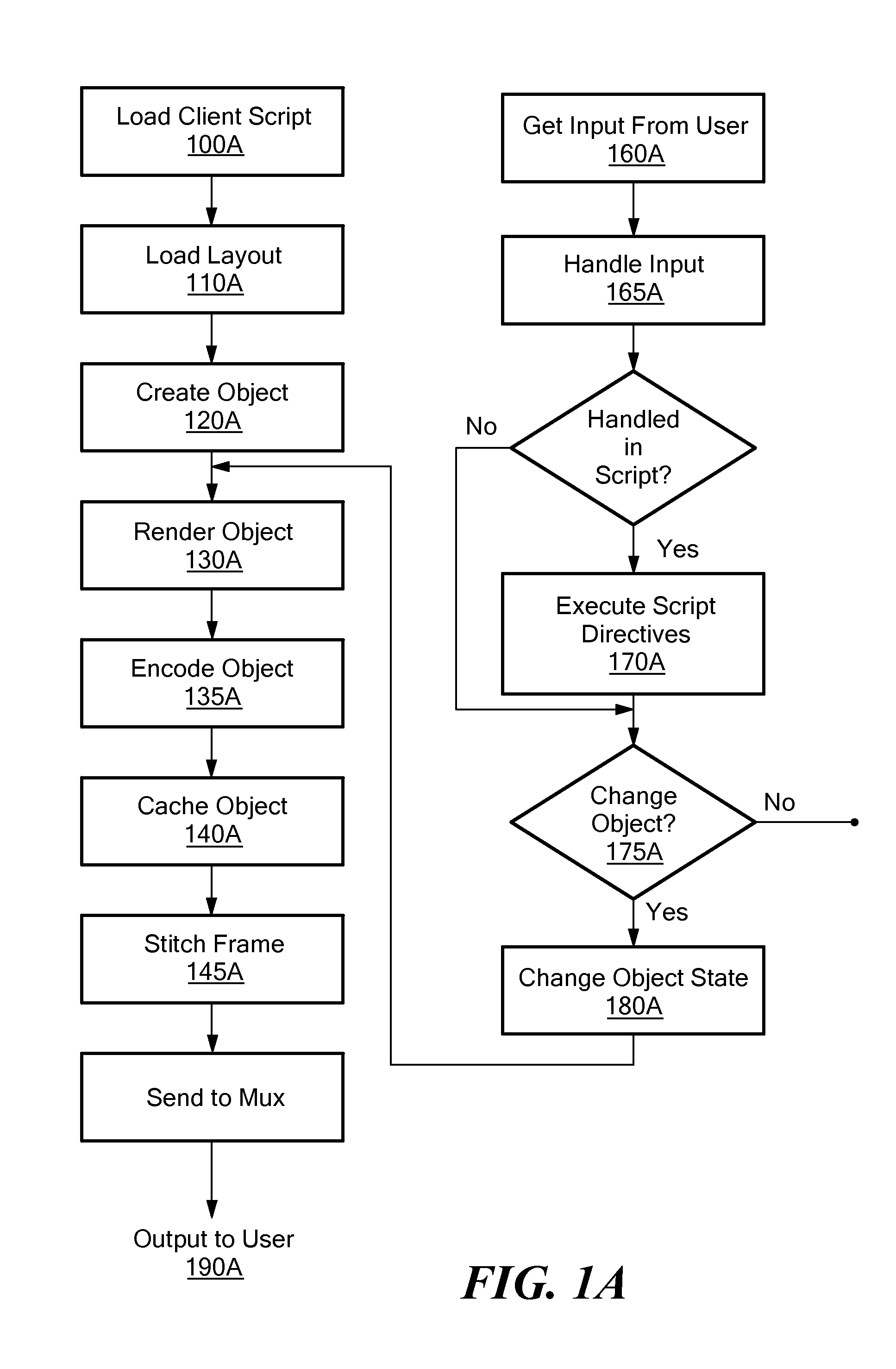
  • Figure 3
    Figure 3
Patent Text Reader

Abstract

Access to interactive content at a client device through the use of triggers is disclosed. The client device is coupled to a television communication network and receives an encoded broadcast video stream containing at least one trigger. The client device decodes the encoded broadcast video stream and parses the broadcast video stream for triggers. As the broadcast video stream is parsed, the stream is output to a display device. When a trigger is identified, the client device automatically tunes to an interactive content channel. The client device sends a signal indicative of the trigger through the television communication network to the processing office. The processing office can then use the information contained within the trigger signal to provide content to the client device. The content may be interactive content, static content, or the broadcast program stitched with interactive or static content. The user of the client device can then interact with any interactive content.
Need to check novelty before this filing date? Find Prior Art

Description

PRIORITY

[0001] The present U.S. patent application is a Continuation-In-Part of and claims priority from U.S. patent application Ser. No. 12 / 008,722 entitled “MPEG Objects and Systems and Methods for Using MPEG Objects” filed on Jan. 11, 2008, which itself claims priority from U.S. Provisional Patent Applications No. 60 / 884,744, No. 60 / 884,772, and No. 60 / 884,773, each of which was filed on Jan. 12, 2007. The subject matter of these applications is incorporated herein by reference in their entirety. The present U.S. patent application is also a Continuation-In-Part of and claims priority from U.S. patent application Ser. No. 12 / 008,697 entitled “Interactive Encoded Content System including Object Models for Viewing on a Remote Device” filed on Jan. 11, 2008, which itself claims priority from U.S. Provisional Patent Applications No. 60 / 884,744, No. 60 / 884,772, and No. 60 / 884,773, each of which was filed on Jan. 12, 2007. The subject matter of these applications is incorporated herein ...

Examples

Embodiment Construction

[0032]Embodiments of the present invention disclose MPEG objects and systems and methods of using MPEG objects in a client / server environment for providing interactive encoded video content to a client device that includes an MPEG decoder and an upstream data connection to the server in an interactive communications network. As used in the detailed description and the claims the term MPEG element and MPEG video element shall refer to graphical information that has been formatted according to an MPEG standard (Motion Picture Experts Group). The graphical information may only be partially encoded. For example, graphical information that has been transform coded using the discrete cosine transform will be considered to be an MPEG element without requiring quantization, entropy encoding and additional MPEG formatting. MPEG elements may include MPEG header information for macroblocks and the slice level. An MPEG element may include data for either a full MPEG video frame, a portion of an...