Check patentability & draft patents in minutes with Patsnap Eureka AI!

Process method to fabricate CMOS circuits with dual stress contact etch-stop liner layers

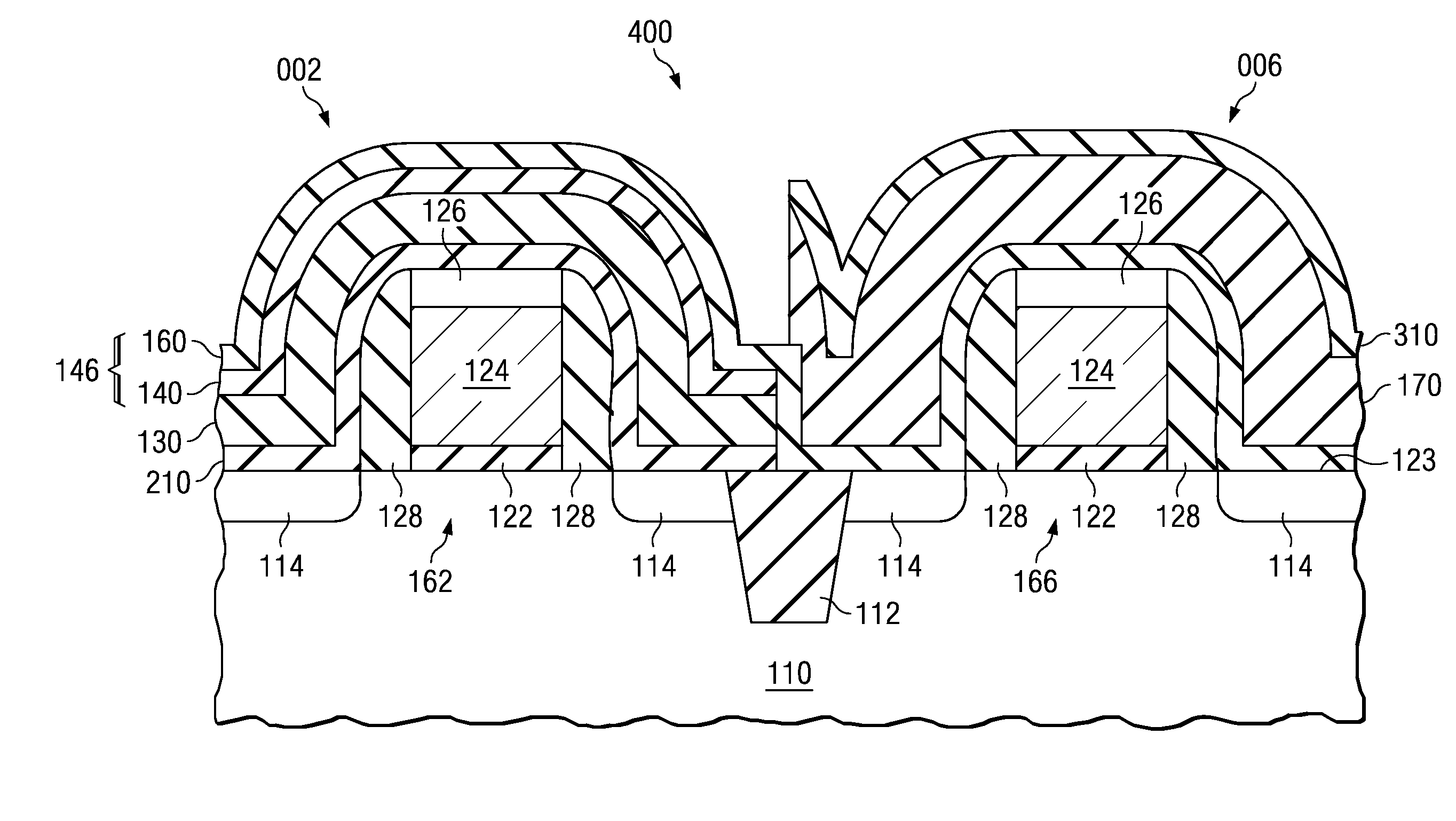
a technology of etching stop and cmos, which is applied in the direction of semiconductor devices, electrical equipment, basic electric elements, etc., can solve the problems of strain loss in the cmos channel region, partial or full delamination of the layers, and the etching process of the second stress layer often thins the underlying first stress layer

Inactive Publication Date: 2009-01-22
TEXAS INSTR INC
View PDF8 Cites 18 Cited by
  • Summary
  • Abstract
  • Description
  • Claims
  • Application Information

AI Technical Summary

Problems solved by technology

However, this conventional fabrication process has drawbacks and disadvantages.
For example, one drawback is that the etching process of the second stress layer often thins the underlying first stress layer due to the similarity in material properties.
Another drawback in the conventional fabrication process is that the adhesion of the stress layers on the surface of CMOS structures is sometimes not adequate, which can result in strain loss in the CMOS channel regions and / or partial or full delamination of the layers.

Method used

the structure of the environmentally friendly knitted fabric provided by the present invention; figure 2 Flow chart of the yarn wrapping machine for environmentally friendly knitted fabrics and storage devices; image 3 Is the parameter map of the yarn covering machine
View more

Image

Smart Image Click on the blue labels to locate them in the text.
Viewing Examples
Smart Image
  • Process method to fabricate CMOS circuits with dual stress contact etch-stop liner layers
  • Process method to fabricate CMOS circuits with dual stress contact etch-stop liner layers
  • Process method to fabricate CMOS circuits with dual stress contact etch-stop liner layers

Examples

Experimental program
Comparison scheme
Effect test

Embodiment Construction

[0001]1. Field of the Invention

[0002]This invention relates generally to complementary metal oxide semiconductor (CMOS) devices and methods for their manufacture and, more particularly, to dual stress layers of CMOS devices.

[0003]2. Background of the Invention

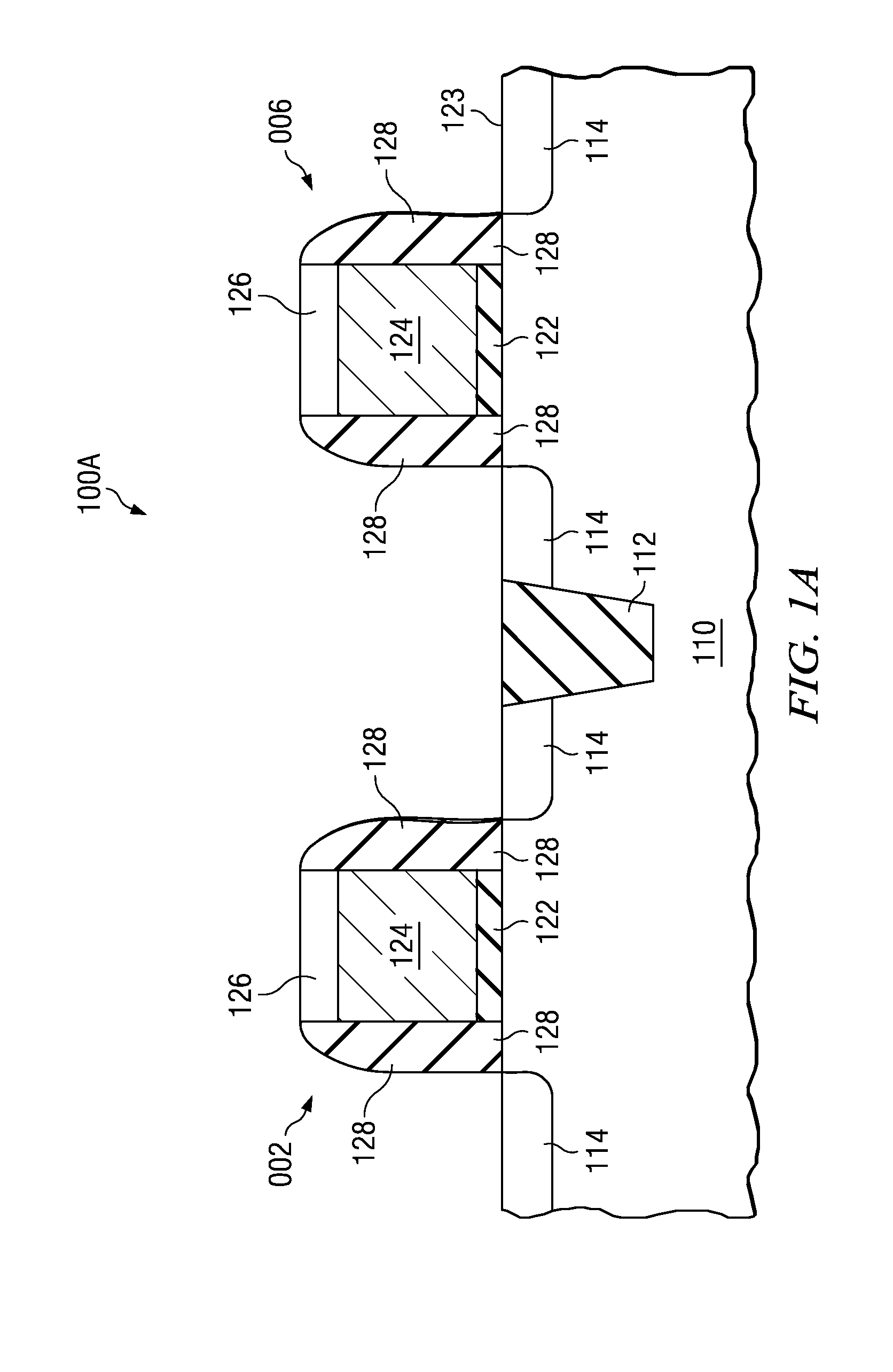
[0004]Dual stress layers (DSL) have been proven to be an effective way to improve both NMOS and PMOS transistor performance of CMOS devices. This is because the carrier mobility of each channel region of the NMOS and PMOS transistors can be increased by the stress exerted in the channel region from its corresponding stress layer.

[0005]Generally, two types of stress layers, including tensile stress layers and compressive stress layers, can be formed over CMOS transistor structures. In a CMOS fabrication process, each stress layer can be deposited, patterned and etched. Often there is a buffer layer formed between the two types stress layers during the fabrication. For example, a second stress layer (e.g., a compressive stress la...

the structure of the environmentally friendly knitted fabric provided by the present invention; figure 2 Flow chart of the yarn wrapping machine for environmentally friendly knitted fabrics and storage devices; image 3 Is the parameter map of the yarn covering machine
Login to View More

PUM

No PUM Login to View More

Abstract

Exemplary embodiments provide IC CMOS devices having dual stress layers and methods for their manufacture using a buffer layer stack between the two types of the stress layers. The buffer layer stack can include multiple buffer layers formed between a first type stress layer (e.g., a tensile stress layer) and a second type stress layer (e.g., a compressive stress layer) during the CMOS fabrication. Specifically, the buffer layer stack can be formed after the etching process of the first type stress layer but prior to the etching process of the second type stress layer, and thus to protect the etched first type stress layer during the subsequent etching process of the overlaid second type stress layer. In addition, a portion of the buffer layer stack can be formed between, for example, the compressive stress layer and the underlying PMOS device to enhance their adhesion.

Description

DESCRIPTION OF THE INVENTION[0001]1. Field of the Invention[0002]This invention relates generally to complementary metal oxide semiconductor (CMOS) devices and methods for their manufacture and, more particularly, to dual stress layers of CMOS devices.[0003]2. Background of the Invention[0004]Dual stress layers (DSL) have been proven to be an effective way to improve both NMOS and PMOS transistor performance of CMOS devices. This is because the carrier mobility of each channel region of the NMOS and PMOS transistors can be increased by the stress exerted in the channel region from its corresponding stress layer.[0005]Generally, two types of stress layers, including tensile stress layers and compressive stress layers, can be formed over CMOS transistor structures. In a CMOS fabrication process, each stress layer can be deposited, patterned and etched. Often there is a buffer layer formed between the two types stress layers during the fabrication. For example, a second stress layer (e...

Claims

the structure of the environmentally friendly knitted fabric provided by the present invention; figure 2 Flow chart of the yarn wrapping machine for environmentally friendly knitted fabrics and storage devices; image 3 Is the parameter map of the yarn covering machine
Login to View More

Application Information

Patent Timeline
no application Login to View More
IPC IPC(8): H01L21/8238
CPCH01L29/7843H01L21/823807
Inventor YU, SHAOFENGDELOACH, JUANITASMITH, BRIAN A.OBENG, YAW S.BUSHMAN, SCOTT GREGORY
Owner TEXAS INSTR INC
Features
  • R&D
  • Intellectual Property
  • Life Sciences
  • Materials
  • Tech Scout
Why Patsnap Eureka
  • Unparalleled Data Quality
  • Higher Quality Content
  • 60% Fewer Hallucinations
Social media
Patsnap Eureka Blog
Learn More