

Method and apparatus for bounded time delay estimation
a time delay estimation and estimation method technology, applied in the field of wireless communication, to achieve the effect of reducing multi-path errors, more robust and accurate self-localization capabilities
- Summary
- Abstract
- Description
- Claims
- Application Information
AI Technical Summary
Benefits of technology
Problems solved by technology
Method used
Image

Examples
Embodiment Construction
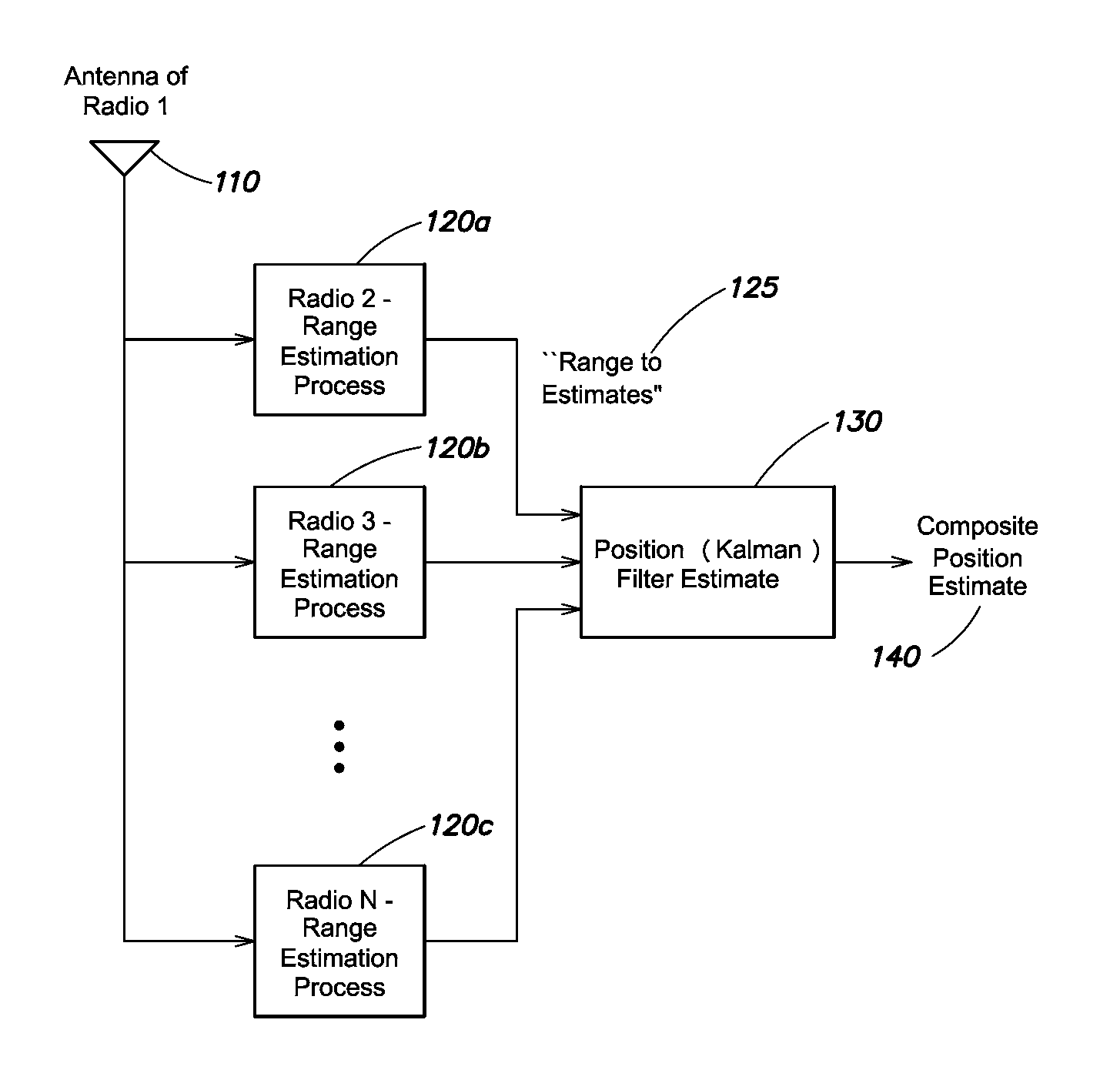
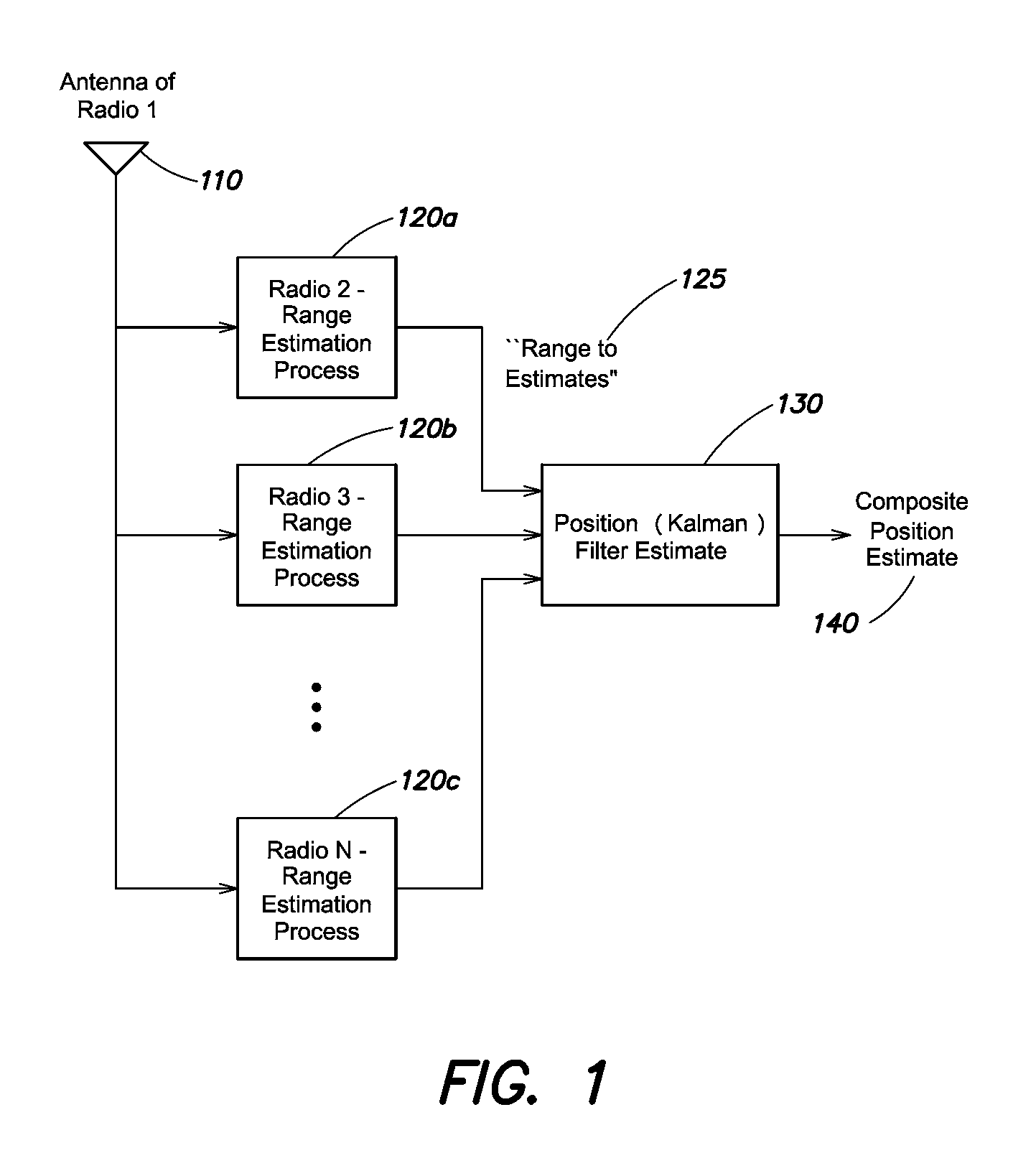
[0027]Aspects and embodiments are directed to a bounded time delay estimation concept which can be used to provide improved self-localization and tracking for wireless devices. For example, radios that need to continue to self locate in the intermittent absence of GPS service may embodiments of the methods and apparatus discussed herein improve their ability to self-locate. Conventional self-location processes generally use a time of arrival estimation process to estimate range to a known reference point, followed by a tracker algorithm to monitor changes in position. By contrast, aspects and embodiments use a tracker to affect the time of arrival range estimation process, thus linking these previously separate sequential processes in a unique way to limit the possibility of an incorrect decision being made, as discussed further below.
[0028]It is to be appreciated that embodiments of the methods and apparatus discussed herein are not limited in application to the details of construc...
PUM
 Login to View More
 Abstract
Description
Claims
Application Information
 Login to View More