Proximity detection device and proximity detection method

US20110055305A1Active Publication Date: 2011-03-03RPX CORP
6 Cites 53 Cited by

Patent Information

Authority / Receiving Office
US · United States
Current Assignee / Owner
Publication Date
2011-03-03

Smart Images

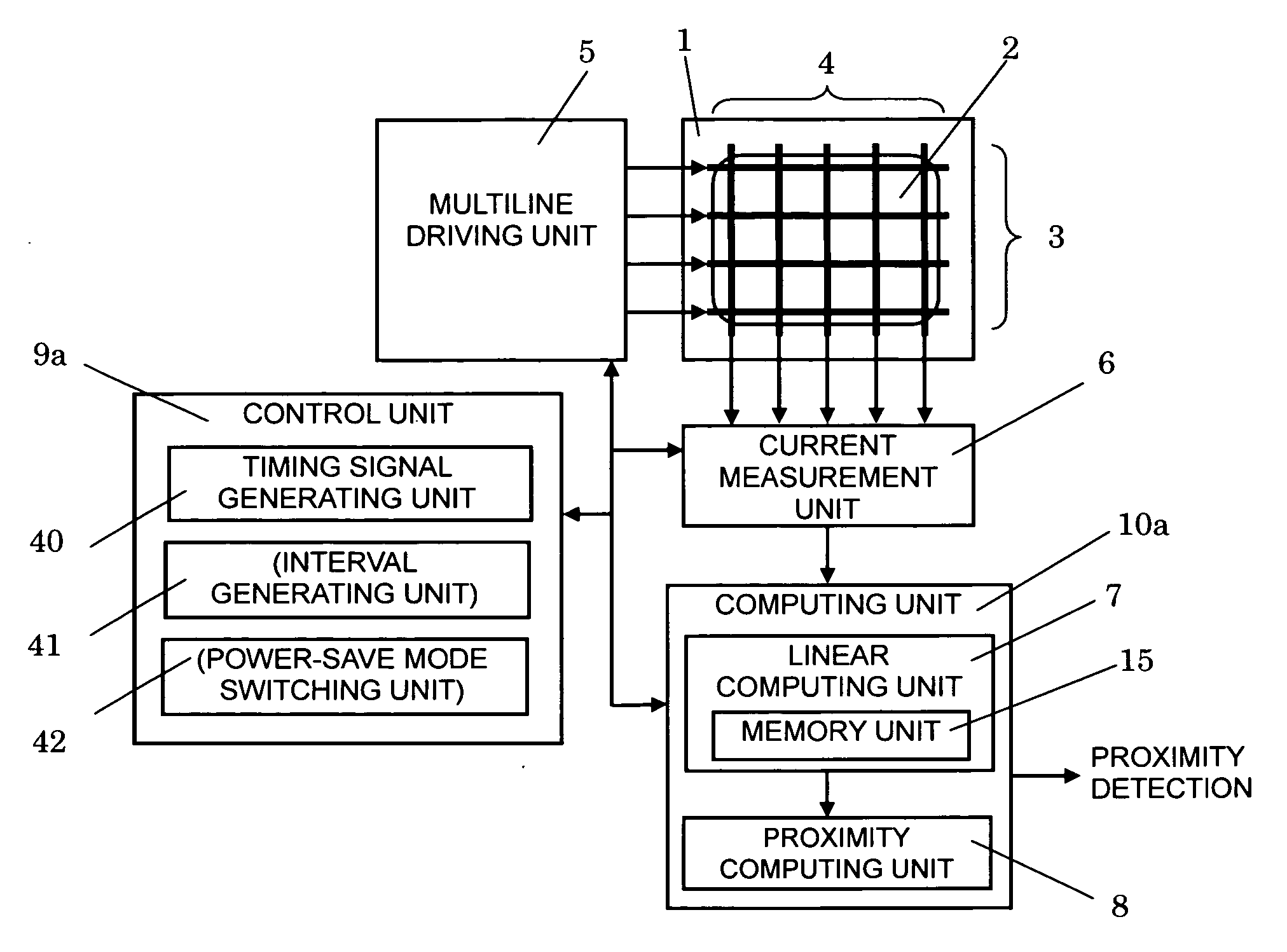
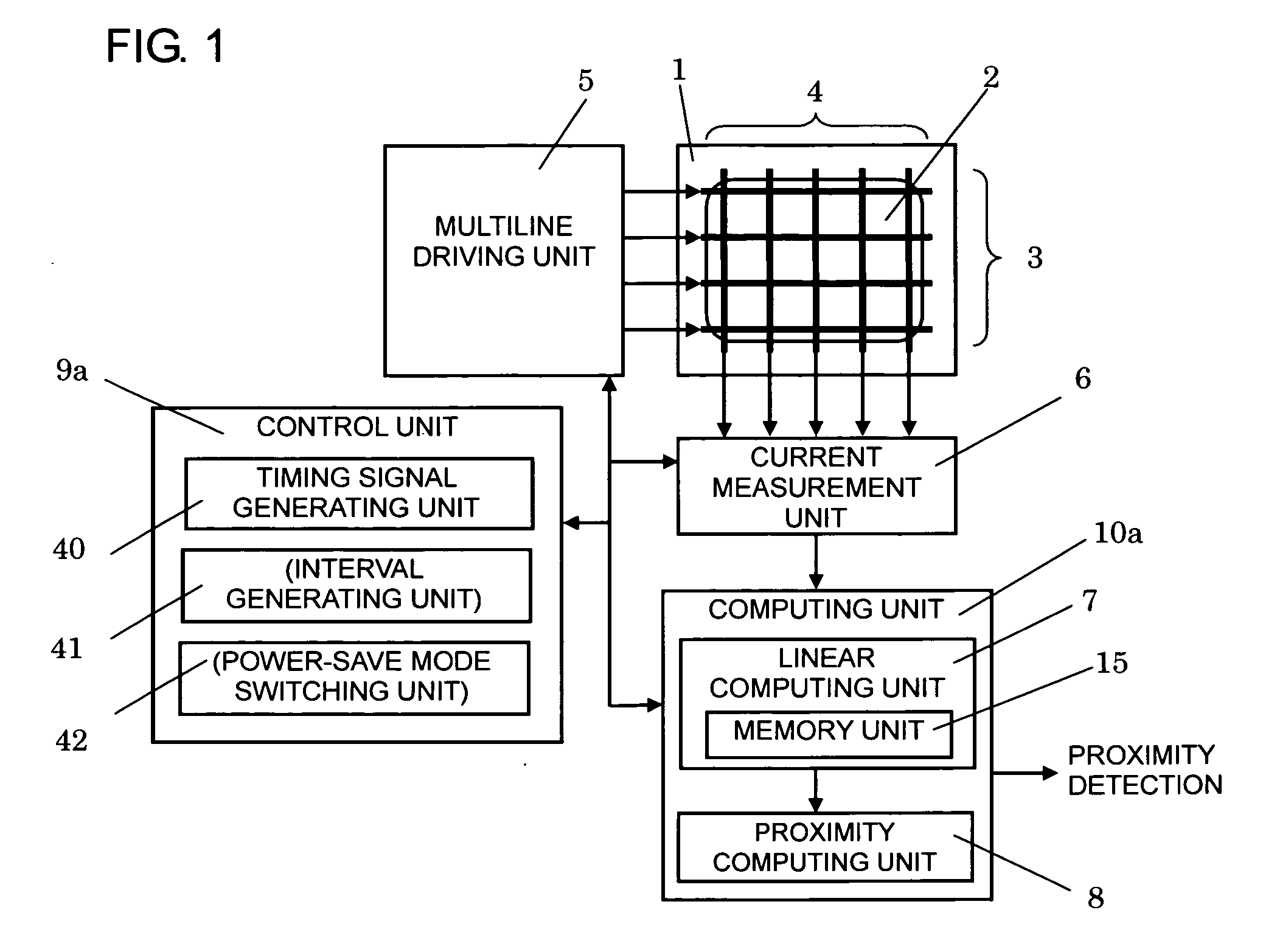
  • Figure 1
    Figure 1
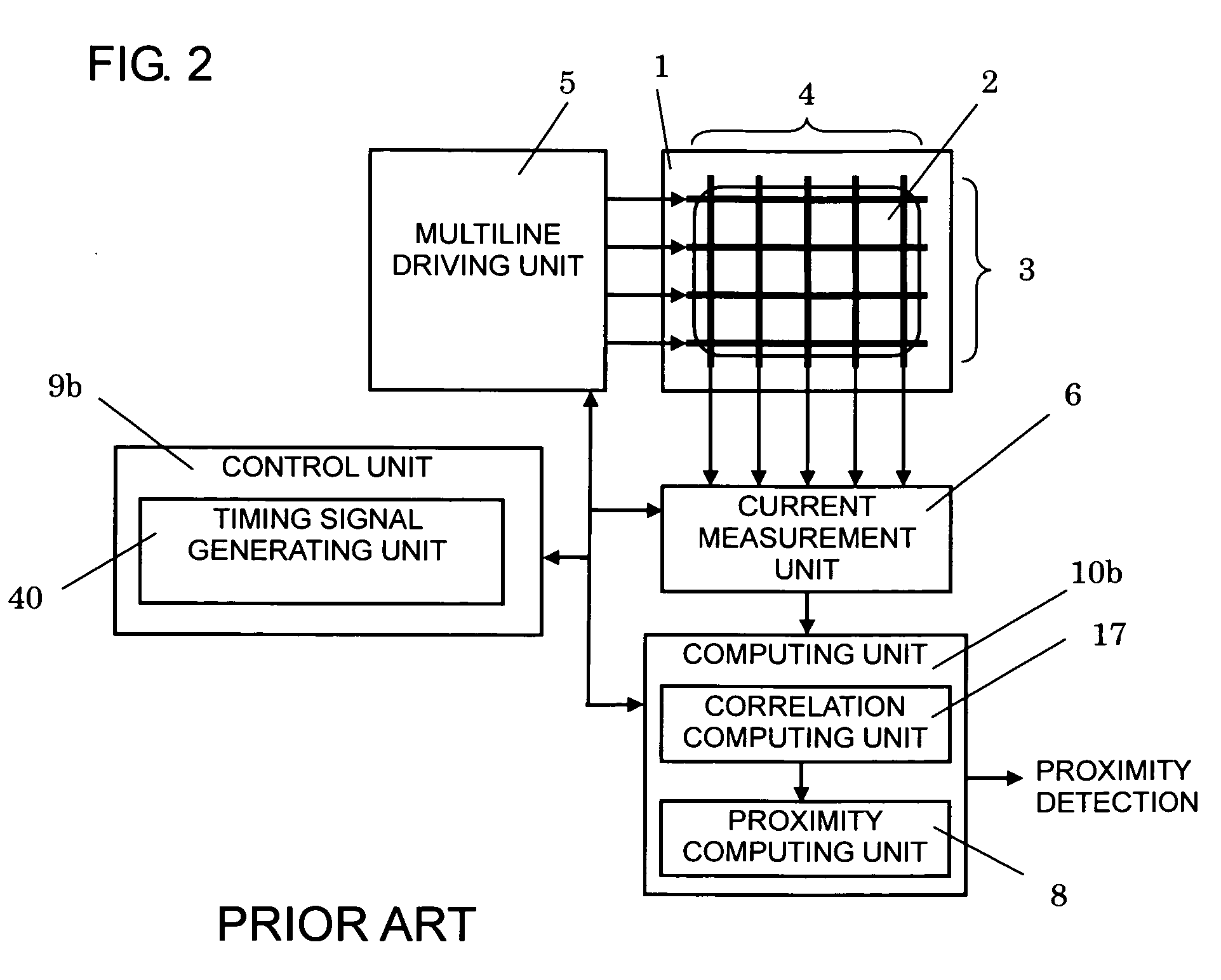
  • Figure 2
    Figure 2
  • Figure 3
    Figure 3
Patent Text Reader

Abstract

The device includes plural transmitting electrodes and receiving electrodes, a multiline driving unit that simultaneously applies periodic alternating voltages to at least two electrodes of the transmitting electrodes, a current measurement unit, a computing unit, and a control unit. The computing unit includes a linear computing unit that performs linear computation to convert the current values or amounts of accumulated charge measured in the current measurement unit into values in response to the electrostatic capacitances of the respective intersections between the transmitting electrodes and the receiving electrodes, and a proximity computing unit that obtains the approach determination or the approach position of the object toward the detection area from an output of the linear computing unit. The linear computing unit includes a memory unit that stores an interim result of the computation to be read out at plural times.
Need to check novelty before this filing date? Find Prior Art

Description

BACKGROUND OF THE INVENTION

[0001] 1. Field of the Invention

[0002] The present invention relates to a proximity detection device of detecting an approach and a position of an object of a human finger or the like by changes in electrostatic capacitances of respective intersections of plural electrodes arranged in correspondence with two-dimensional coordinates.

[0003] 2. Description of the Related Art

[0004] It is known that, when an object of a human finger or the like approaches between closely located two electrodes, the electrostatic capacitance between the electrodes changes. proximity detection devices such as an electrostatic touch sensor to which the principle is applied to the detection of the electrostatic capacitances of respective intersections of plural electrodes arranged in correspondence with two-dimensional coordinates in a detection area have been disclosed and some of them have been put into practical use (for example, see JP-T-2003-526831).

[0005] An example of the convent...

Examples

embodiment

[0035]A preferred embodiment of the invention will be explained based on FIG. 1.

[0036]A proximity detection device according to the invention includes, in FIG. 1, transmitting electrodes 3 corresponding to one dimension of two dimensional coordinates in a detection area 2 on a supporting unit 1 and receiving electrodes 4 corresponding to the other dimension provided via insulating layers for preventing electric continuity between them, a multiline driving unit 5 that simultaneously applies periodic alternating voltages to plural electrodes of the transmitting electrodes 3, a current measurement unit 6 that measures the magnitudes of the currents from the receiving electrodes 4 changing in response to the electrostatic couplings of the intersections between the transmitting electrodes 3 and the receiving electrodes 4 in synchronization with the driving to the transmitting electrodes 3, a computing unit 10a that obtains an approach determination and an approach position of an object t...