Temporal tracking robot control system

a technology of robot control and tracking system, applied in the field of tracking system, can solve the problem of not disclosing the algorithm of dual-loop temporal tracking system

US20110231016A1Active Publication Date: 2011-09-22RAYTHEON CO
10 Cites 136 Cited by

Patent Information

Authority / Receiving Office
US · United States
Current Assignee / Owner
Publication Date
2011-09-22

Smart Images

  • Figure 1
    Figure 1
  • Figure 2
    Figure 2
  • Figure 3
    Figure 3
Patent Text Reader

Abstract

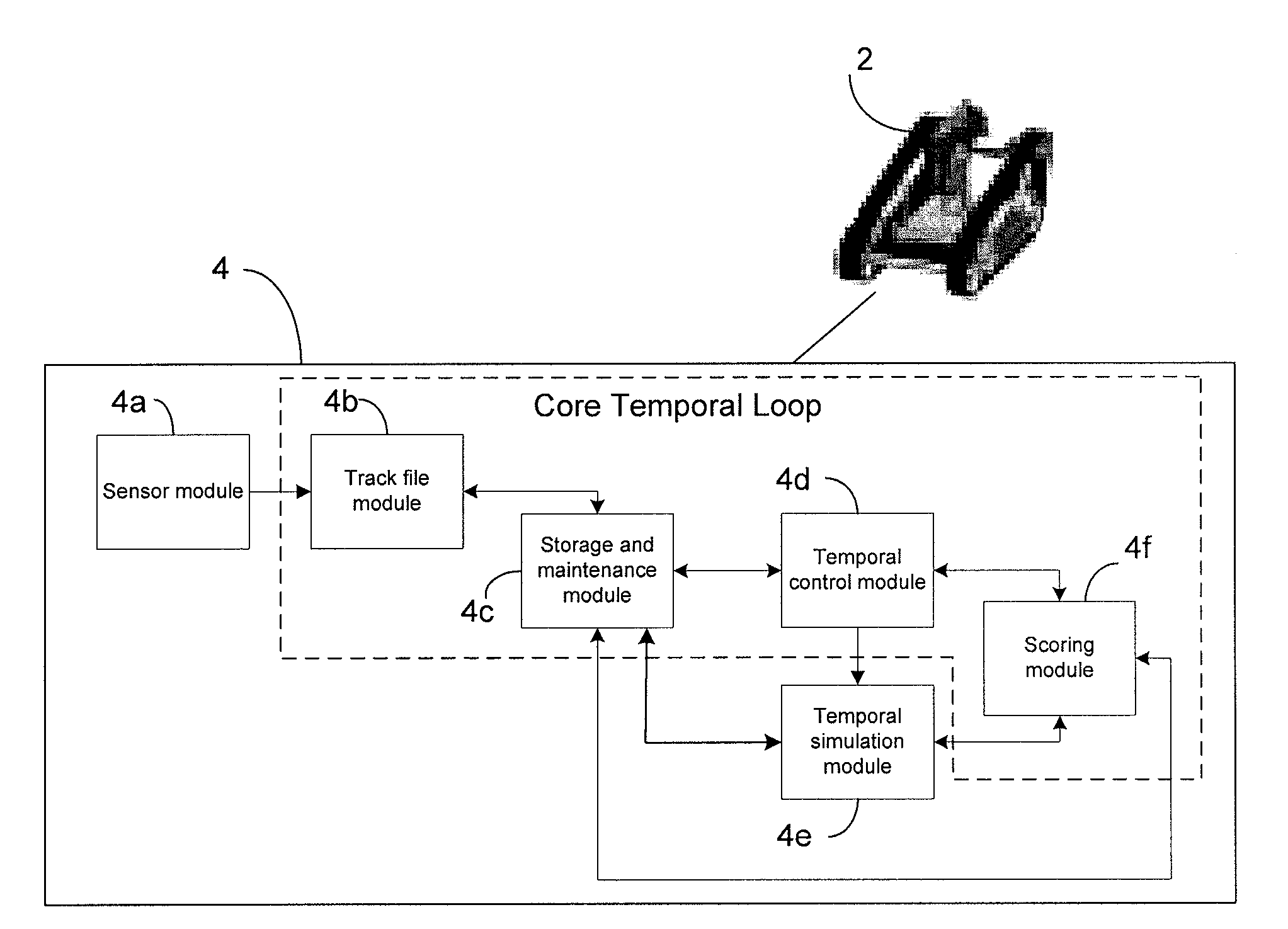
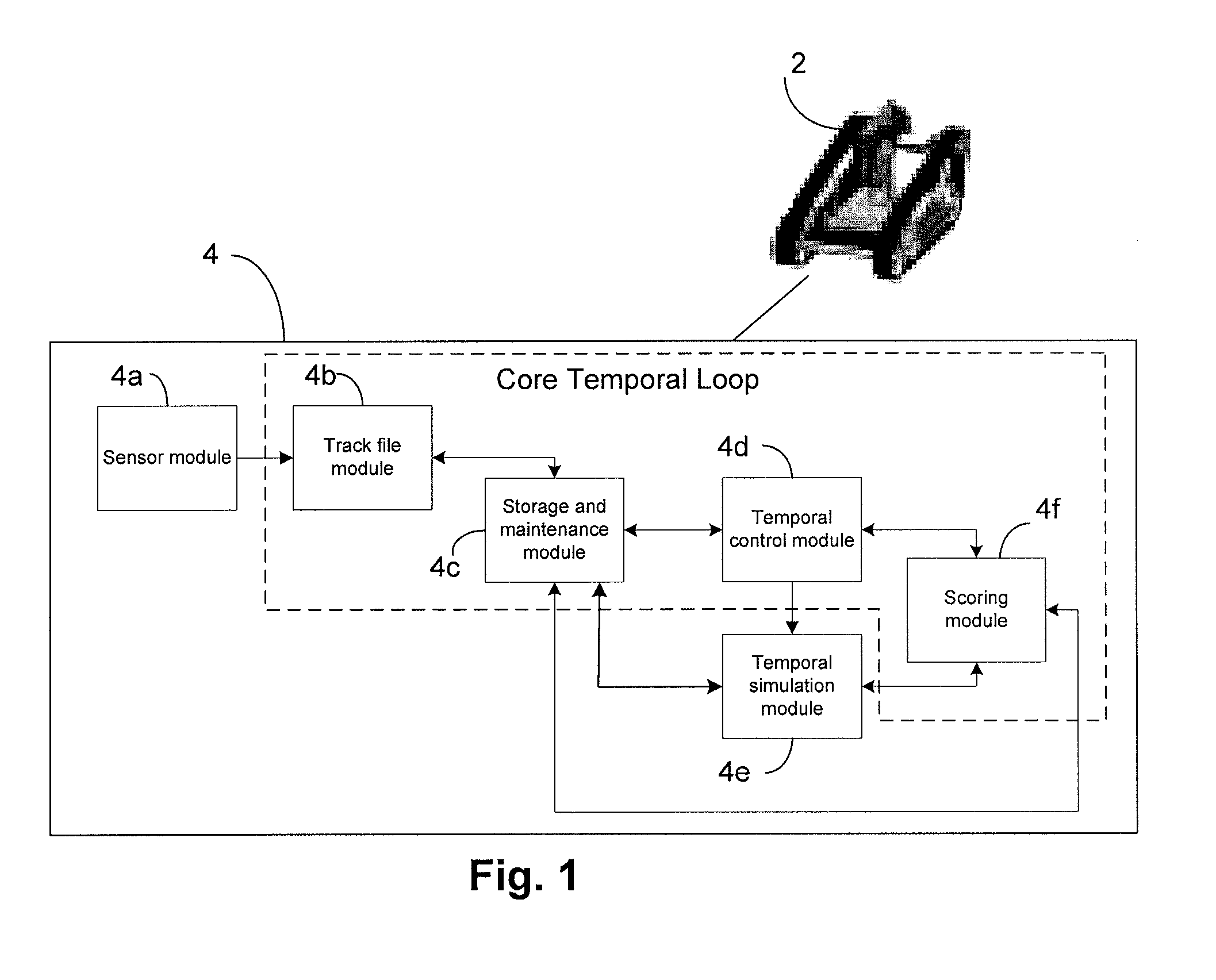
A temporal controller for mobile robot path planning includes a sensor module for receiving data corresponding to spatial locations of at least one object, and a temporal control module operatively coupled to the sensor module, the temporal control module configured to predict future locations of the at least one object based on data received by the sensor module. The controller further includes a temporal simulation module operatively coupled to the temporal control module, wherein the temporal simulation module configured to use the predicted future locations of the at least one object to simulate multiple robot motion hypothesis for object avoidance and trajectory planning.
Need to check novelty before this filing date? Find Prior Art

Description

FIELD OF THE INVENTION

[0001] The present invention relates generally to tracking systems and, more particularly, to a robot tracking system that associates data, predicts the future location and state of sensed and a priori objects, aids in the classification of objects, and plans the future location and state of one or more robots using goal- or constraint-oriented and / or behavior-based models.BACKGROUND

[0002] In 1986 the concept of a subsumption architecture for path planning and motion control of robots was developed. This concept provides a method for structuring motion from the bottom up using layered sets of rules. Later, the rules were represented as a network of probabilistic constraints linking the successive positions (poses) of a mobile robot. Currently, behavior-based approaches are practiced by a number of leading research institutions and companies, including MIT, Stanford, CMU, University of Arizona, Idaho National Labs and iRobot.

[0003] Further developments in path plan...

Examples

Embodiment Construction

[0060]The principles of the invention will now be described with reference to the drawings, wherein like reference numerals refer to like elements throughout.

[0061]A device and method in accordance with the present invention can associate sensed and a priori data, dynamically accept and respond to strings of temporal-based human operator commands, predict the future positions, states and their covariance of tracked objects and robots using probabilistic object-to-object and robot-to-object modeling and simulation. The device and method can use the predictions to aid in the classification of the objects, and produce strings of temporal-based action commands for mobile path planning trajectories, motion control, and the like of one or more robots and / or provide feedback to a human operator interface, all in the presence of missing data, latency, translational bias, and / or sensing error An obstacle (also referred to as an object) as used herein refers to any fixed, movable or moving ob...