Method and apparatus for dealing with accumulative behavior of some system observations in a time series for bayesian inference with a static bayesian network model

a time series and system observation technology, applied in the field of root cause diagnosis of faults in complex multi-host systems, can solve problems such as adversely affecting the ability of another host to carry out its work within the cluster, and the complexity of multi-host systems may be larg

US20120005534A1Active Publication Date: 2012-01-05ORACLE INT CORP
0 Cites 58 Cited by

Patent Information

Authority / Receiving Office
US · United States
Patent Type
Applications(United States)
Current Assignee / Owner
Publication Date
2012-01-05

Smart Images

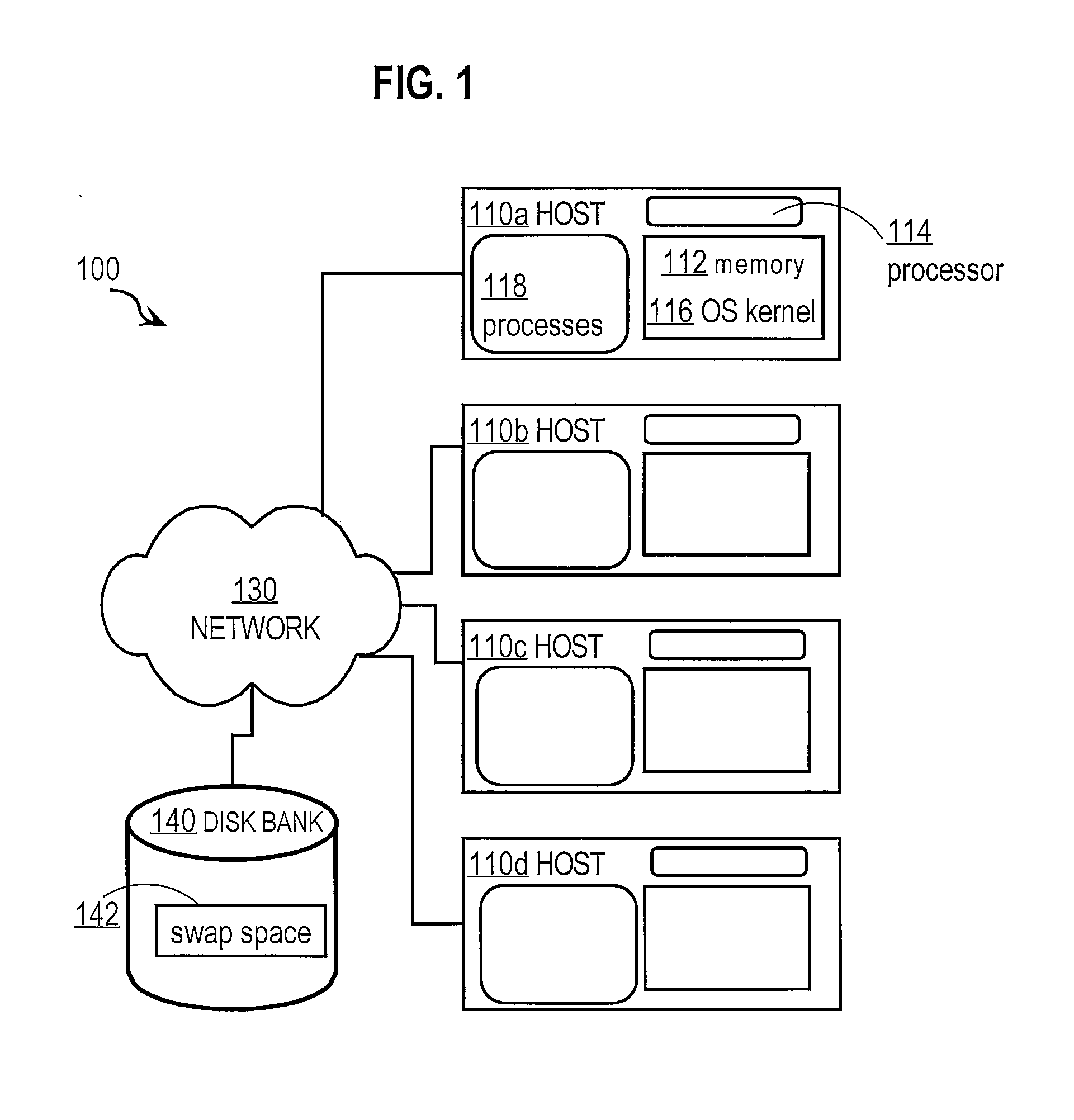
  • Figure 1
    Figure 1
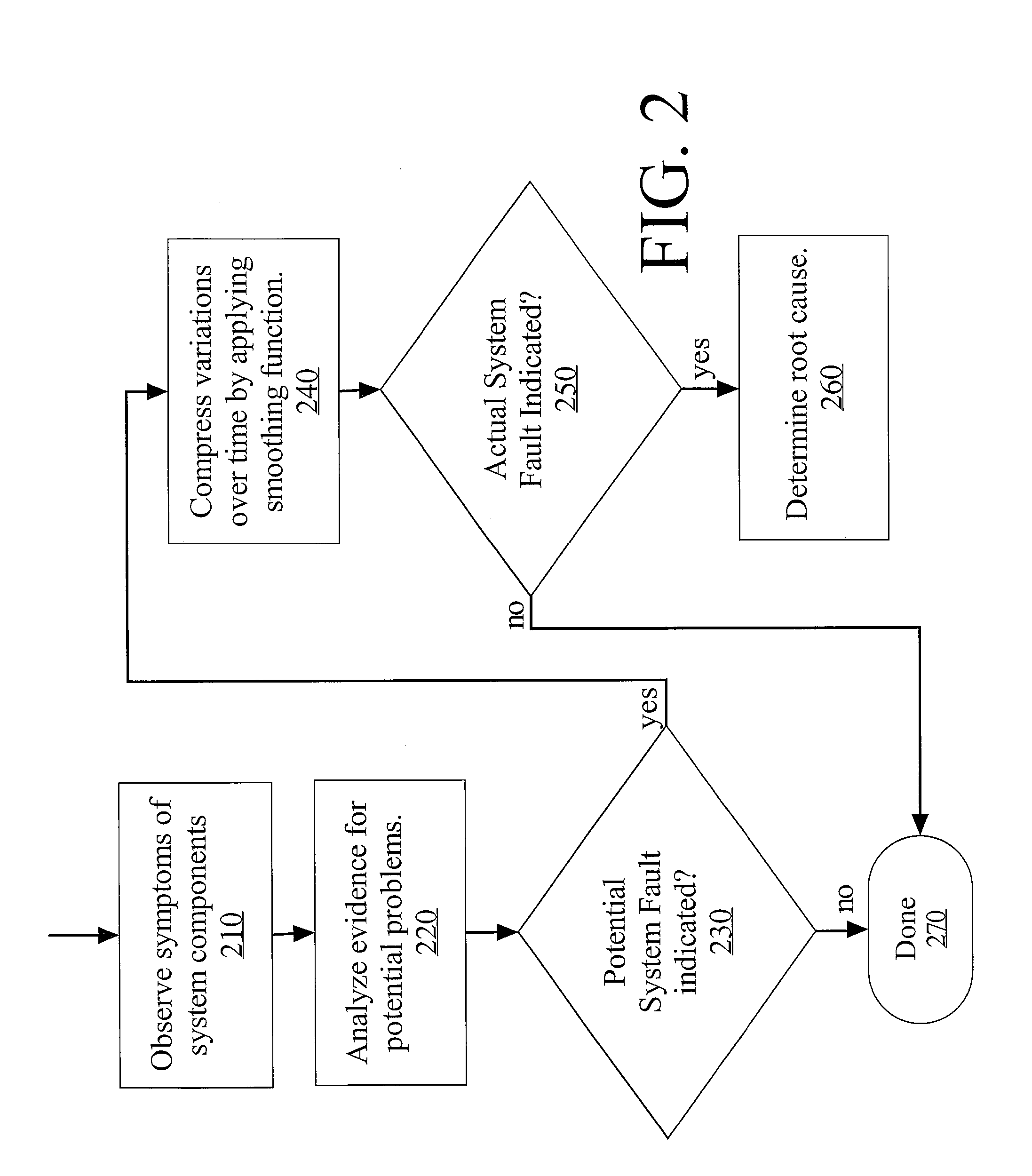
  • Figure 2
    Figure 2
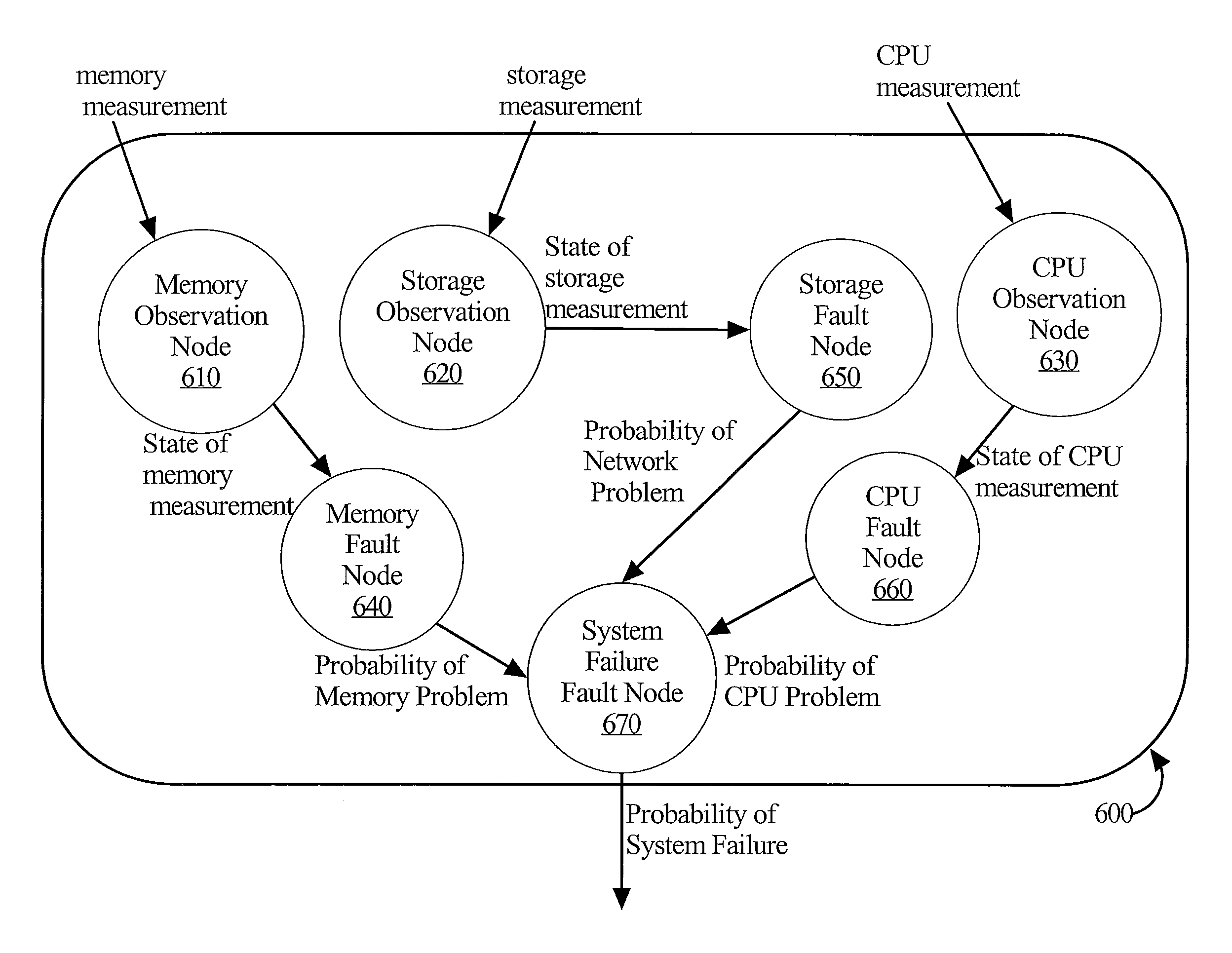
  • Figure 3
    Figure 3
Patent Text Reader

Abstract

A method and apparatus are provided for determining the probability that one or more problems have occurred within a complex multi-host system. A probabilistic model representing the cause / effect relationships among potential system problems identifies the probability that a problem occurred in the system based at least on system measure states that are input into the probabilistic model. System measure states may be determined based on an aggregation of system measurement values taken periodically. Aggregating system measurement values may be performed over system measurement values that were taken during a recent time interval. A rolling count aggregation function may be used for this purpose. A rolling count function counts the number of system measurement values taken within the recent time interval that lie within a particular range of values. A system measure state may be determined based on whether the rolling count exceeds a threshold associated with the system measure.
Need to check novelty before this filing date? Find Prior Art

Description

CROSS-REFERENCE TO RELATED APPLICATIONS

[0001] This application is related to U.S. patent application Ser. No. 12 / 830,069 filed Jul. 2, 2010, U.S. patent application Ser. No. 12 / 830,144 filed Jul. 2, 2010, and U.S. patent application Ser. No. 12 / 830,116 filed Jul. 2, 2010, the entire contents of which are hereby incorporated by reference for all purposes as if fully set forth herein.FIELD OF THE INVENTION

[0002] The present invention relates to root cause diagnosis of faults in a complex, multi-host system.BACKGROUNDMulti-Host Computing System

[0003] A multi-host computing system is a collection of interconnected computing elements that provide processing to a set of client applications. Each of the computing elements may be referred to as a node or a host. (The word “host” is used herein to avoid confusion with “nodes” of a graph). A host may be a computer interconnected to other computers, or a server blade interconnected to other server blades in a grid. A group of hosts in a multi-hos...

Examples

Embodiment Construction

[0025]In the following description, for the purposes of explanation, numerous specific details are set forth in order to provide a thorough understanding of the present invention. It will be apparent, however, that the present invention may be practiced without these specific details. In other instances, well-known structures and devices are shown in block diagram form in order to avoid unnecessarily obscuring the present invention.

General Overview

[0026]Diagnosing faults in complex systems may be challenging for at least several reasons. With multiple components performing asynchronously, it may be difficult to know at any one point in time whether observed anomalous system measurements represent a real fault condition or just a transient condition that will correct itself without intervention. False positive indications of failure can occur because a large complex system has oscillating states. It would be too expensive to respond to every transient failure condition. Thus, it is i...