
Endoscope Simulator
Patent Information
- Authority / Receiving Office
- US · United States
- Current Assignee / Owner
- Publication Date
- 2013-02-21
Smart Images
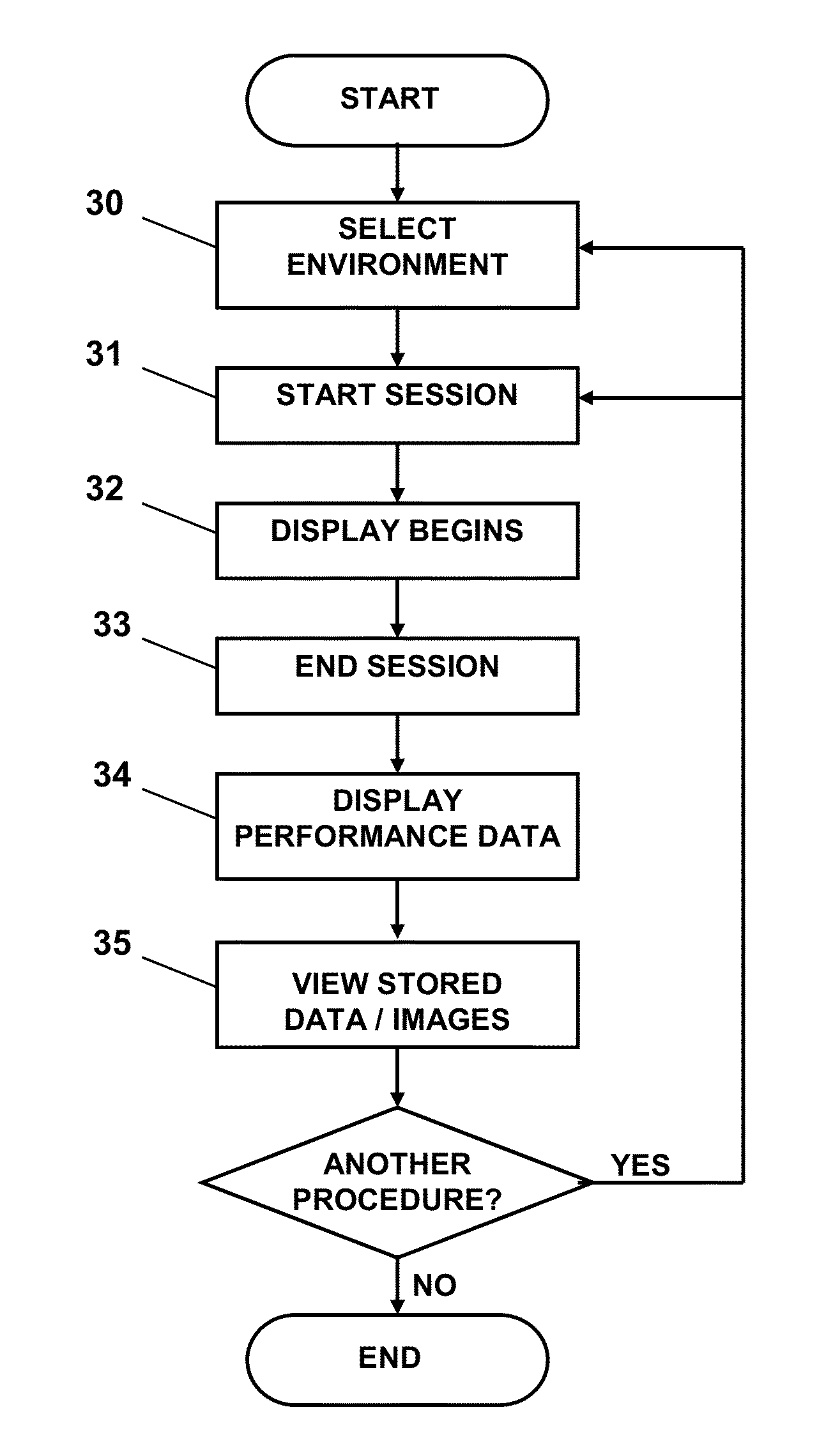
Figure 1 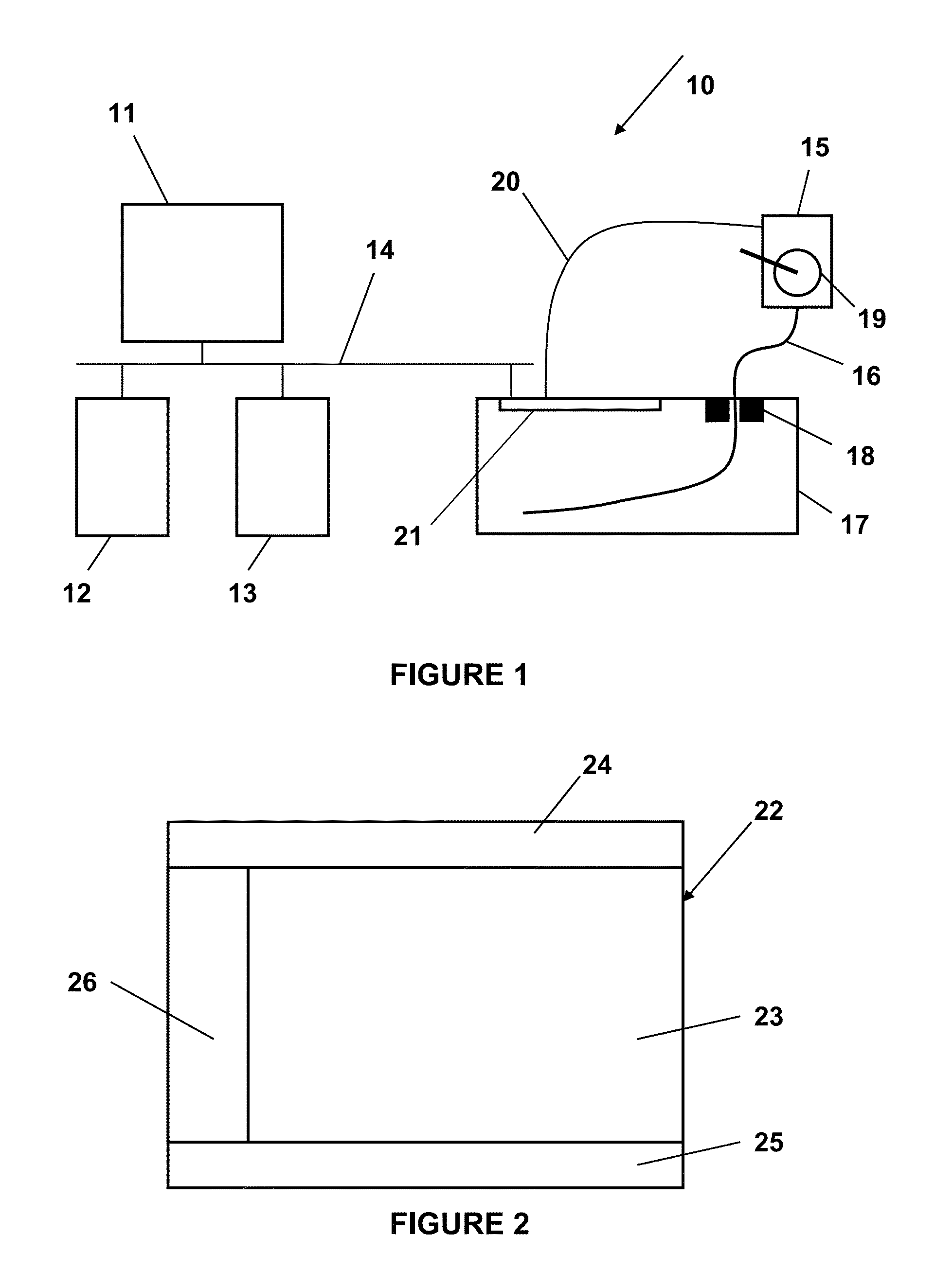
Figure 2 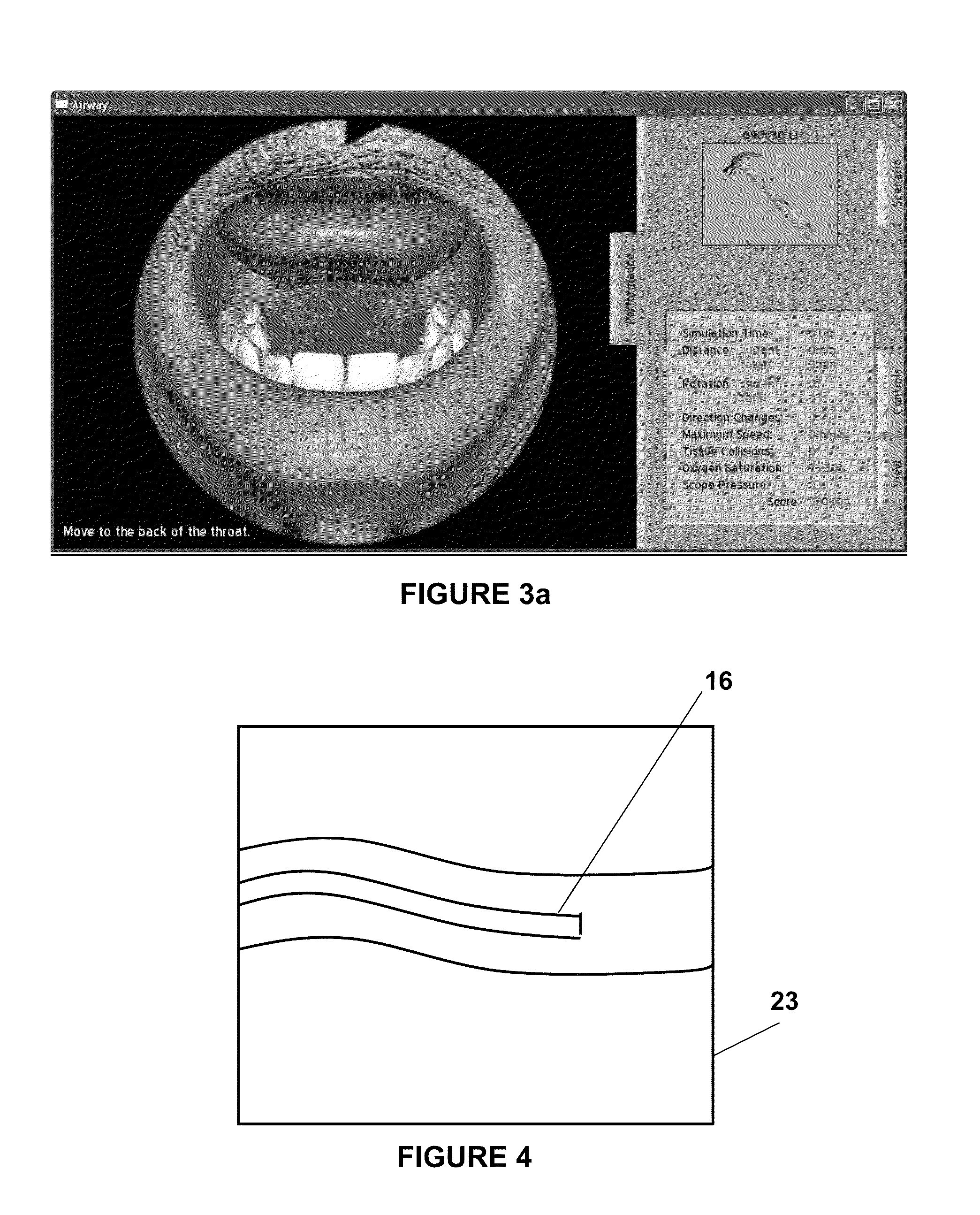
Figure 3
Abstract
Description
FIELD OF THE INVENTION
[0001] The present invention relates to an endoscope simulator. More particularly, the invention relates to a training aid which simulates movement of a virtual endoscope in a virtual human or animal body passageway or cavity, and which preferably provides for improved realism and / or accuracy in the simulated path in the virtual space.BACKGROUND OF THE INVENTION
[0002] Endoscopy is a minimally invasive diagnostic medical procedure used to view interior parts of the body, such as the interior or exterior surfaces of organs, joints or cavities. It enables physicians to peer through the body's passageways. An endoscope typically uses two fibre optic lines. The first, a “light fibre”, carries light to the region of the body to be viewed. The second, an “image fibre”, carries the image of the region back to the physician's viewing lens or, where desired, to a camera so that the image may be displayed on a screen. The portion of the endoscope inserted into the body may ...
Examples
Embodiment Construction
[0090]Embodiments of the invention provide a computer-based and operated simulator which creates a realistic environment for instruction and training in the use of an endoscope. The fully interactive environment simulates the real world behaviour of endoscope insertion and the resultant visual feedback. It may be used by those lacking experience of endoscopic procedures and by skilled physicians wishing to re-familiarise themselves with a procedure, particularly those performed less frequently or more risky. Performance of users may be tracked and assessed.
[0091]Existing endoscopy simulators, such as those disclosed in GB-A-2,252,656 and WO-A-96 / 30885, use a simple mathematical model of the displayed passageway or cavity and a path-seeking or edge detection algorithm to simply identify collisions between the virtual endoscope tube and passageway, whereas the arrangements presented in WO-A-2009 / 08750 include a physics engine to analyse the basic Newtonian physics of the collision and...