

High-Purity Phospholipids
a phospholipid, high-purity technology, applied in the field of synthetic chemistry, can solve the problems of low overall yield of multi-step synthetic pathway, low specificity of reaction, and low yield of overall yield
Active Publication Date: 2013-03-28
VASCULAR BIOGENICS
View PDF1 Cites 10 Cited by
- Summary
- Abstract
- Description
- Claims
- Application Information
AI Technical Summary
Benefits of technology
This patent introduces new methods for making oxidized phospholipids, which can be useful in larger production quantities. These methods help to overcome previous limitations in the preparation process.
Problems solved by technology
The non-specificity of the reactions reduces yield, requires a further separation step and raises concern for undesired side effects when the products are integrated in pharmaceutical compositions.
Such a multi-step synthetic pathway is characterized by relatively low overall yields and requires separation of most of the formed intermediates by means of column chromatography.
It has been found that in vivo applications employing esterified oxidized phospholipids prepared as above have the disadvantage of susceptibility to recognition, binding and metabolism of the active component in the body, making dosage and stability after administration an important consideration.
Thus, the currently known methods of preparing etherified, as well as esterified, oxidized phospholipids involve complex multi-step procedures suitable for laboratory preparation yet rendering industrial scale preparation inefficient and complex.
In particular, these multi-step procedures require industrially inapplicable separation techniques such as column chromatography during various stages of the synthetic process.
Method used
the structure of the environmentally friendly knitted fabric provided by the present invention; figure 2 Flow chart of the yarn wrapping machine for environmentally friendly knitted fabrics and storage devices; image 3 Is the parameter map of the yarn covering machine
View moreImage
Smart Image Click on the blue labels to locate them in the text.
Smart ImageViewing Examples

Examples
Experimental program
Comparison scheme
Effect test
embodiment 1
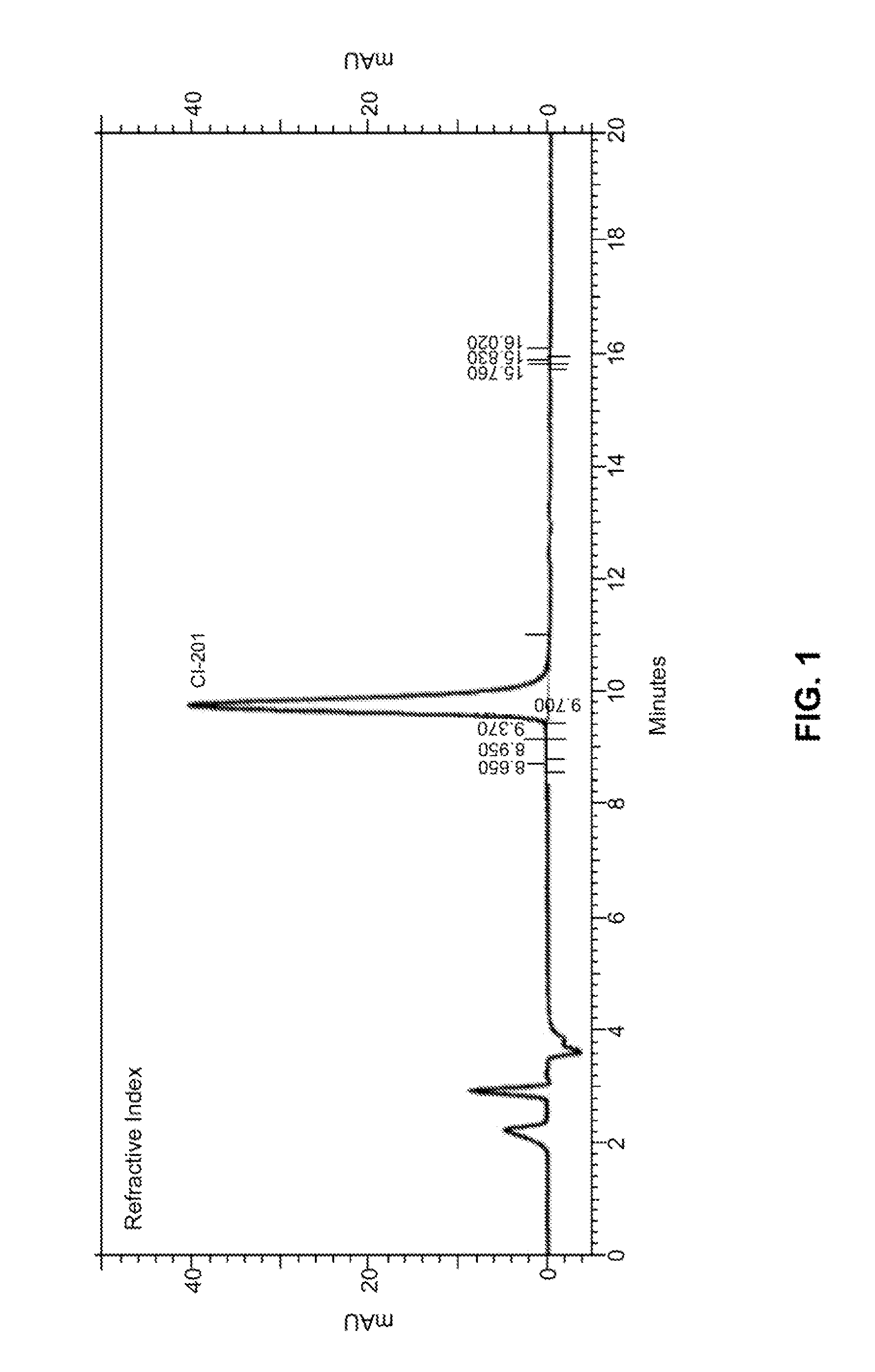
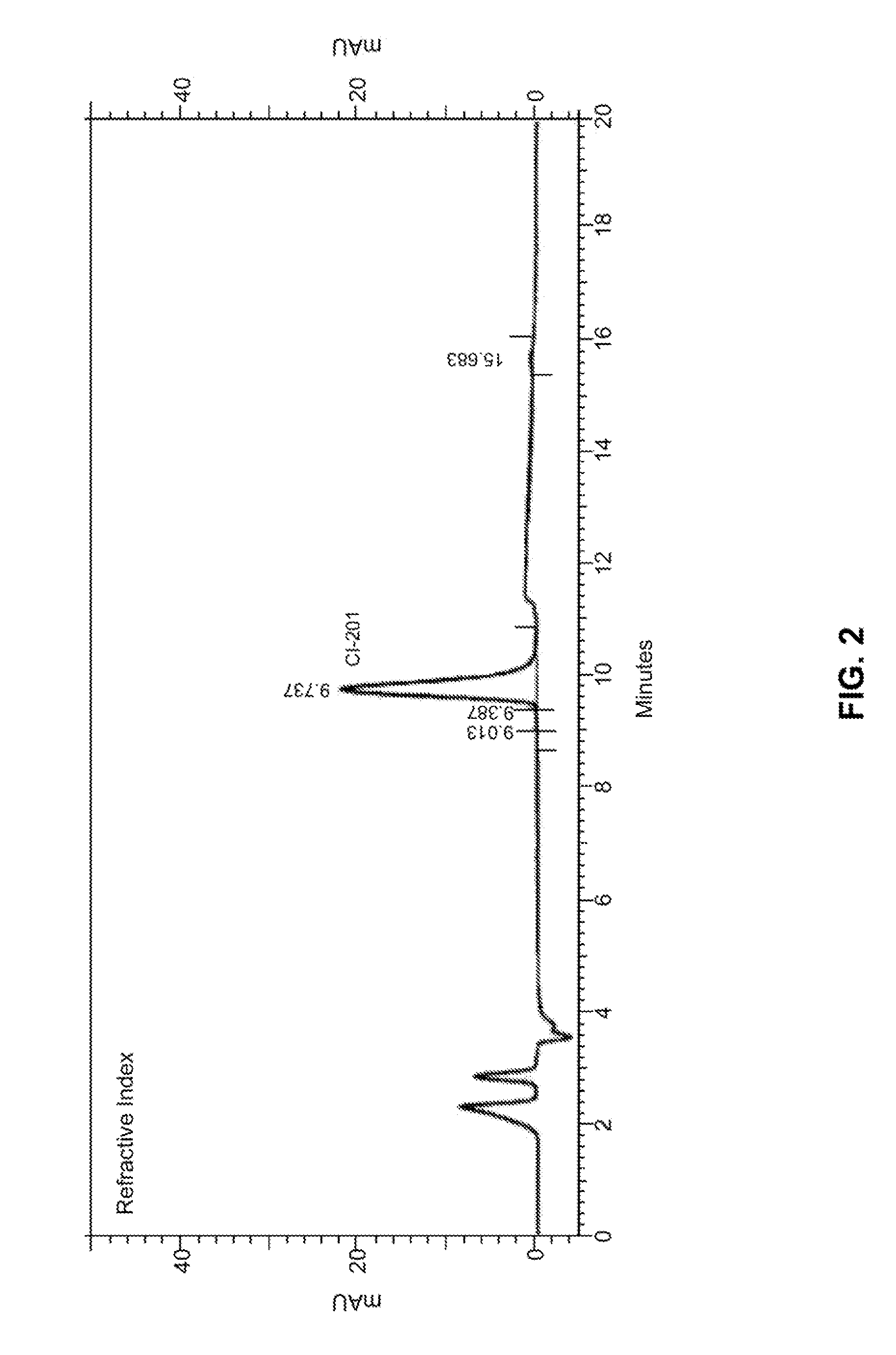
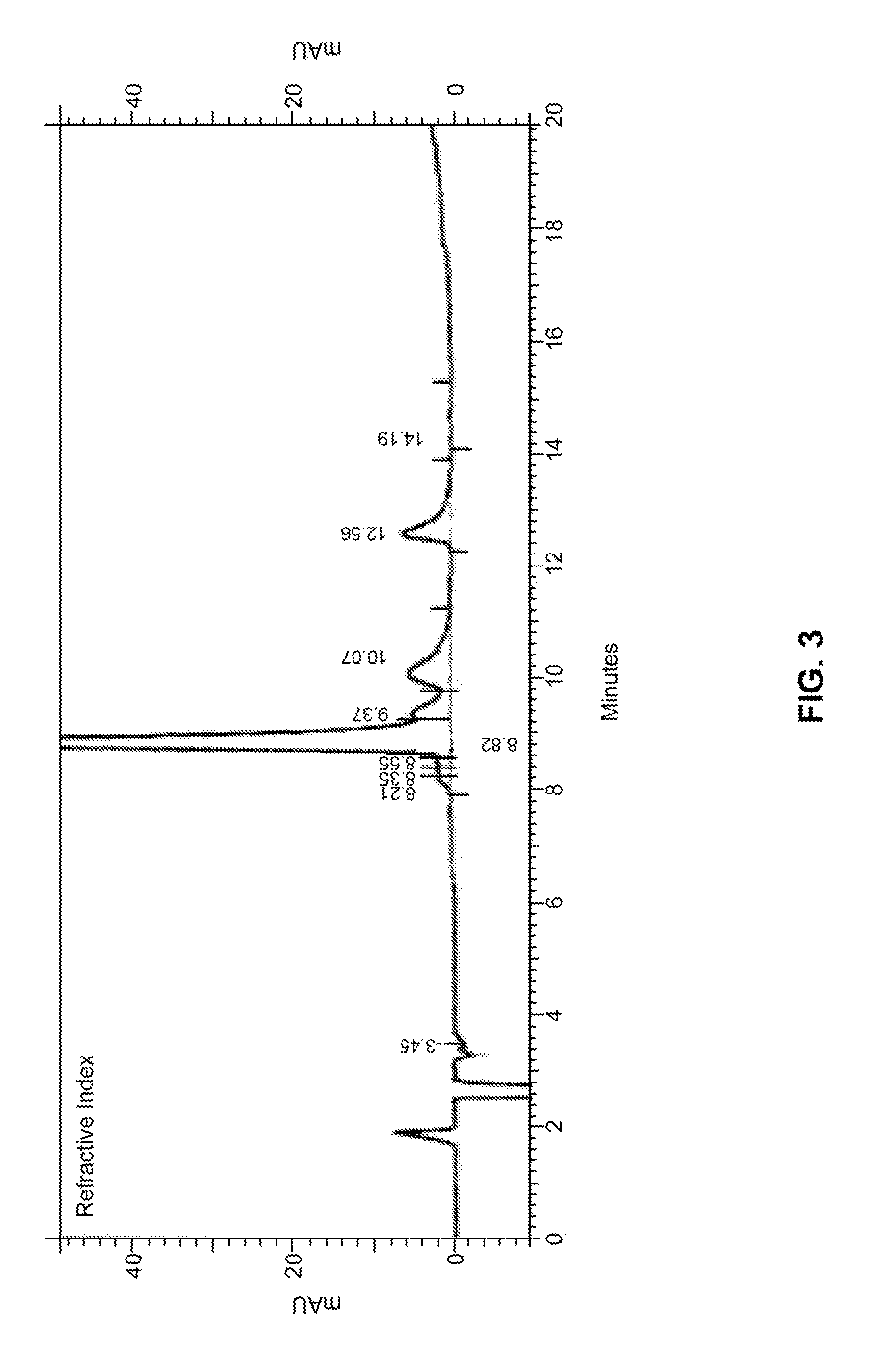
[0154]In some embodiments, the present disclosure provides CI-201 having a purity of greater than about 90% (AUC), or greater than 90% (AUC), e.g., as measured using the RI HPLC method described in Example 10.
embodiment 2
[0155]In other embodiments, the CI-201 of the present disclosure has a purity of at least about 91% (AUC), at least about 92% (AUC), at least about 93% (AUC), or at least about 94% (AUC), e.g., as measured using the RI HPLC method described in Example 10.
embodiment 3
[0156]In other embodiments, the CI-201 of the present disclosure has a purity of at least about 95%, or at least about 96% (AUC), e.g., as measured using the RI HPLC method described in Example 10.
the structure of the environmentally friendly knitted fabric provided by the present invention; figure 2 Flow chart of the yarn wrapping machine for environmentally friendly knitted fabrics and storage devices; image 3 Is the parameter map of the yarn covering machine
Login to View More PUM
 Login to View More
 Abstract
Novel synthetic routes, which are highly applicable for industrial preparation of therapeutically beneficial oxidized phospholipids are disclosed. Particularly, novel methods for efficiently preparing compounds having a glycerolic backbone and one or more oxidized moieties attached to the glycerolic backbone, which are devoid of column chromatography are disclosed. Further disclosed are novel methods of introducing phosphorus-containing moieties such as phosphate moieties to compounds having glycerolic backbone and intermediates formed thereby. Further disclosed is substantially pure 1-hexadecyl-2-(4′-carboxy)butyl-sn-glycero-3-phosphocholine (CI-201).
Description
RELATED APPLICATIONS[0001]This application is a continuation-in-part of U.S. patent application Ser. No. 13 / 358,573, filed on Jan. 26, 2012, which is a division of U.S. patent application Ser. No. 12 / 861,921, filed on Aug. 24, 2010 (now U.S. Pat. No. 8,124,800), which is a division of U.S. patent application Ser. No. 11 / 650,973, filed on Jan. 9, 2007 (now U.S. Pat. No. 7,807,847).FIELD AND BACKGROUND OF THE INVENTION[0002]The present invention relates to the field of synthetic chemistry, and more particularly, to novel synthetic processes useful for the preparation of oxidized phospholipids, derivatives, analogs and salts thereof. The present invention further relates to pure 1-hexadecyl-2-(4′-carboxy)butyl-sn-glycero-3-phosphocholine (CI-201).[0003]In the art of pharmacology, modified phospholipids are known in many applications. In U.S. Pat. No. 5,985,292 compositions for trans-dermal and trans-membranal application incorporating phospholipids bearing lipid-soluble active compound...
Claims
the structure of the environmentally friendly knitted fabric provided by the present invention; figure 2 Flow chart of the yarn wrapping machine for environmentally friendly knitted fabrics and storage devices; image 3 Is the parameter map of the yarn covering machine
Login to View More Application Information
Patent Timeline
 Login to View More
 IPC IPC(8): C07F9/09
CPCC07F9/106C07F9/103
InventorHALPERIN, GIDEONKOVALEVSKI-ISHAI, ETI
OwnerVASCULAR BIOGENICS