
Modulated inline water heating system for aircraft beverage makers
- Summary
- Abstract
- Description
- Claims
- Application Information
AI Technical Summary
Benefits of technology
Problems solved by technology
Method used
Image

Examples
Embodiment Construction
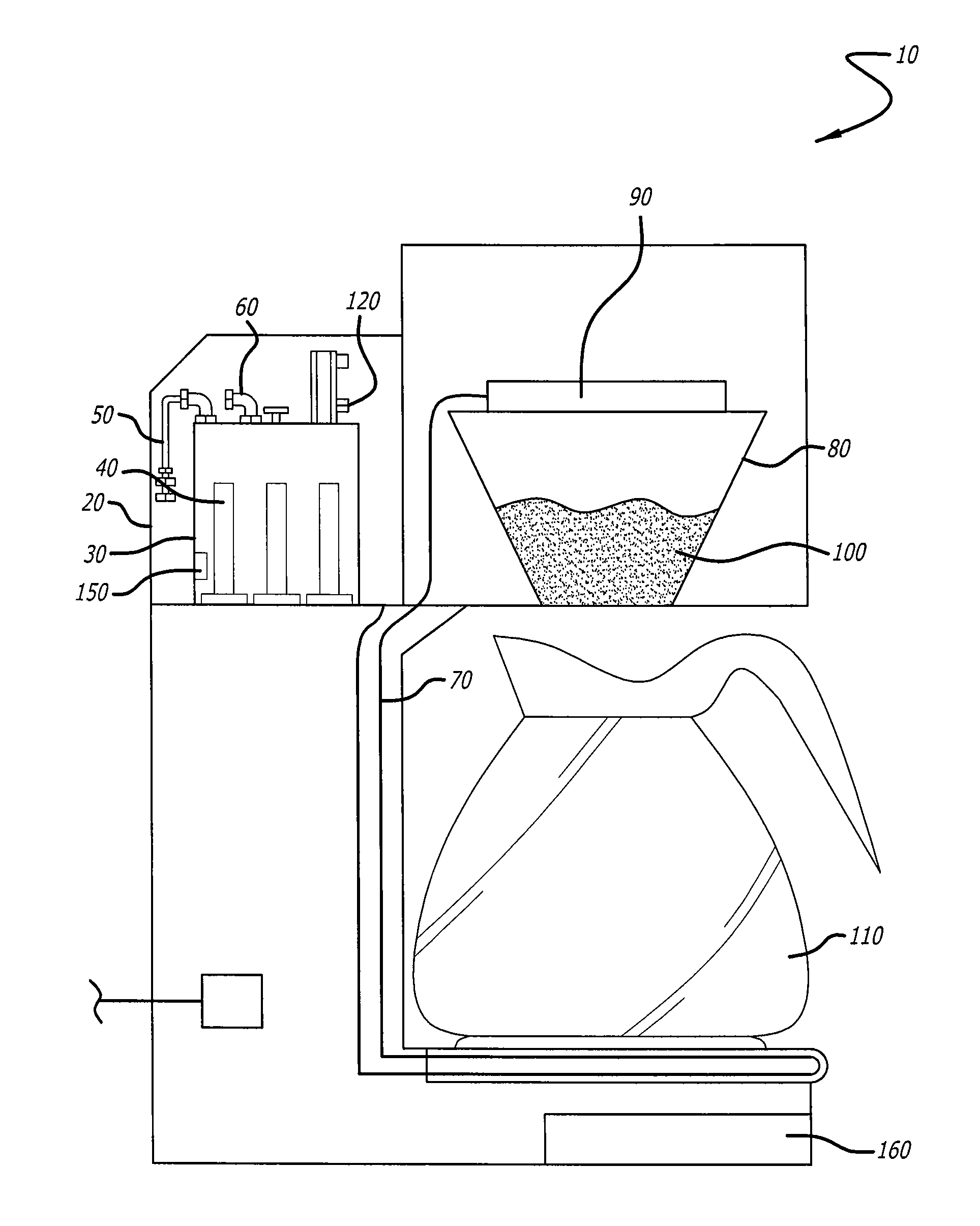
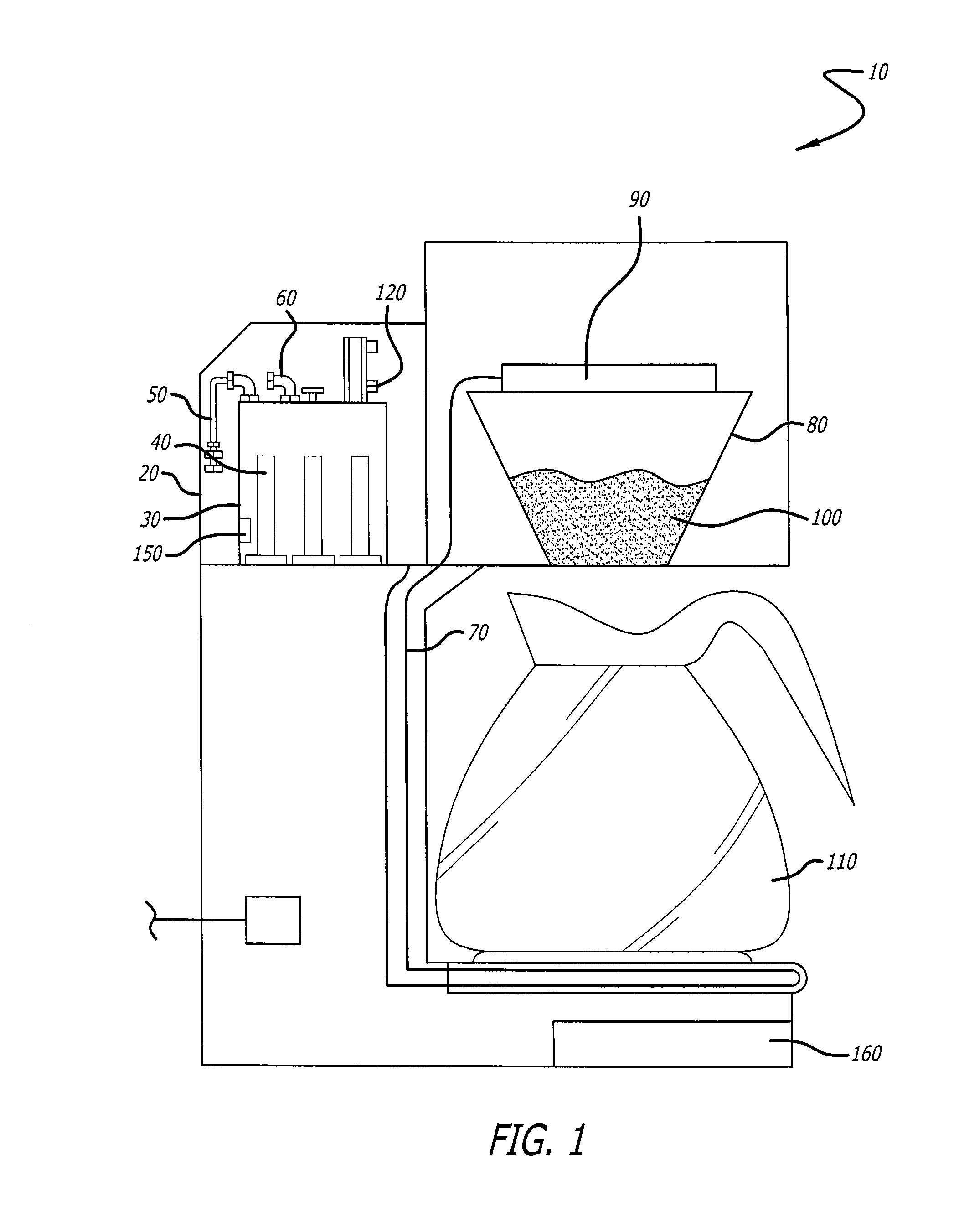
[0014]FIG. 1 illustrates a beverage brewing apparatus 10 that incorporates a water heating unit of the present invention. The beverage brewing apparatus 10 includes a housing 20 that encloses the tank 30 having three heating elements 40. The tank 30 includes a water inlet 50 and a water outlet 60, where fresh water is introduced into the tank 30 through the inlet 50 from a fresh water supply, and hot water is pumped from the tank 30 through the outlet 60 and up a conduit 70 to a coffee brewing basket 80 through a nozzle 90. The hot water enters the basket 80 filled with coffee 100, which is filtered and flows into a decanter 110 where it can be served to passengers.
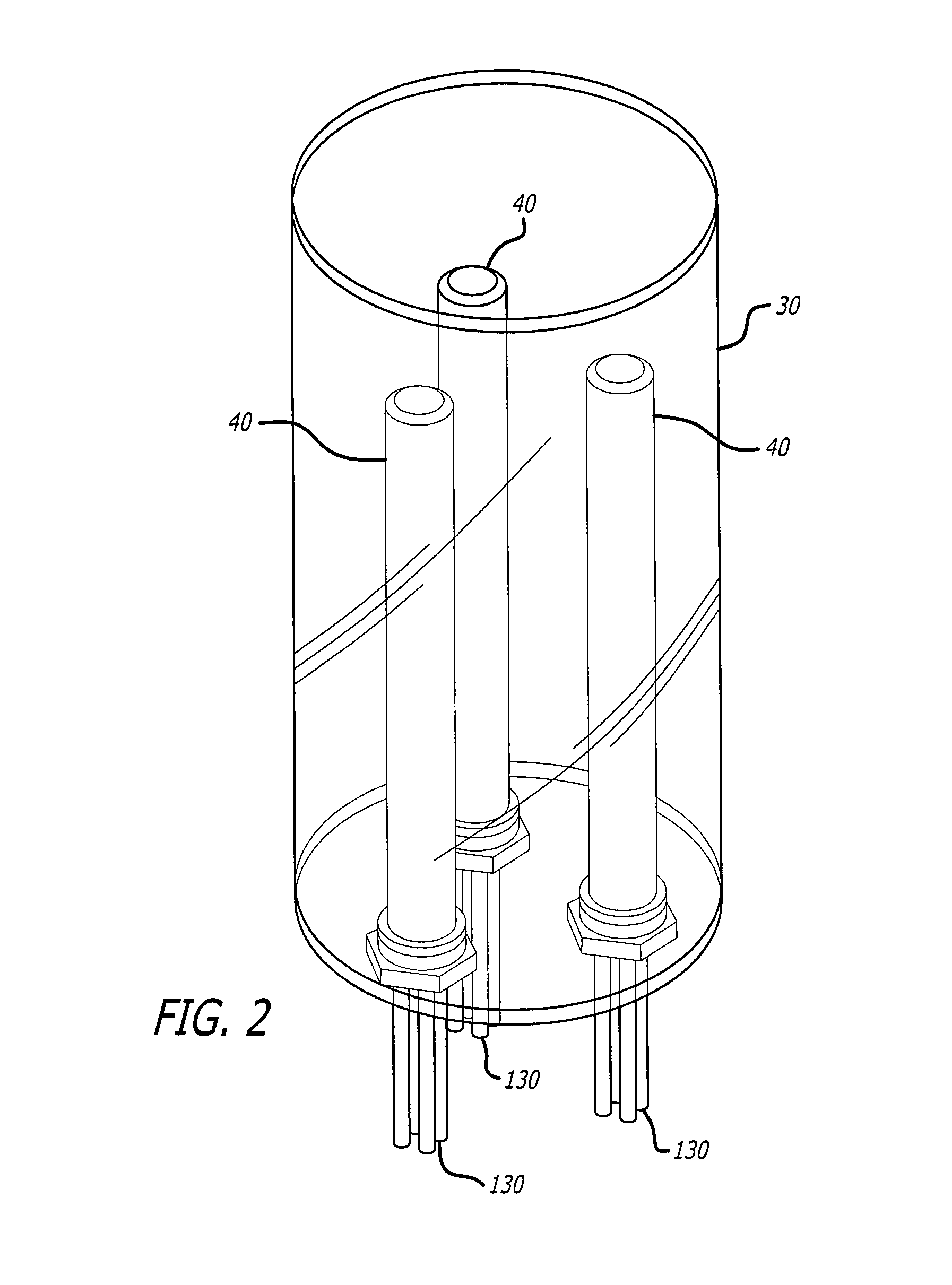
[0015]The tank 30 (FIG. 2) includes the three heating elements 40, which operate independently to raise the temperature of the water, measured by a temperature sensor 120. The three heating elements are each connected through electrical cables 130 to a power system via connector 150. The power system is controlled by a pr...
PUM
 Login to View More
 Abstract
Description
Claims
Application Information
 Login to View More